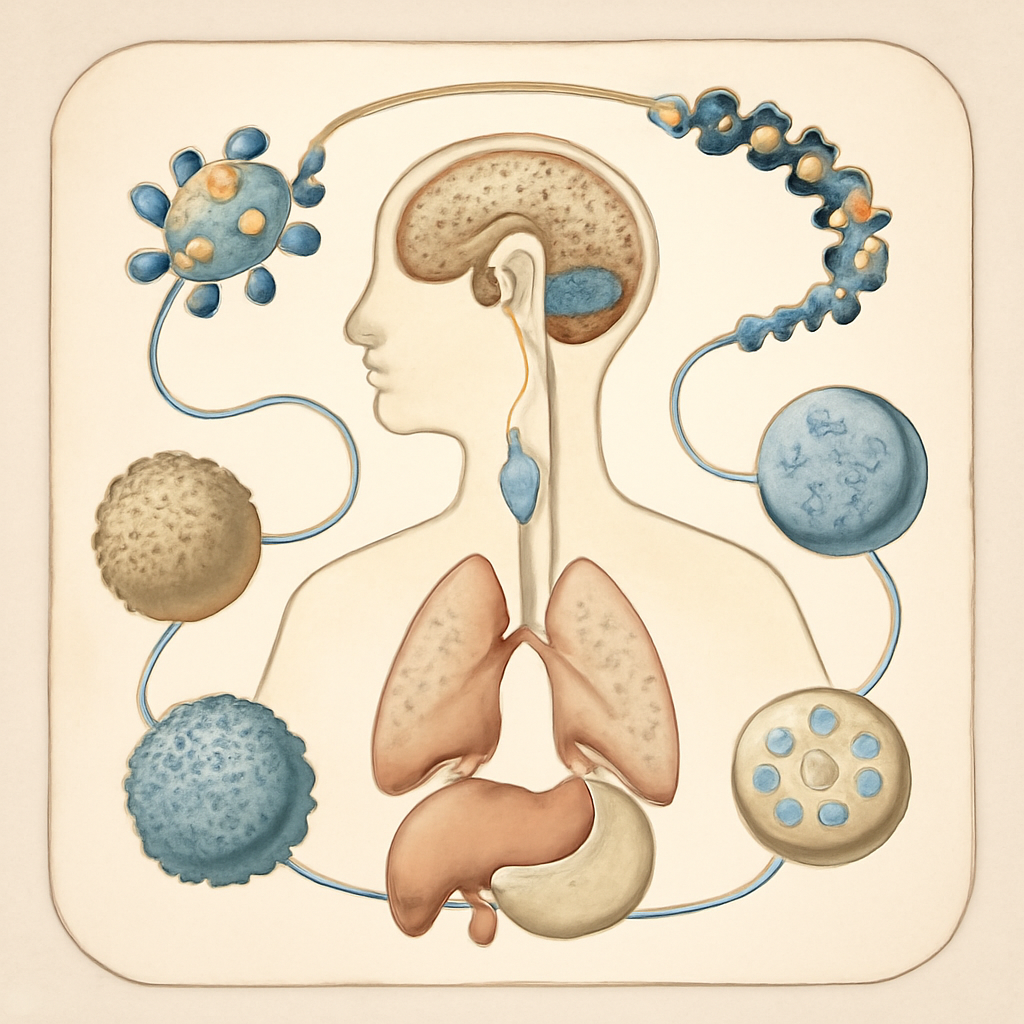
The Dance of Hormones and Peptides: Orchestrating Life's Signals
Inside our bodies, a silent conversation unfolds between hormones and peptides, two crucial players in our biological symphony. Hormones, chemical messengers released by glands, travel through the bloodstream to distant organs, while peptides, smaller chains of amino acids, often act as local signals or hormone precursors. Together, they coordinate vital processes like growth, metabolism, and immune responses. Their interactions are complex yet elegant — peptides can regulate hormone release, and hormones can influence peptide production, creating a feedback loop that keeps our systems in balance.
This interplay ensures our bodies respond swiftly and precisely to internal and external changes. From insulin controlling blood sugar to peptide hormones like oxytocin shaping social bonding, their partnership is essential to health and survival. Understanding this dynamic helps unravel how diseases develop when signals go awry and guides powerful medical treatments that mimic or modify these natural pathways.
“Hormones and peptides work together as precise chemical messengers that regulate everything from appetite to growth, creating a finely tuned symphony inside your body.”
Reflect
If your body’s communication network were disrupted, how might it affect your health, mood, or even your ability to heal?
Research·4 sources·8 primary·11 independent publishers·Strong evidence coverage·Established confidence·Investigated 23 Oct 2026(11 days ago)·Source-verified
Your next question, in
Visual Trail
See The Dance of Hormones and Peptides: Orchestrating Life's Signals
A guided visual explanation assembled from QE artwork and sourced documentary images.
01 / 02
QE visual interpretation
Frame 01
The Dance of Hormones and Peptides: Orchestrating Life's Signals
Hormones and peptides work together as chemical messengers, regulating and balancing the body's vital functions.
Image provenance and limitation
Source: AI-generated visual interpretation
Creator: Question Everything
Limitation: This image explains or evokes the subject. It is not documentary evidence and should not be used to verify a factual claim.
Evidence
What do we know?
Verified claims with confidence scoring and cited sources.
3 of 4 findings need extra caution. Finding 1, Finding 2, Finding 3 rest on weaker sourcing than the other findings.
Living footnotes
Claims remain in the reading flow. Select a citation number to inspect the source behind it.
01
AcademicMixed evidence
Most hormones in the human body are peptides, which act as signaling molecules by binding to specific cell-surface receptors to regulate physiological processes.
Peptides are short chains of amino acids that serve as hormones in the body, such as insulin and oxytocin. Unlike larger proteins, they act quickly by attaching to receptors on cell surfaces, triggering specific responses that control metabolism, growth, mood, and energy balance. This targeted signaling differs from steroid hormones, which enter cells and directly affect gene activity.
02
AcademicMixed evidence
Peptides like glucagon-like peptide-1 (GLP-1) influence appetite and glucose metabolism, but food-induced increases in GLP-1 do not always lead to consistent physiological effects.
GLP-1 is a gut-derived peptide hormone that signals satiety and helps regulate blood sugar. Its secretion depends on food composition and digestion, influenced by factors like food structure and intestinal release site. However, studies show that natural GLP-1 spikes after meals do not reliably reduce appetite or cause lasting weight loss, highlighting a complex relationship between peptide signaling and bodily responses.
03
AcademicMixed evidence
Bariatric surgery causes significant changes in gastrointestinal and pancreatic peptide hormones, contributing to improved glucose tolerance and weight loss.
Surgical procedures like gastric bypass modify hormone levels including GLP-1, peptide YY, ghrelin, and insulin. These changes alter appetite control, digestion, and metabolism, which play a major role in the surgery’s success for obesity and type 2 diabetes remission. The interplay of these peptides highlights their critical function in regulating energy balance and glucose homeostasis.
04
AcademicSupported
Peptide hormones in plants act similarly to animal peptides by binding to membrane receptors and triggering cellular responses, demonstrating a universal signaling mechanism.
In plants, peptide hormones regulate processes like pollination, growth, and stress responses by activating receptors on cell surfaces. This signaling paradigm resembles animal peptide hormone action, showing that peptides serve as essential messengers across life forms, adapting to their unique biological contexts.
The complete record below preserves every citation, confidence input and recorded limitation.
Read the full evidence record4 findings · citations · limitations
Evidence review4 findings4 openable sources
01
Finding 1 of 4AcademicNeeds caution
1
1/1 verified
Most hormones in the human body are peptides, which act as signaling molecules by binding to specific cell-surface receptors to regulate physiological processes.
Peptides are short chains of amino acids that serve as hormones in the body, such as insulin and oxytocin. Unlike larger proteins, they act quickly by attaching to receptors on cell surfaces, triggering specific responses that control metabolism, growth, mood, and energy balance. This targeted signaling differs from steroid hormones, which enter cells and directly affect gene activity.
Mixed evidencemodel score 55%
Verification was mixed across 1 source.
REFERENCE
›View sources and limits— 1 citation, limits
Supporting passage
Peptides are short chains of amino acids that serve as hormones in the body, such as insulin and oxytocin. Unlike larger proteins, they act quickly by attaching to receptors on cell surfaces, triggering specific responses that control metabolism, growth, mood, and energy balance. This targeted signaling differs from steroid hormones, which enter cells and directly affect gene activity.
QE used this source because its retrieved passage directly addresses the claim. It appeared in 2 complementary searches.
“Here is what actually matters. Your body produces thousands of peptides naturally. They act as signaling molecules: hormones, neurotransmitters, growth factors, immune modulators. Insulin is a peptide hormone. So is oxytocin. So are the endorphins that flood your system after a hard workout. When your gut releases GLP…”
This passage was checked against the claim.
Retrieved 23/10/2026
What limits this
1 of 2 citations failed verification and are not shown.
Rests on a single source. No independent corroboration.
No peer-reviewed source among the citations.
Verification was mixed — some citations supported the claim and some did not.
02
Finding 2 of 4AcademicNeeds caution
1
1/1 verified
Peptides like glucagon-like peptide-1 (GLP-1) influence appetite and glucose metabolism, but food-induced increases in GLP-1 do not always lead to consistent physiological effects.
GLP-1 is a gut-derived peptide hormone that signals satiety and helps regulate blood sugar. Its secretion depends on food composition and digestion, influenced by factors like food structure and intestinal release site. However, studies show that natural GLP-1 spikes after meals do not reliably reduce appetite or cause lasting weight loss, highlighting a complex relationship between peptide signaling and bodily responses.
Mixed evidencemodel score 55%
Verification was mixed across 1 source.
PRIMARY STUDY
›View sources and limits— 1 citation, limits
Supporting passage
GLP-1 is a gut-derived peptide hormone that signals satiety and helps regulate blood sugar. Its secretion depends on food composition and digestion, influenced by factors like food structure and intestinal release site. However, studies show that natural GLP-1 spikes after meals do not reliably reduce appetite or cause lasting weight loss, highlighting a complex relationship between peptide signaling and bodily responses.
QE used this research source for direct evidence relevant to the claim.
“Interest in using foods to stimulate endogenous glucagon-like peptide-1 (GLP-1) has outpaced evidence that transient postprandial increases translate into meaningful physiological outcomes. This review critically examines how food processing and matrix architecture interact with digestion and microbial metabolism to d…”
This passage was checked against the claim.
Retrieved 23/10/2026
What limits this
1 of 2 citations failed verification and are not shown.
Rests on a single source. No independent corroboration.
Verification was mixed — some citations supported the claim and some did not.
03
Finding 3 of 4AcademicNeeds caution
1
1/1 verified
Bariatric surgery causes significant changes in gastrointestinal and pancreatic peptide hormones, contributing to improved glucose tolerance and weight loss.
Surgical procedures like gastric bypass modify hormone levels including GLP-1, peptide YY, ghrelin, and insulin. These changes alter appetite control, digestion, and metabolism, which play a major role in the surgery’s success for obesity and type 2 diabetes remission. The interplay of these peptides highlights their critical function in regulating energy balance and glucose homeostasis.
Mixed evidencemodel score 55%
Verification was mixed across 1 source.
PRIMARY STUDY
›View sources and limits— 1 citation, limits
Supporting passage
Surgical procedures like gastric bypass modify hormone levels including GLP-1, peptide YY, ghrelin, and insulin. These changes alter appetite control, digestion, and metabolism, which play a major role in the surgery’s success for obesity and type 2 diabetes remission. The interplay of these peptides highlights their critical function in regulating energy balance and glucose homeostasis.
QE used this research source for direct evidence relevant to the claim.
“Bariatric surgery for obesity has proved to be an extremely effective method of promoting long-term weight reduction with additional beneficial metabolic effects, such as improved glucose tolerance and remission of type 2 diabetes. A range of bariatric procedures are in common use, including gastric banding, sleeve ga…”
This passage was checked against the claim.
Retrieved 23/10/2026
What limits this
1 of 2 citations failed verification and are not shown.
Rests on a single source. No independent corroboration.
Verification was mixed — some citations supported the claim and some did not.
04
Finding 4 of 4Academic
1
1/1 verified
Peptide hormones in plants act similarly to animal peptides by binding to membrane receptors and triggering cellular responses, demonstrating a universal signaling mechanism.
In plants, peptide hormones regulate processes like pollination, growth, and stress responses by activating receptors on cell surfaces. This signaling paradigm resembles animal peptide hormone action, showing that peptides serve as essential messengers across life forms, adapting to their unique biological contexts.
Supportedmodel score 88%
A single peer-reviewed source. No independent corroboration.
PRIMARY STUDY
›View sources and limits— 1 citation, limits
Supporting passage
In plants, peptide hormones regulate processes like pollination, growth, and stress responses by activating receptors on cell surfaces. This signaling paradigm resembles animal peptide hormone action, showing that peptides serve as essential messengers across life forms, adapting to their unique biological contexts.
QE used this research source for direct evidence relevant to the claim.
“Most peptide hormones are secreted out of the cell to interact with membrane-associated receptors in neighboring cells, and subsequently activate signal transductions, leading to changes in gene expression and cellular responses. Since the discovery of the first plant peptide hormone, systemin, in tomato in 1991, puta…”
This passage was checked against the claim.
Retrieved 23/10/2026
What limits this
Rests on a single source. No independent corroboration.
The generator scored this 88%, which would read as “Established”. Its citations reach only “Supported”, so that is what is shown.
The reference archive
Sources & Further Reading
Continue exploring the research, reporting and reference material available on this subject.
These were found while researching this question but are not used as evidence for any claim above.
These visualizations respond to your curiosity. Interact to go deeper.
process flow
How Peptides and Hormones Signal in the Body
Peptide Hormone Synthesis
Secretion into Bloodstream
Receptor Binding
Signal Transduction
Physiological Response
statistics card
Key Facts About Peptide Hormones
50+
Amino acids in peptides versus proteins
Peptides are shorter chains, allowing faster signaling.
Millions
People prescribed GLP-1 receptor agonists
Demonstrates widespread therapeutic use of peptide hormones.
2015
Year of key study on bariatric surgery’s hormonal effects
Highlights scientific understanding of peptide roles in metabolism.
Perspectives
How is this interpreted?
Enter a viewpoint. Notice what it reveals, what it leaves out, and whether it changes the question for you.
The EmpiricistScientific viewpointLive tension
Scientific research shows that hormones and peptides interact as a finely tuned communication network that regulates metabolism, growth, and appetite. Advances in peptide biology reveal their precision in cell signaling, with therapeutic applications such as GLP-1 receptor agonists for diabetes and obesity. However, the physiological effects of peptides depend heavily on context, dose, and receptor availability.
What this lens notices
01Peptides act via cell-surface receptors triggering specific cascades
02GLP-1 agonists improve glucose control and reduce appetite pharmacologically
03Bariatric surgery alters peptide hormone profiles leading to metabolic benefits
Application
Why does this matter to you?
Personal reflections and applications for your life.
Thought experimentSelf-Reflection
How might understanding your body's peptide and hormone signals change your approach to health and nutrition?
Why it changes the question
Recognizing that peptides and hormones regulate hunger, energy, and mood invites you to consider how lifestyle choices influence these signals. This awareness can empower more mindful decisions about diet, exercise, and stress management.
Try this
Try tracking your meals and moods for a week to notice patterns that might relate to hormonal signaling.
Media
QE Smart Glass
Curated media selected for this investigation.
QE Glass
YOUTUBE
Endocrine System, Part 1 - Glands & Hormones: Crash Course Anatomy & Physiology #23
CrashCourse
Hank begins teaching you about your endocrine system by explaining how it uses glands to produce hormones. These hormones ...
No AI help here — no suggestions, no autocomplete, nothing finishing your sentences. That is deliberate. Working out what you think is effortful, and the effort is the part that changes you: reasoning is trained like a muscle, and a muscle that is always carried gets weaker. Let something else do the thinking and you keep the answer but lose the capacity to have reached it.
Write your current position.
Not what the page says. What you think, having read it.0 words · Nothing written yet.
Sign in to leave a mark. Your draft is saved here in the meantime.