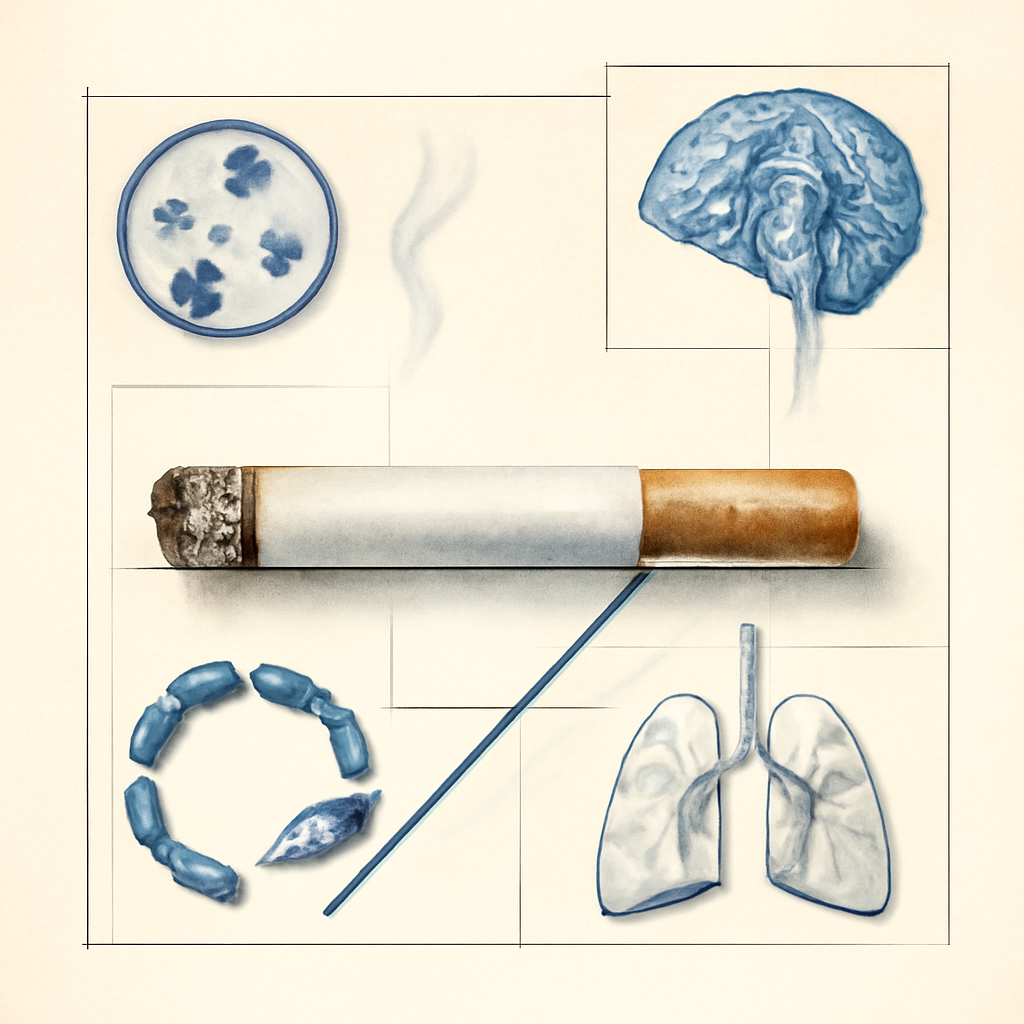
The Art and Science of Quitting Smoking: Strategies, Challenges, and Neuroscience
Quitting smoking is a complex interplay of behavioral change, neurobiology, and social context. Nicotine dependence rewires the brain’s reward pathways, making cessation a multifaceted challenge that extends beyond mere willpower. Effective quitting strategies combine pharmacological aids like nicotine replacement therapy (NRT), varenicline, or bupropion with cognitive-behavioral therapy (CBT) to reprogram habits and manage withdrawal symptoms. Recent advances emphasize personalized approaches, considering genetic predispositions, psychological profiles, and environmental triggers.
Understanding relapse triggers—stress, social cues, or emotional states—is critical for sustained abstinence. Cutting-edge research explores neurofeedback, mindfulness-based interventions, and digital therapeutics, aiming to reshape neural circuits linked to craving and habit formation. Longitudinal studies underscore the importance of ongoing support and adaptive coping mechanisms. Quitting smoking is not a linear trajectory; it requires resilience, tailored interventions, and sometimes repeated attempts before permanent success is achieved.
✨
Wonder Moment
“Combining pharmacological aids with behavioral counseling more than doubles the chances of quitting smoking successfully.”
Reflect
How might our understanding of addiction and behavior change if we viewed quitting smoking as a complex interplay between neurobiology, social context, and personal resolve rather than just willpower?
5 sources·Established confidence·Investigated 26 Aug 2026(yesterday)·Source-verified
Your next question, in
Visual Trail
See The Art and Science of Quitting Smoking: Strategies, Challenges, and Neuroscience
A guided visual explanation assembled from QE artwork and sourced documentary images.
01 / 05
QE visual interpretation
Frame 01
The Art and Science of Quitting Smoking: Strategies, Challenges, and Neuroscience
Quitting smoking requires a personalized mix of medication, therapy, and behavioral change to overcome addiction and prevent relapse.
Image provenance and limitation
Source: AI-generated visual interpretation
Creator: Question Everything
Limitation: This image explains or evokes the subject. It is not documentary evidence and should not be used to verify a factual claim.
Evidence
What do we know?
Verified claims with confidence scoring and cited sources.
1 of 6 findings need extra caution. Finding 4 rests on weaker sourcing than the other findings.
Living footnotes
Claims remain in the reading flow. Select a citation number to inspect the source behind it.
01
StatisticalSupported
The strongest predictor of successful smoking cessation is the degree of nicotine dependence, with heavier smokers finding it harder to quit.
A longitudinal study of British adults showed that the number of cigarettes smoked per day was the most significant predictor of quitting success, surpassing socio-demographic factors like social class or marital status. This finding underscores nicotine dependence's central role in cessation outcomes and suggests that strategies must address addiction intensity to be effective.
02
AcademicSupported
Nicotine replacement therapy, especially when combining a patch with a rapid-delivery form, significantly improves long-term smoking abstinence rates.
A comprehensive Cochrane review found that nicotine replacement therapy (NRT) increases quit rates by alleviating withdrawal symptoms and cravings. Combining a transdermal patch with faster-acting NRT forms like gum or spray showed superior success compared to single forms. The review rigorously analyzed randomized controlled trials with follow-ups of at least six months, reinforcing the robustness of these findings.
03
AcademicSupported
The perioperative period around elective surgery is an opportune moment to initiate smoking cessation interventions with lasting benefits.
Millions of smokers undergo elective surgery yearly, and evidence suggests that offering cessation support during this period improves immediate surgical outcomes and long-term abstinence. Physicians can provide brief behavioral counseling and pharmacotherapy, capitalizing on patients' heightened motivation due to surgical risks, making this a strategic teachable moment.
04
StatisticalNot confirmed
Cold turkey quitting is the most common method among smokers, but success rates are higher when combined with support and pharmacological aids.
While many smokers attempt to quit abruptly without assistance, data indicate that combining medication with counseling roughly doubles the odds of quitting. This suggests that willpower alone is insufficient for most, and structured interventions significantly improve outcomes, especially for those with higher nicotine dependence.
05
StatisticalSupported
Household smoking behavior strongly influences an individual's likelihood to quit, with quitting behaviors clustering within families.
Research analyzing household dynamics found that smokers living with other smokers were less likely to quit, illustrating how social environment and support systems critically affect cessation. This clustering effect suggests that interventions targeting entire households may be more effective than isolated individual approaches.
06
ObservationalSupported
Behavioral strategies like distraction, oral substitutes, and environmental changes effectively help manage nicotine cravings during quit attempts.
Clinical guidelines emphasize practical techniques to resist cravings, such as chewing sugarless gum, drinking water, or changing routines that trigger urges. These non-pharmacological approaches complement medical treatments and empower smokers to navigate withdrawal with greater control, reducing relapse risk.
The complete record below preserves every citation, confidence input and recorded limitation.
Read the full evidence record6 findings · citations · limitations
Evidence review6 findings6 openable sources
01
Finding 1 of 6Statistical
0/1 verified
The strongest predictor of successful smoking cessation is the degree of nicotine dependence, with heavier smokers finding it harder to quit.
A longitudinal study of British adults showed that the number of cigarettes smoked per day was the most significant predictor of quitting success, surpassing socio-demographic factors like social class or marital status. This finding underscores nicotine dependence's central role in cessation outcomes and suggests that strategies must address addiction intensity to be effective.
Supportedmodel score 70%
A single peer-reviewed source. No independent corroboration.
PRIMARY STUDY
›View sources and limits— 1 citation, limits
Supporting passage
A longitudinal study of British adults showed that the number of cigarettes smoked per day was the most significant predictor of quitting success, surpassing socio-demographic factors like social class or marital status. This finding underscores nicotine dependence's central role in cessation outcomes and suggests that strategies must address addiction intensity to be effective.
Rests on a single source. No independent corroboration.
02
Finding 2 of 6Academic
1
0/1 verified
Nicotine replacement therapy, especially when combining a patch with a rapid-delivery form, significantly improves long-term smoking abstinence rates.
A comprehensive Cochrane review found that nicotine replacement therapy (NRT) increases quit rates by alleviating withdrawal symptoms and cravings. Combining a transdermal patch with faster-acting NRT forms like gum or spray showed superior success compared to single forms. The review rigorously analyzed randomized controlled trials with follow-ups of at least six months, reinforcing the robustness of these findings.
Supportedmodel score 70%
A single peer-reviewed source. No independent corroboration.
PRIMARY STUDY
›View sources and limits— 1 citation, limits
Supporting passage
A comprehensive Cochrane review found that nicotine replacement therapy (NRT) increases quit rates by alleviating withdrawal symptoms and cravings. Combining a transdermal patch with faster-acting NRT forms like gum or spray showed superior success compared to single forms. The review rigorously analyzed randomized controlled trials with follow-ups of at least six months, reinforcing the robustness of these findings.
Rests on a single source. No independent corroboration.
03
Finding 3 of 6Academic
1
0/1 verified
The perioperative period around elective surgery is an opportune moment to initiate smoking cessation interventions with lasting benefits.
Millions of smokers undergo elective surgery yearly, and evidence suggests that offering cessation support during this period improves immediate surgical outcomes and long-term abstinence. Physicians can provide brief behavioral counseling and pharmacotherapy, capitalizing on patients' heightened motivation due to surgical risks, making this a strategic teachable moment.
Supportedmodel score 70%
A single peer-reviewed source. No independent corroboration.
PRIMARY STUDY
›View sources and limits— 1 citation, limits
Supporting passage
Millions of smokers undergo elective surgery yearly, and evidence suggests that offering cessation support during this period improves immediate surgical outcomes and long-term abstinence. Physicians can provide brief behavioral counseling and pharmacotherapy, capitalizing on patients' heightened motivation due to surgical risks, making this a strategic teachable moment.
Rests on a single source. No independent corroboration.
04
Finding 4 of 6StatisticalNeeds caution
0/0 verified
Cold turkey quitting is the most common method among smokers, but success rates are higher when combined with support and pharmacological aids.
While many smokers attempt to quit abruptly without assistance, data indicate that combining medication with counseling roughly doubles the odds of quitting. This suggests that willpower alone is insufficient for most, and structured interventions significantly improve outcomes, especially for those with higher nicotine dependence.
Not confirmedmodel score 30%
Scored as if sourced, but every citation failed verification.
NO SURVIVING CITATION
›View sources and limits— limits
Supporting passage
While many smokers attempt to quit abruptly without assistance, data indicate that combining medication with counseling roughly doubles the odds of quitting. This suggests that willpower alone is insufficient for most, and structured interventions significantly improve outcomes, especially for those with higher nicotine dependence.
Citations (0 of 2 survived verification)
Nothing openable. Every citation was removed by provenance validation.
What limits this
All 2 citations on this claim failed verification and were removed. Nothing openable supports it.
05
Finding 5 of 6Statistical
0/1 verified
Household smoking behavior strongly influences an individual's likelihood to quit, with quitting behaviors clustering within families.
Research analyzing household dynamics found that smokers living with other smokers were less likely to quit, illustrating how social environment and support systems critically affect cessation. This clustering effect suggests that interventions targeting entire households may be more effective than isolated individual approaches.
Supportedmodel score 70%
A single peer-reviewed source. No independent corroboration.
PRIMARY STUDY
›View sources and limits— 1 citation, limits
Supporting passage
Research analyzing household dynamics found that smokers living with other smokers were less likely to quit, illustrating how social environment and support systems critically affect cessation. This clustering effect suggests that interventions targeting entire households may be more effective than isolated individual approaches.
Rests on a single source. No independent corroboration.
06
Finding 6 of 6Observational
0/2 verified
Behavioral strategies like distraction, oral substitutes, and environmental changes effectively help manage nicotine cravings during quit attempts.
Clinical guidelines emphasize practical techniques to resist cravings, such as chewing sugarless gum, drinking water, or changing routines that trigger urges. These non-pharmacological approaches complement medical treatments and empower smokers to navigate withdrawal with greater control, reducing relapse risk.
Supportedmodel score 80%
2 sources agree, none peer-reviewed.
REPORTINGREFERENCE
›View sources and limits— 2 citations, limits
Supporting passage
Clinical guidelines emphasize practical techniques to resist cravings, such as chewing sugarless gum, drinking water, or changing routines that trigger urges. These non-pharmacological approaches complement medical treatments and empower smokers to navigate withdrawal with greater control, reducing relapse risk.
These visualizations respond to your curiosity. Interact to go deeper.
process flow
Steps in a Successful Smoking Cessation Attempt
Preparation
Initiation
Withdrawal Management
Maintenance
Long-Term Abstinence
statistics card
Key Statistics on Smoking Cessation
2x
Increase in quit success with combined medication and counseling
Using both doubles the chance of quitting compared to one alone.
21%
Proportion of British smokers who quit over 10 years
Longitudinal data from large population samples.
45%
Quit rate in comprehensive tobacco treatment programs
Example from MD Anderson’s Tobacco Research and Treatment Program.
30%
Percentage of adults who smoke at baseline in a large UK survey
Context for understanding quitting challenges.
Visual Gallery
Images & artifacts
Historical images, diagrams, and visual knowledge from Wikimedia Commons.
Perspectives
How is this interpreted?
Enter a viewpoint. Notice what it reveals, what it leaves out, and whether it changes the question for you.
The EmpiricistScientific viewpointLive tension
Scientific consensus holds that nicotine addiction is both a physiological dependency and a behavioral habit. Neurobiological studies reveal changes in brain reward circuits, making quitting difficult without both pharmacological support and behavioral intervention. This dual nature explains why comprehensive approaches that address both brain chemistry and daily routines achieve the best outcomes.
02Withdrawal symptoms peak within days and can last weeks
03Behavioral cues trigger relapse even after physiological dependence wanes
Application
Why does this matter to you?
Personal reflections and applications for your life.
Thought experimentSelf-Reflection
What personal habits, environments, or relationships might be reinforcing your smoking behavior?
Why it changes the question
Understanding your unique triggers and social influences is crucial to customizing a quitting strategy that works for you. Reflecting on these factors helps anticipate challenges before they arise.
Try this
Keep a detailed journal for a few days tracking when and why you smoke to identify patterns and triggers.
Media
QE Smart Glass
Curated media selected for this investigation.
QE Glass
YOUTUBE
How and When to use Varenicline? (Champix, Chantix) - Medical Doctor Explains
HOW TO MEDICATE
This is an informational overview video on Varenicline. Varenicline is available under several brandnames: Champix and Chantix.
QE Glass
YOUTUBE
Medications to Help You Stop Smoking
Majd MD
Dr. Majd reviews the top 8 medications used to help with smoking cessation, including the various over-the-counter nicotine ...
QE Glass
YOUTUBE
Quit Smoking Medications
American Lung Association
Using quit smoking medications can help relieve physical symptoms when trying to quit smoking. Learn more about the seven ...
QE Glass
YOUTUBE
What Happens When You Stop Smoking?
AsapSCIENCE
How fast does the body recover? "Dear Lazy People" video: https://youtu.be/ygVMyoOV-Vw Subscribe! http://bit.ly/asapsci GET ...
QE Glass
YOUTUBE
How to Quit Smoking, Vaping or Dipping Tobacco
Huberman Lab Clips
Dubbed by ElevenLabs Dr. Andrew Huberman discusses various methods to quit smoking, vaping or dipping tobacco. Dr. Andrew ...
QE Glass
YOUTUBE
How and When to use Bupropion? (Wellbutrin, Zyban) - Medical Doctor Explains
HOW TO MEDICATE
This is an informational overview video on Bupropion. Bupropion is available under several brandnames: Wellbutrin and Zyban.
QE Glass
YOUTUBE
Nicotine’s Effects on the Brain & Body & How to Quit Smoking or Vaping
Andrew Huberman
In this episode, I explain how nicotine impacts the brain and body, including its potent ability to enhance attention, focus, and ...
QE Glass
PODCAST
The Science of Quitting Smoking
Radiolab
A deep dive into the neurobiology of addiction and the complex human struggle to quit smoking.
Connected context
Connected entities
The people, places, concepts, and events that matter here.
Keep Going
Where this leads
Questions this investigation opens up — and what QE has already looked into.
No AI help here — no suggestions, no autocomplete, nothing finishing your sentences. That is deliberate. Working out what you think is effortful, and the effort is the part that changes you: reasoning is trained like a muscle, and a muscle that is always carried gets weaker. Let something else do the thinking and you keep the answer but lose the capacity to have reached it.
Write your current position.
Not what the page says. What you think, having read it.0 words · Nothing written yet.
Sign in to leave a mark. Your draft is saved here in the meantime.