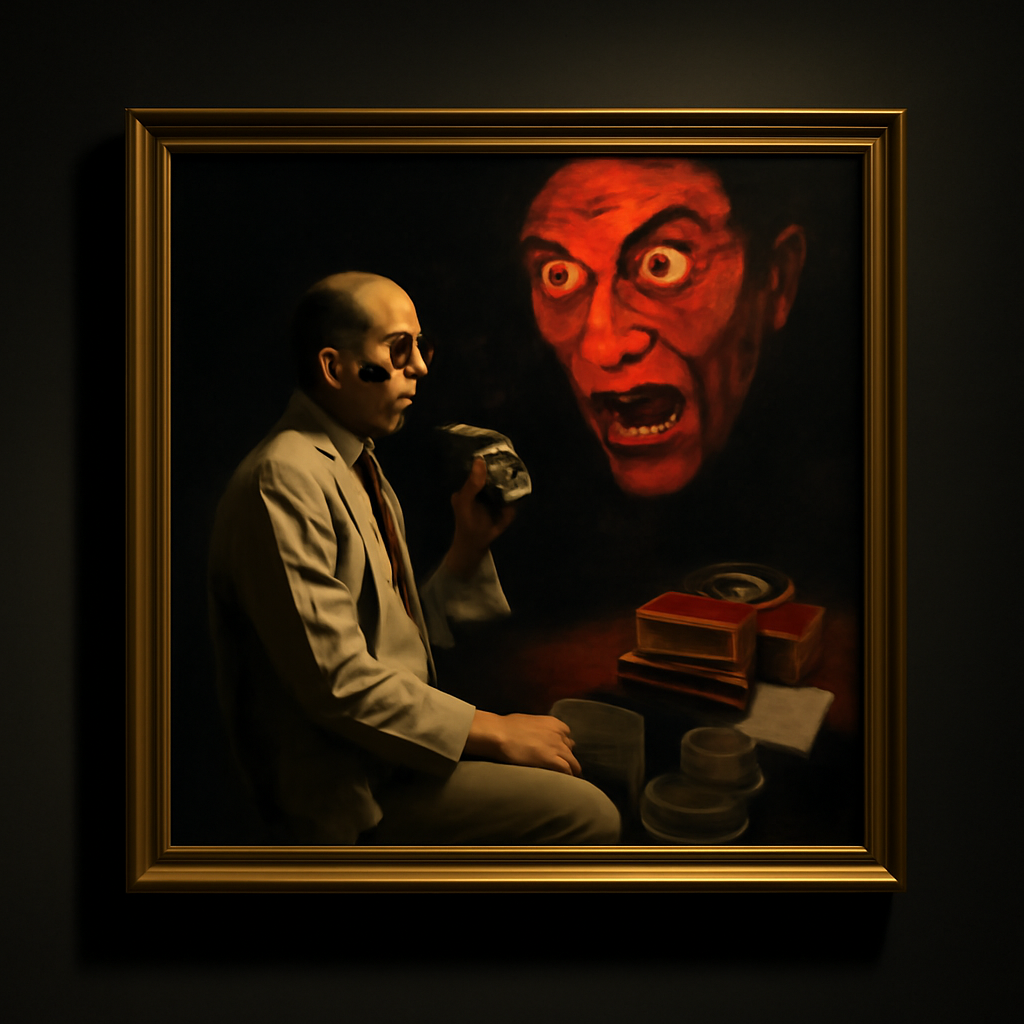
Hunter S. Thompson: Fear, Loathing, and the Birth of Gonzo Journalism
Hunter S. Thompson turned reporting into a collision of fact, confession, satire, and chaos. Born in Kentucky in 1937, he wrote with the speed and fury of someone chasing a moving target. His breakthrough came with “Hell’s Angels,” an immersive account of the California motorcycle gang. Then came “Fear and Loathing in Las Vegas,” a hallucinatory road story that made his name—and blurred the line between journalism and wild fiction.
Thompson called his style “Gonzo,” a form of reporting in which the writer becomes part of the story. From the 1960s onward, he attacked political power, police culture, celebrity, and the American dream with savage humor. His work was fueled by drugs, alcohol, danger, and a fierce belief that writing should leave a mark. He died in 2005, but his voice still echoes wherever reporters turn personal experience into a lens on a broken world.
✨
Wonder Moment
“Hunter S. Thompson turned the journalist from a hidden observer into a character inside the story. ”
Reflect
When does witnessing become participation, and can a reporter ever describe reality without changing it?
1 source·Developing confidence·Investigated 8 Aug 2026(19 days ago)·Source-verified·May need refresh
Your next question, in
Visual Trail
See Hunter S. Thompson: Fear, Loathing, and the Birth of Gonzo Journalism
A guided visual explanation assembled from QE artwork and sourced documentary images.
01 / 05
QE visual interpretation
Frame 01
Hunter S. Thompson: Fear, Loathing, and the Birth of Gonzo Journalism
Hunter S. Thompson invented Gonzo journalism, blending fearless reporting, personal chaos, and savage political satire.
Image provenance and limitation
Source: AI-generated visual interpretation
Creator: Question Everything
Limitation: This image explains or evokes the subject. It is not documentary evidence and should not be used to verify a factual claim.
Evidence
What do we know?
Verified claims with confidence scoring and cited sources.
2 of 3 findings need extra caution. Finding 1, Finding 3 rest on weaker sourcing than the other findings.
Living footnotes
Claims remain in the reading flow. Select a citation number to inspect the source behind it.
01
HistoricalNot confirmed
Hunter S. Thompson helped establish Gonzo journalism as a highly personal form of reporting.
Thompson’s reporting placed his own voice, instincts, and misadventures inside the story rather than keeping him behind an invisible professional curtain. His work on the Hells Angels and his later writing about American politics and culture made that approach famous. In this style, the writer is not simply recording events. The writer becomes part of the pressure system being observed, turning journalism into something closer to lived narrative.
02
HistoricalSupported
Fear and Loathing in Las Vegas brought Thompson wide public attention in 1971.
In 1971, Fear and Loathing in Las Vegas placed Thompson at the centre of literary and cultural attention. The book’s journey through the American West became more than a chaotic travel story: it became a savage examination of the broken promises of 1960s counterculture and the polished machinery of mass tourism. Thompson’s wild narrator is both witness and suspect, chasing the American Dream while showing its strange, glittering underside.
03
HistoricalNot confirmed
Thompson covered George McGovern’s 1972 presidential campaign for Rolling Stone.
Thompson’s political reporting carried the same volatile energy as his travel writing. He covered George McGovern’s 1972 campaign for Rolling Stone in Fear and Loathing on the Campaign Trail ’72, making the reporter’s personality part of the political spectacle. The result was not neutral stenography. It was an intimate, furious account of campaigns as theatre, ambition, exhaustion, and human weakness—seen from inside the travelling machine.
The complete record below preserves every citation, confidence input and recorded limitation.
Read the full evidence record3 findings · citations · limitations
Evidence review3 findings1 openable sources
01
Finding 1 of 3HistoricalNeeds caution
0/0 verified
Hunter S. Thompson helped establish Gonzo journalism as a highly personal form of reporting.
Thompson’s reporting placed his own voice, instincts, and misadventures inside the story rather than keeping him behind an invisible professional curtain. His work on the Hells Angels and his later writing about American politics and culture made that approach famous. In this style, the writer is not simply recording events. The writer becomes part of the pressure system being observed, turning journalism into something closer to lived narrative.
Not confirmedmodel score 30%
Scored as if sourced, but every citation failed verification.
NO SURVIVING CITATION
›View sources and limits— limits
Supporting passage
Thompson’s reporting placed his own voice, instincts, and misadventures inside the story rather than keeping him behind an invisible professional curtain. His work on the Hells Angels and his later writing about American politics and culture made that approach famous. In this style, the writer is not simply recording events. The writer becomes part of the pressure system being observed, turning journalism into something closer to lived narrative.
Citations (0 of 2 survived verification)
Nothing openable. Every citation was removed by provenance validation.
What limits this
All 2 citations on this claim failed verification and were removed. Nothing openable supports it.
02
Finding 2 of 3Historical
0/1 verified
Fear and Loathing in Las Vegas brought Thompson wide public attention in 1971.
In 1971, Fear and Loathing in Las Vegas placed Thompson at the centre of literary and cultural attention. The book’s journey through the American West became more than a chaotic travel story: it became a savage examination of the broken promises of 1960s counterculture and the polished machinery of mass tourism. Thompson’s wild narrator is both witness and suspect, chasing the American Dream while showing its strange, glittering underside.
Supportedmodel score 93%
A single peer-reviewed source. No independent corroboration.
PRIMARY STUDY
›View sources and limits— 1 citation, limits
Supporting passage
In 1971, Fear and Loathing in Las Vegas placed Thompson at the centre of literary and cultural attention. The book’s journey through the American West became more than a chaotic travel story: it became a savage examination of the broken promises of 1960s counterculture and the polished machinery of mass tourism. Thompson’s wild narrator is both witness and suspect, chasing the American Dream while showing its strange, glittering underside.
1 of 2 citations failed verification and are not shown.
Rests on a single source. No independent corroboration.
The generator scored this 93%, which would read as “Established”. Its citations reach only “Supported”, so that is what is shown.
03
Finding 3 of 3HistoricalNeeds caution
0/0 verified
Thompson covered George McGovern’s 1972 presidential campaign for Rolling Stone.
Thompson’s political reporting carried the same volatile energy as his travel writing. He covered George McGovern’s 1972 campaign for Rolling Stone in Fear and Loathing on the Campaign Trail ’72, making the reporter’s personality part of the political spectacle. The result was not neutral stenography. It was an intimate, furious account of campaigns as theatre, ambition, exhaustion, and human weakness—seen from inside the travelling machine.
Not confirmedmodel score 30%
Scored as if sourced, but every citation failed verification.
NO SURVIVING CITATION
›View sources and limits— limits
Supporting passage
Thompson’s political reporting carried the same volatile energy as his travel writing. He covered George McGovern’s 1972 campaign for Rolling Stone in Fear and Loathing on the Campaign Trail ’72, making the reporter’s personality part of the political spectacle. The result was not neutral stenography. It was an intimate, furious account of campaigns as theatre, ambition, exhaustion, and human weakness—seen from inside the travelling machine.
Citations (0 of 2 survived verification)
Nothing openable. Every citation was removed by provenance validation.
What limits this
All 2 citations on this claim failed verification and were removed. Nothing openable supports it.
Interactive Exploration
Touch, drag, and discover
These visualizations respond to your curiosity. Interact to go deeper.
timeline
A Life Moving Toward Gonzo
Loading timeline…
relationship map
The Gonzo Engine
Mapping relationships…
Drag nodes to rearrange — tap for details
Visual Gallery
Images & artifacts
Historical images, diagrams, and visual knowledge from Wikimedia Commons.
Perspectives
How is this interpreted?
Enter a viewpoint. Notice what it reveals, what it leaves out, and whether it changes the question for you.
The EmpiricistScientific viewpointLive tension
From a research perspective, Thompson is valuable because his work exposes the limits of detached observation. His reporting offers rich firsthand material, but it also makes bias impossible to ignore. The narrator selects, exaggerates, and interprets. That does not make the account useless; it makes the method visible. Readers can study both the event and the storyteller’s effect on it, like watching an experiment in which the observer leaves fingerprints on every result.
What this lens notices
01The narrator’s presence is part of the evidence.
02Personal reporting reveals choices that conventional prose can hide.
03A vivid account still needs checking against other sources.
Application
Why does this matter to you?
Personal reflections and applications for your life.
Thought experimentSelf-Reflection
When have your feelings changed the way you described an event?
Why it changes the question
This matters because every account has a point of view, even when it sounds calm and factual. Spotting your own angle can make your judgments clearer and fairer.
Try this
Write two short descriptions of the same event: one from your viewpoint and one from another person’s.
Media
QE Smart Glass
Curated media selected for this investigation.
QE Glass
YOUTUBE
Hunter S. Thompson - Gonzo Extraordinaire
Biographics
Check my other channel TodayIFoundOut! https://www.youtube.com/user/TodayIFoundOut →Subscribe for new videos four times ...
QE Glass
YOUTUBE
The Terrible Paradox of Being a Creative Person - Hunter S. Thompson
Pursuit of Wonder
Get a free 7-day trial of Imprint and 20% off an annual membership using this link: https://imprintapp.com/wonder or scan the QR ...
QE Glass
YOUTUBE
Hunter S. Thompson Omnibus 1978
frankensplean
BBC program Omnibus features Nigel Finch's 50-minute 1978 documentary of Hunter S. Thompson and Ralph Steadman, with ...
QE Glass
YOUTUBE
Hunter S. Thompson speaking at UCLA 2/24/1984
UCLA Irv and Xiaoyan Drasnin Communication Archive
From the archives of the UCLA Campus Events Commission. Digitized 2015. The views and ideas expressed in these videos are ...
QE Glass
YOUTUBE
The Man Who Changed Journalism
Ryan Hollinger
PLEDGE YOUR SUPPORT ▻ https://www.patreon.com/ryanhollinger SUBSCRIBE ▻ http://www.youtube.com/user/himynames.
QE Glass
YOUTUBE
How to Write Like Hunter S. Thompson
Entertain The Elk
In this video essay, learn how famous American author, Hunter S. Thompson, honed his Gonzo writing style and what made it so ...
QE Glass
YOUTUBE
Hunter S Thompson - More Loathing and Fear - Biography Documentary
Professor Graeme Yorston
Hunter S Thompson was the creator of Gonzo journalism, a literary outlaw who rode with the Hell's Angels and partied like there ...
QE Glass
YOUTUBE
Hunter S Thompson - A Life of Fear and Loathing - Biography Documentary
Professor Graeme Yorston
Hunter S Thompson was the creator of Gonzo journalism, a literary outlaw who rode with the Hell's Angels and partied like there ...
QE Glass
YOUTUBE
Hunter S. Thompson meets a Hell's Angel, 1967 | CBC
CBC
In this clip from 1967, Hunter S.Thompson comes face to face with a member of the Hell's Angels. Thompson became known ...
QE Glass
YOUTUBE
Hunter S. Thompson on Outlaws
Blank on Blank
I keep my mouth shut now. I've turned into a professional coward.” - Hunter S. Thompson in 1967 As told to Studs Terkel ...
QE Glass
YOUTUBE
Hunter S. Thompson on His Writing Process
The Narrative Art
Hunter S. Thompson on His Writing Process. The best chronicle of drug-soaked, addle-brained, rollicking good times ever ...
QE Glass
YOUTUBE
Hunter S. Thompson and the philosophy of gonzo journalism
Keskesay
In this video I am looking at Hunter S. Thompsons life and how he developed the gonzo style of writing specifically in journalism ...
QE Glass
YOUTUBE
Hunter S. Thompson Interview on Gonzo Journalism (April 16, 1975)
UGA Brown Media Archives
Harrison Salisbury sits down with Dr. Thompson for an interview discussing his writing style and process. Part of the journalism ...
Connected context
Connected entities
The people, places, concepts, and events that matter here.
Keep Going
Where this leads
Questions this investigation opens up — and what QE has already looked into.
No AI help here — no suggestions, no autocomplete, nothing finishing your sentences. That is deliberate. Working out what you think is effortful, and the effort is the part that changes you: reasoning is trained like a muscle, and a muscle that is always carried gets weaker. Let something else do the thinking and you keep the answer but lose the capacity to have reached it.
Write your current position.
Not what the page says. What you think, having read it.0 words · Nothing written yet.
Sign in to leave a mark. Your draft is saved here in the meantime.