Imagine sitting in a glass cabin, dangling hundreds of feet above a roaring ocean. You are commanding a machine that lifts loads as heavy as blue whales onto a metal island. Landing a job as an offshore crane operator is a thrilling career move, but it is not a job you can just walk into. It requires a mix of nerves of steel, specialized training, and starting from the bottom.
To get there, you first need to prove your skills on dry land. Most offshore operators spend years working construction sites or ports first. Once you have the basic crane licenses, you must pass intense safety courses, including how to escape a sinking helicopter. It is a demanding path, but it rewards you with incredible ocean views, high pay, and weeks of free time between shifts.
“Offshore crane operators must time their lifts to the rhythm of the ocean waves, catching a rising supply boat at its highest point to prevent the cargo from snapping the crane's steel cables.”
Reflect
If technology eventually automates these high-stakes ocean lifts, will we lose the unique human intuition needed to read the unpredictable sea?
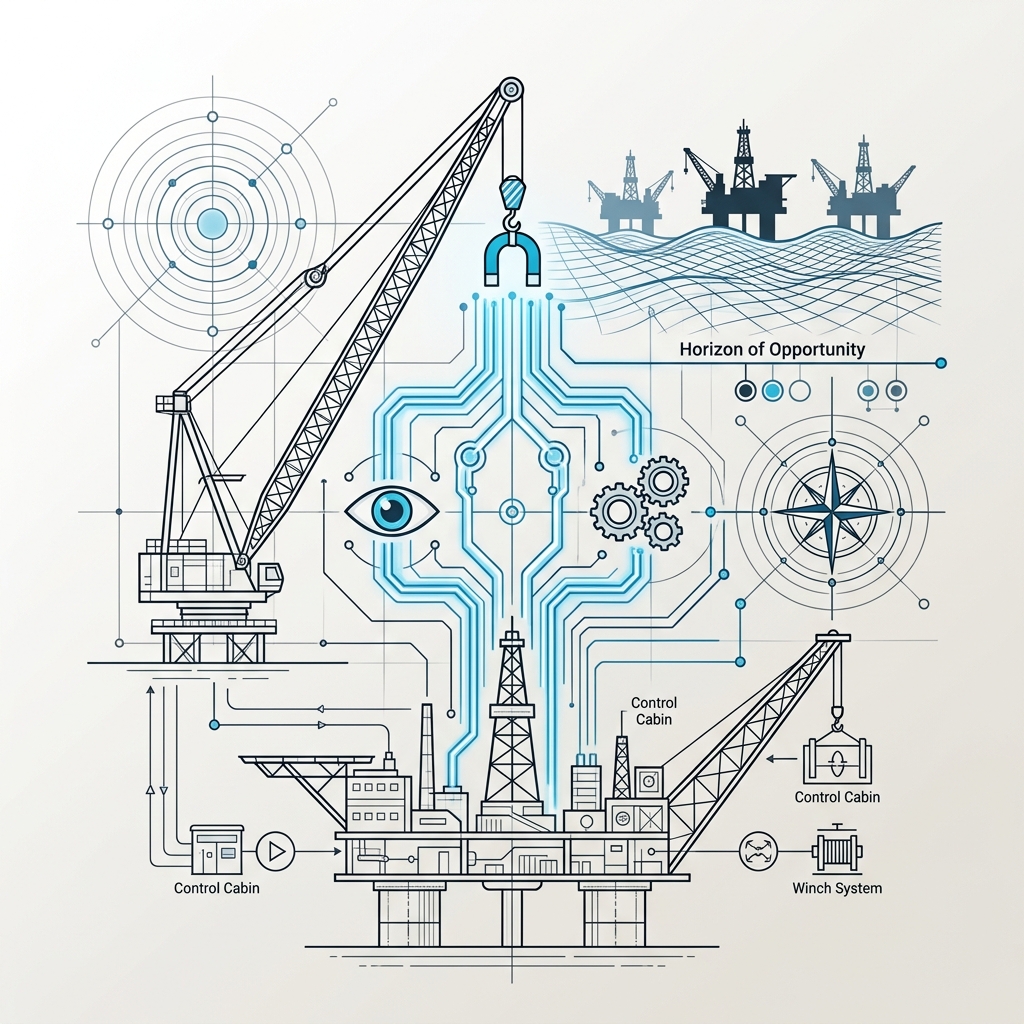
A guided visual explanation assembled from QE artwork and sourced documentary images.
01 / 02
QE visual interpretation
Frame 01
How to Land an Offshore Crane Operator Job
To get an offshore crane job, you need land-based crane experience, specialized offshore safety certifications, and a lot of grit.
Image provenance and limitation
Source: AI-generated visual interpretation
Creator: Question Everything
Limitation: This image explains or evokes the subject. It is not documentary evidence and should not be used to verify a factual claim.
Evidence
What do we know?
Verified claims with confidence scoring and cited sources.
Living footnotes
Claims remain in the reading flow. Select a citation number to inspect the source behind it.
01
ObservationalNot confirmed
Transitioning from land-based crane operating to offshore requires specialized survival and safety certifications.
Working on the ocean is dangerous. To get an offshore job, you cannot just know how to drive a crane. You must pass special safety courses. These include BOSIET or HUET, which teach you how to escape a helicopter that has crashed underwater. You also need basic offshore safety training like RigPass or Safe Gulf. These certificates show employers you can survive at sea before you even touch a crane control.
02
ObservationalNot confirmed
Employers require specific multi-stage crane operating certifications and hundreds of hours of documented hands-on practice.
You cannot just jump onto an offshore rig crane. You need a formal crane license like API RP 2D or an OPITO Stage 1 certificate. Standard training requires at least 150 hours of logged hands-on practice. The first 25 hours are strictly limited to basic lifts on the main deck. You are not allowed to lift anything from moving boats until you prove you can safely handle emergency load-lowering.
03
ObservationalNot confirmed
Landing an offshore crane job typically requires several years of experience and passing strict medical screenings.
Offshore rigs are isolated and demanding. Most hiring companies look for operators with two to three years of experience. You also have to pass a tough physical exam. Doctors will test your vision, color blindness, hearing, and reflexes. Because you are working high up on a moving platform, you must be in top physical shape to ensure you can handle the intense mental and physical stress.
The complete record below preserves every citation, confidence input and recorded limitation.
Read the full evidence record3 findings · citations · limitations
Evidence review3 findings8 openable sources
01
Finding 1 of 3Observational
0/2 verified
Transitioning from land-based crane operating to offshore requires specialized survival and safety certifications.
Working on the ocean is dangerous. To get an offshore job, you cannot just know how to drive a crane. You must pass special safety courses. These include BOSIET or HUET, which teach you how to escape a helicopter that has crashed underwater. You also need basic offshore safety training like RigPass or Safe Gulf. These certificates show employers you can survive at sea before you even touch a crane control.
Not confirmedmodel score 30%
No source survived verification. Treat as unconfirmed.
REFERENCE ×2
›View sources and limits— 2 citations, limits
Supporting passage
Working on the ocean is dangerous. To get an offshore job, you cannot just know how to drive a crane. You must pass special safety courses. These include BOSIET or HUET, which teach you how to escape a helicopter that has crashed underwater. You also need basic offshore safety training like RigPass or Safe Gulf. These certificates show employers you can survive at sea before you even touch a crane control.
QE used this source because its retrieved passage directly addresses the claim.
“| | | | --- | | Title | CRANE OPERATOR - OFFSHORE GOM | | Category | Oil & Gas | | Description | ACTIVELY RECRUITING FOR POTENTIAL TEMPORARY & FULL TIME POSITIONS! CRANE OPERATOR JOB SUMMARY: Operate the rig’s cranes in a safe and efficient manner working within the design specifications and environmental limits of th…”
This passage was selected for relevance. It has not been checked against the claim.
QE used this source because its retrieved passage directly addresses the claim. It appeared in 3 complementary searches.
“A typical certification path looks like this: Starting on land-based cranes before moving offshore is a practical route that many operators take. It builds your core skills and hours before you make the transition to more complex offshore environments. ## What does an offshore crane operator do”
This passage was selected for relevance. It has not been checked against the claim.
Retrieved 30/09/2026
What limits this
No peer-reviewed source among the citations.
02
Finding 2 of 3Observational
0/2 verified
Employers require specific multi-stage crane operating certifications and hundreds of hours of documented hands-on practice.
You cannot just jump onto an offshore rig crane. You need a formal crane license like API RP 2D or an OPITO Stage 1 certificate. Standard training requires at least 150 hours of logged hands-on practice. The first 25 hours are strictly limited to basic lifts on the main deck. You are not allowed to lift anything from moving boats until you prove you can safely handle emergency load-lowering.
Not confirmedmodel score 30%
No source survived verification. Treat as unconfirmed.
REFERENCE ×2
›View sources and limits— 2 citations, limits
Supporting passage
You cannot just jump onto an offshore rig crane. You need a formal crane license like API RP 2D or an OPITO Stage 1 certificate. Standard training requires at least 150 hours of logged hands-on practice. The first 25 hours are strictly limited to basic lifts on the main deck. You are not allowed to lift anything from moving boats until you prove you can safely handle emergency load-lowering.
QE used this source because its retrieved passage directly addresses the claim.
“r Equivalent 3+ years experience as offshore Crane Operator on semisubmersibles and/or drillships 1-2 years experience with mechanical, electric, hydraulic, lattice and knuckle boom pedestal cranes as well as experience with gantry and bridge cranes. Level/Stage 3 Crane Certificate (API RP 2D certification) Must pass…”
This passage was selected for relevance. It has not been checked against the claim.
QE used this source because its retrieved passage directly addresses the claim. It appeared in 2 complementary searches.
“Qualify the 3rd day’s theoretical examination with a minimum cut-score of 70% and practical assessment with a minimum cut-score of 80%. A minimum of 150 hours of hands-on training should be conducted before the trainee can take a proficiency test to gain certification as a qualified Crane Operator. The hands-on traini…”
This passage was selected for relevance. It has not been checked against the claim.
Retrieved 30/09/2026
What limits this
No peer-reviewed source among the citations.
03
Finding 3 of 3Observational
0/4 verified
Landing an offshore crane job typically requires several years of experience and passing strict medical screenings.
Offshore rigs are isolated and demanding. Most hiring companies look for operators with two to three years of experience. You also have to pass a tough physical exam. Doctors will test your vision, color blindness, hearing, and reflexes. Because you are working high up on a moving platform, you must be in top physical shape to ensure you can handle the intense mental and physical stress.
Not confirmedmodel score 30%
No source survived verification. Treat as unconfirmed.
REFERENCE ×4
›View sources and limits— 4 citations, limits
Supporting passage
Offshore rigs are isolated and demanding. Most hiring companies look for operators with two to three years of experience. You also have to pass a tough physical exam. Doctors will test your vision, color blindness, hearing, and reflexes. Because you are working high up on a moving platform, you must be in top physical shape to ensure you can handle the intense mental and physical stress.
QE used this source because its retrieved passage directly addresses the claim.
“Also, performs and directs lifting operations. | | Position Requirements | PREREQUISITES/QUALIFICATIONS: High School Diploma or Equivalent 3+ years experience as offshore Crane Operator on semisubmersibles and/or drillships 1-2 years experience with mechanical, electric, hydraulic, lattice and knuckle boom pedestal cr…”
This passage was selected for relevance. It has not been checked against the claim.
QE used this source because its retrieved passage directly addresses the claim. It appeared in 3 complementary searches.
“To work as an offshore crane operator, you typically need a combination of a recognized crane operator certificate, offshore safety training, and documented practical experience. Most employers and crewing agencies also require medical fitness certification and, depending on the region, additional industry-specific en…”
This passage was selected for relevance. It has not been checked against the claim.
QE used this source because its retrieved passage directly addresses the claim. It appeared in 2 complementary searches.
“mage Reference standards QP-PAI-STD-005: 2020 Rev 0, Qatar Energy Standard for Lifting Equipment and operations ISO 15513: 2000, Cranes — Competency requirements for crane drivers (operators), slingers, signallers and assessors Applicable pre-requisite D-I-NP-LDAA-17024-09 Experience Minimum of three (3) years of expe…”
This passage was selected for relevance. It has not been checked against the claim.
QE used this source because its retrieved passage directly addresses the claim.
“at least 2-3 years of offshore crane operating experience. Valid crane operator certification/license required. High School Diploma or equivalent preferred.”
This passage was selected for relevance. It has not been checked against the claim.
Retrieved 30/09/2026
What limits this
No peer-reviewed source among the citations.
The reference archive
Sources & Further Reading
Continue exploring the research, reporting and reference material available on this subject.
These were found while researching this question but are not used as evidence for any claim above.
These visualizations respond to your curiosity. Interact to go deeper.
process flow
Your Step-by-Step Path to the Rig
Get Basic Crane Training
Pass the Medical Exam
Earn Sea Safety Certificates
Log Hands-on Hours
Apply for Offshore Roles
statistics card
Career Outlook and Requirements
$80,000 - $130,000
Average Annual Salary
Top-tier operators earn high pay, with food, housing, and travel fully covered by employers while at sea.
150 Hours
Minimum Hands-On Training
Required practice time before taking your practical proficiency test for offshore certification.
3 Years
Preferred Experience
Most major offshore companies require at least three years of operating experience for senior rig roles.
Contested
This one is genuinely argued over
Both cases are put as strongly as their own supporters would put them, from evidence rather than from who holds the view. Read them and decide for yourself.
The case that it's true
The smartest way to get offshore is to start with land-based cranes. Building up your hours on construction sites or ports is easier and cheaper. It lets you master the basic physics of lifting without the added danger of moving waves. Employers trust land-trained operators who already have thousands of hours under their belt. Once you have solid land experience, getting your offshore safety papers is a quick step to high-paying rig jobs.
What this rests on
Easier access to entry-level crane training on land
Lower initial training costs compared to marine schools
Strong foundation in crane mechanics and rigging physics
The case against
Starting on land is a waste of time if your goal is the ocean. Land cranes do not prepare you for the constant sway of a ship or the pressure of boat-to-boat transfers. You should go straight into marine-specific schools. Getting your OPITO Stage 1 or API RP 2D certification immediately saves years of irrelevant land work. Rigs operate differently than construction sites, and direct marine training makes you a safer offshore operator faster.
What this rests on
Direct focus on wave motion and dynamic load factors
Faster path to high offshore salaries
Immediate familiarity with offshore rig culture and safety protocols
Application
Why does this matter to you?
Personal reflections and applications for your life.
Thought experimentPractical
Are you ready for the physical and mental demands of isolated rig life?
Why it changes the question
Offshore work means living away from family for weeks in a high-stress environment. You must decide if the high pay is worth the isolation and long shifts.
Try this
Look up a typical 'two weeks on, two weeks off' rotation schedule to see how it would fit your lifestyle.
Media
QE Smart Glass
Curated media selected for this investigation.
QE Glass
YOUTUBE
How to Become an Offshore Crane Operator (Harder Than You Think)
OffshoreLyfe
How do you actually become an offshore crane operator? Not the way most people think. There's no "take a course, get your card, ...
QE Glass
YOUTUBE
What New Rig Workers Go Through Living Offshore
Rig Insider
The offshore life looks dramatic from the outside, but the real story is far stranger and more demanding. This video follows a new ...
QE Glass
YOUTUBE
PART-1 Podcast with Offshore Crane Operator | High Salary and High Risk | Courses, Career, salary |
Sailor Avinash Singh
Vandemataram guys This Video is for those who wanted to start there Carrier as Crane Operators Including (AB, OS , BOSUN,) in ...
QE Glass
YOUTUBE
How to become a Crane Operator….three distinct paths to take
Timothy Phillips
How to become a Crane Operator! Three distinct way to break into the industry. On the job training, Crane School and The IUOE ...
QE Glass
YOUTUBE
Day in the Life of a Crane Operator
Valaris Limited
What does a typical day look like for a Crane Operator offshore? Get up close with Jacob Keyes and learn about what a typical ...
QE Glass
YOUTUBE
THESE ARE THE HIGHEST PAYING ENTRY LEVELS RANK OFFSHORE #offshorejobs #oilandgas #offshorelife
HITCHLIFE
Think you need years of experience to make serious money offshore? Think again. These are some of the entry-level ...
QE Glass
YOUTUBE
Maersk Resolve. A day in the life of an Offshore Crane Operator
Abou Benadam
This is one of the best Crane Operators I have every had as my Boss in all my years Offshore. Pristine man mangement skills, rare ...
QE Glass
PODCAST
Careers Offshore Podcast
Various
Listen to interviews with veteran rig workers sharing tips on how to break into the industry and survive the lifestyle.
Keep Going
Where this leads
Questions this investigation opens up — and what QE has already looked into.
No AI help here — no suggestions, no autocomplete, nothing finishing your sentences. That is deliberate. Working out what you think is effortful, and the effort is the part that changes you: reasoning is trained like a muscle, and a muscle that is always carried gets weaker. Let something else do the thinking and you keep the answer but lose the capacity to have reached it.
Write your current position.
Not what the page says. What you think, having read it.0 words · Nothing written yet.
Sign in to leave a mark. Your draft is saved here in the meantime.