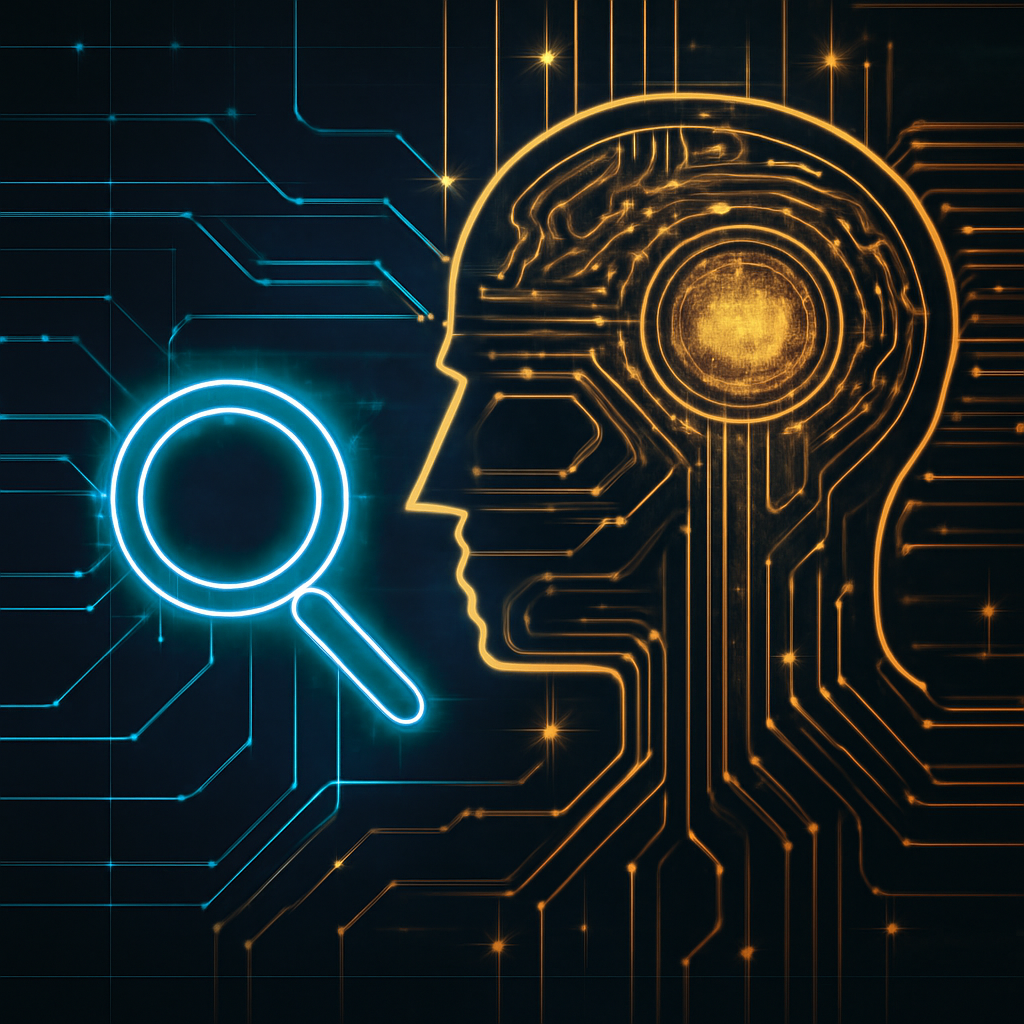
The short answer is: just once. The moment you type a single word into a search bar, the internet starts looking back at you. It does not wait for you to search ten or twenty times. Instantly, silent trackers behind the screen note down your device type, your general location, and the exact second you clicked. They use this tiny crumb of data to start building a digital portrait of who you are.
Think of it like walking into a local shop. You do not just look at an item. The shopkeeper instantly notes your shoes, your accent, and what you stared at longest. By your second or third search, the system is actively digging through your past online behaviour. It does this to guess what you might buy next. It is a silent, instant mirror.
✨
Wonder Moment
“The moment you start typing, search engines are already guessing your thoughts to predict what you want before you even finish.”
Reflect
If computers get too good at predicting our next move, will we still have free will, or will we just follow the paths they lay out for us?
1 source·Established confidence·Investigated 14 Aug 2026(13 days ago)·Source-verified·May need refresh
Your next question, in
Visual Trail
See How Search Engines Search You Back
A guided visual explanation assembled from QE artwork and sourced documentary images.
01 / 02
QE visual interpretation
Frame 01
How Search Engines Search You Back
The moment you search for something even once, the algorithm instantly starts searching your data to figure out who you are.
Image provenance and limitation
Source: AI-generated visual interpretation
Creator: Question Everything
Limitation: This image explains or evokes the subject. It is not documentary evidence and should not be used to verify a factual claim.
Evidence
What do we know?
Verified claims with confidence scoring and cited sources.
2 of 3 findings need extra caution. Finding 1, Finding 2 rest on weaker sourcing than the other findings.
Living footnotes
Claims remain in the reading flow. Select a citation number to inspect the source behind it.
01
ObservationalNot confirmed
Modern search engines try to guess your actual question from just a single word.
When you search, you do not just get a list of links. The system actively guesses what you actually mean, even if you only type one word. It does this to make search feel fast. But it also means the system is constantly building a model of your intent. It limits what you see to just a few highly targeted results. This makes it feel like the machine is looking back at you and reading your mind.
02
ObservationalNot confirmed
Users sometimes find mysterious searches in their history that they never actually typed.
Sometimes people notice strange search terms appearing in their history. They see phrases they never looked up. This can make it feel like the computer is searching them or acting on its own. While it can be a simple bug or account sync issue, it shows how closely our personal accounts track and store every single action. When the system glitches, the illusion of a private, passive search bar quickly breaks down.
03
AcademicSupported
The brain itself operates as a prediction machine that constantly tries to anticipate incoming information.
It is not just search engines that 'search you back' by predicting your moves. Your own brain does the exact same thing. Scientists show that our brains are prediction machines. They do not just wait for sensory inputs like sight or sound. Instead, they constantly guess what is about to happen next to save energy. When you feel like a search engine is anticipating you, you are seeing a digital version of your brain's own shortcut system.
The complete record below preserves every citation, confidence input and recorded limitation.
Read the full evidence record3 findings · citations · limitations
Evidence review3 findings1 openable sources
01
Finding 1 of 3ObservationalNeeds caution
0/0 verified
Modern search engines try to guess your actual question from just a single word.
When you search, you do not just get a list of links. The system actively guesses what you actually mean, even if you only type one word. It does this to make search feel fast. But it also means the system is constantly building a model of your intent. It limits what you see to just a few highly targeted results. This makes it feel like the machine is looking back at you and reading your mind.
Not confirmedmodel score 30%
Scored as if sourced, but every citation failed verification.
NO SURVIVING CITATION
›View sources and limits— limits
Supporting passage
When you search, you do not just get a list of links. The system actively guesses what you actually mean, even if you only type one word. It does this to make search feel fast. But it also means the system is constantly building a model of your intent. It limits what you see to just a few highly targeted results. This makes it feel like the machine is looking back at you and reading your mind.
Citations (0 of 1 survived verification)
Nothing openable. Every citation was removed by provenance validation.
What limits this
All 1 citation on this claim failed verification and were removed. Nothing openable supports it.
02
Finding 2 of 3ObservationalNeeds caution
0/0 verified
Users sometimes find mysterious searches in their history that they never actually typed.
Sometimes people notice strange search terms appearing in their history. They see phrases they never looked up. This can make it feel like the computer is searching them or acting on its own. While it can be a simple bug or account sync issue, it shows how closely our personal accounts track and store every single action. When the system glitches, the illusion of a private, passive search bar quickly breaks down.
Not confirmedmodel score 80%
Scored as if sourced, but every citation failed verification.
NO SURVIVING CITATION
›View sources and limits— limits
Supporting passage
Sometimes people notice strange search terms appearing in their history. They see phrases they never looked up. This can make it feel like the computer is searching them or acting on its own. While it can be a simple bug or account sync issue, it shows how closely our personal accounts track and store every single action. When the system glitches, the illusion of a private, passive search bar quickly breaks down.
Citations (0 of 1 survived verification)
Nothing openable. Every citation was removed by provenance validation.
What limits this
All 1 citation on this claim failed verification and were removed. Nothing openable supports it.
The generator scored this 80%, which would read as “Supported”. Its citations reach only “Unresolved”, so that is what is shown.
03
Finding 3 of 3Academic
1
0/1 verified
The brain itself operates as a prediction machine that constantly tries to anticipate incoming information.
It is not just search engines that 'search you back' by predicting your moves. Your own brain does the exact same thing. Scientists show that our brains are prediction machines. They do not just wait for sensory inputs like sight or sound. Instead, they constantly guess what is about to happen next to save energy. When you feel like a search engine is anticipating you, you are seeing a digital version of your brain's own shortcut system.
Supportedmodel score 95%
A single peer-reviewed source. No independent corroboration.
PRIMARY STUDY
›View sources and limits— 1 citation, limits
Supporting passage
It is not just search engines that 'search you back' by predicting your moves. Your own brain does the exact same thing. Scientists show that our brains are prediction machines. They do not just wait for sensory inputs like sight or sound. Instead, they constantly guess what is about to happen next to save energy. When you feel like a search engine is anticipating you, you are seeing a digital version of your brain's own shortcut system.
Rests on a single source. No independent corroboration.
The generator scored this 95%, which would read as “Established”. Its citations reach only “Supported”, so that is what is shown.
Interactive Exploration
Touch, drag, and discover
These visualizations respond to your curiosity. Interact to go deeper.
process flow
How Search Engines Anticipate Your Next Move
The First Keystroke
The Quick Scan
The Math Guess
The Instant Feed
cause effect
The Echo Chamber of Personal Search
Causes — tap to reveal
Tap to reveal cause 1
Tap to reveal cause 2
↓
Perspectives
How is this interpreted?
Enter a viewpoint. Notice what it reveals, what it leaves out, and whether it changes the question for you.
The EmpiricistScientific viewpointEstablished lens
From a computer science view, search engines do not actually care about you as an individual. They use math to match your clicks with millions of other people. They track your IP address, location, and past clicks. This is not a personal investigation. It is just a massive statistical guessing game designed to keep you clicking. The machine is not watching you. It is just calculating you.
What this lens notices
01IP address and location tracking
02Statistical click matching
03Massive user database comparisons
Application
Why does this matter to you?
Personal reflections and applications for your life.
Thought experimentPractical
How often do you click the very first search result without looking at the others?
Why it changes the question
When we always trust the top result, we let the algorithm make choices for us. Breaking this habit helps keep your mind sharp and independent.
Try this
Next time you search, scroll past the first three results and click on something from the middle of the page.
Media
QE Smart Glass
Curated media selected for this investigation.
QE Glass
YOUTUBE
At 11:47 PM, A Cop Walked Into My Hospital Room And Whispered “Don’t Make A Sound”—Then My Daughter…
Revenge Dad
At 11:47 PM, A Cop Walked Into My Hospital Room And Whispered “Don't Make A Sound”—Then My Daughter… Welcome to ...
QE Glass
YOUTUBE
My Twin Brother Tried To End His Life Again — The People Who Tormented Him Will Pay
Revenge Dad
My Twin Brother Tried To End His Life Again — The People Who Tormented Him Will Pay Welcome to Revenge Dad. We are a ...
QE Glass
YOUTUBE
🔥His Tech Company Was Failing, But His Tech System Built a 200,000-Ton Aircraft Carrier for Just $1!
No AI help here — no suggestions, no autocomplete, nothing finishing your sentences. That is deliberate. Working out what you think is effortful, and the effort is the part that changes you: reasoning is trained like a muscle, and a muscle that is always carried gets weaker. Let something else do the thinking and you keep the answer but lose the capacity to have reached it.
Write your current position.
Not what the page says. What you think, having read it.0 words · Nothing written yet.
Sign in to leave a mark. Your draft is saved here in the meantime.