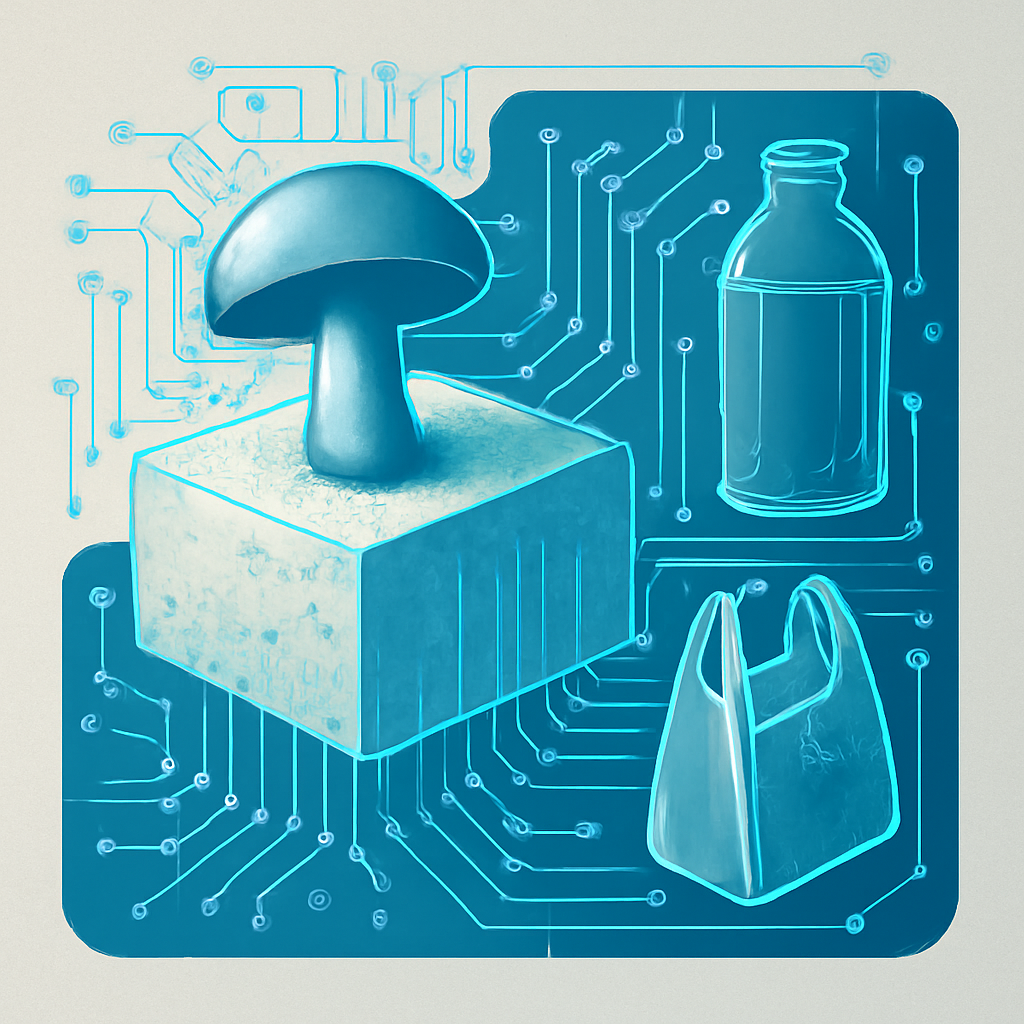
How Mushroom Packaging Can Help Cut Down Plastic Pollution
Plastic pollution is a huge problem. It piles up in oceans, parks, and landfills, and it takes hundreds of years to break down. Mushroom packaging offers a smart and natural way to fight this. Made from the roots of mushrooms, called mycelium, this packaging breaks down quickly and safely once you're done with it. Unlike plastic, it doesn’t leave harmful chemicals behind.
This packaging can be shaped to fit all sorts of products, from electronics to food. It’s grown around agricultural waste, turning trash into something useful. Big companies are starting to use it because it’s cheap, eco-friendly, and helps reduce the mountain of plastic waste we create every year. Using mushroom packaging means less plastic in the environment, cleaner oceans, and a healthier planet for the future.
See How Mushroom Packaging Can Help Cut Down Plastic Pollution
A guided visual explanation assembled from QE artwork and sourced documentary images.
01 / 02
QE visual interpretation
Frame 01
How Mushroom Packaging Can Help Cut Down Plastic Pollution
Mushroom packaging breaks down naturally and helps replace plastic, cutting pollution fast.
Image provenance and limitation
Source: AI-generated visual interpretation
Creator: Question Everything
Limitation: This image explains or evokes the subject. It is not documentary evidence and should not be used to verify a factual claim.
Evidence
What do we know?
Verified claims with confidence scoring and cited sources.
2 of 4 findings need extra caution. Finding 1, Finding 3 rest on weaker sourcing than the other findings.
Living footnotes
Claims remain in the reading flow. Select a citation number to inspect the source behind it.
01
ObservationalMixed evidence
Mushroom packaging is fully biodegradable and decomposes within weeks without leaving toxic residues.
Unlike plastics that can take hundreds of years to break down and often leave harmful chemicals, mushroom packaging naturally decomposes quickly. When disposed of, it turns into healthy soil, closing the loop by enriching the earth instead of polluting it. This makes mushroom packaging a much cleaner alternative for protecting products.
02
ObservationalSupported
Mushroom packaging uses mycelium, a natural fungal root, combined with agricultural waste, avoiding plastics and harmful chemicals.
Mushroom packaging is made by growing mycelium through leftover plant materials like hemp or corn husks. This natural process binds the materials into a strong, protective shape without needing plastic or synthetic glue. This method reduces reliance on fossil fuels and cuts pollution from manufacturing plastics.
03
StatisticalMixed evidence
Switching to mushroom packaging reduces carbon emissions compared to plastic production.
Producing mushroom packaging emits less carbon than making plastic packaging. Plastic comes from fossil fuels and requires energy-intensive processing. Mushroom packaging grows naturally with little energy input, cutting greenhouse gases and helping tackle climate change alongside plastic pollution.
04
ObservationalWell supported
Mushroom packaging provides natural cushioning that protects fragile items without plastic foam.
The structure of mycelium creates a lightweight but sturdy material that absorbs shocks. This makes mushroom packaging great for shipping delicate goods like electronics or glass. It replaces plastic bubble wrap and foam, which are major sources of plastic trash.
The complete record below preserves every citation, confidence input and recorded limitation.
Read the full evidence record4 findings · citations · limitations
Evidence review4 findings6 openable sources
01
Finding 1 of 4ObservationalNeeds caution
1/1 verified
Mushroom packaging is fully biodegradable and decomposes within weeks without leaving toxic residues.
Unlike plastics that can take hundreds of years to break down and often leave harmful chemicals, mushroom packaging naturally decomposes quickly. When disposed of, it turns into healthy soil, closing the loop by enriching the earth instead of polluting it. This makes mushroom packaging a much cleaner alternative for protecting products.
Mixed evidencemodel score 55%
Verification was mixed across 1 source.
REFERENCE
›View sources and limits— 1 citation, limits
Supporting passage
Unlike plastics that can take hundreds of years to break down and often leave harmful chemicals, mushroom packaging naturally decomposes quickly. When disposed of, it turns into healthy soil, closing the loop by enriching the earth instead of polluting it. This makes mushroom packaging a much cleaner alternative for protecting products.
QE used this source because its retrieved passage directly addresses the claim.
“In contrast, mushroom packaging reduces carbon emissions during production and fully biodegrades within weeks. Switching to mushroom packaging is one of the simplest ways to reduce waste in your daily life without sacrificing convenience. By choosing biodegradable materials, individuals and businesses can help protect…”
This passage was checked against the claim.
Retrieved 08/09/2026
What limits this
1 of 2 citations failed verification and are not shown.
Rests on a single source. No independent corroboration.
No peer-reviewed source among the citations.
Verification was mixed — some citations supported the claim and some did not.
02
Finding 2 of 4Observational
2/2 verified
Mushroom packaging uses mycelium, a natural fungal root, combined with agricultural waste, avoiding plastics and harmful chemicals.
Mushroom packaging is made by growing mycelium through leftover plant materials like hemp or corn husks. This natural process binds the materials into a strong, protective shape without needing plastic or synthetic glue. This method reduces reliance on fossil fuels and cuts pollution from manufacturing plastics.
Supportedmodel score 82%
2 sources agree, none peer-reviewed.
REFERENCE ×2
›View sources and limits— 2 citations, limits
Supporting passage
Mushroom packaging is made by growing mycelium through leftover plant materials like hemp or corn husks. This natural process binds the materials into a strong, protective shape without needing plastic or synthetic glue. This method reduces reliance on fossil fuels and cuts pollution from manufacturing plastics.
QE used this source because its retrieved passage directly addresses the claim.
“## What is Mushroom Packaging? Mushroom packaging is an environmentally friendly protective material that is created from the mycelium root-like structure of fungi, which is combined with agricultural byproducts such as hemp waste. The mycelium expands through the plant fibers and integrates them into a firm structure…”
This passage was checked against the claim.
Retrieved 08/09/2026
REFERENCEMushroom Packaging, mushroompackaging.comverifiedWhy QE used this
QE used this source because its retrieved passage directly addresses the claim.
“Include an image for extra impact. Optional button INQUIRE NOW ## Made by nature, Designed by you. Mushroom Packaging grows planet-friendly protective packaging by combining agricultural feedstock with the natural binding strength of mycelium, the root structure of mushrooms. We make packaging that puts the planet fir…”
This passage was checked against the claim.
Retrieved 08/09/2026
What limits this
No peer-reviewed source among the citations.
03
Finding 3 of 4StatisticalNeeds caution
1/1 verified
Switching to mushroom packaging reduces carbon emissions compared to plastic production.
Producing mushroom packaging emits less carbon than making plastic packaging. Plastic comes from fossil fuels and requires energy-intensive processing. Mushroom packaging grows naturally with little energy input, cutting greenhouse gases and helping tackle climate change alongside plastic pollution.
Mixed evidencemodel score 55%
Verification was mixed across 1 source.
REFERENCE
›View sources and limits— 1 citation, limits
Supporting passage
Producing mushroom packaging emits less carbon than making plastic packaging. Plastic comes from fossil fuels and requires energy-intensive processing. Mushroom packaging grows naturally with little energy input, cutting greenhouse gases and helping tackle climate change alongside plastic pollution.
QE used this source because its retrieved passage directly addresses the claim.
“ves no toxic residues and enriches the soil, making it a closed-loop solution for packaging. ### Environmental Impact Compared to Plastic Traditional plastics take hundreds of years to decompose and contribute to pollution, ocean damage, and greenhouse gas emissions. In contrast, mushroom packaging reduces carbon emis…”
This passage was checked against the claim.
Retrieved 08/09/2026
What limits this
1 of 2 citations failed verification and are not shown.
Rests on a single source. No independent corroboration.
No peer-reviewed source among the citations.
Verification was mixed — some citations supported the claim and some did not.
04
Finding 4 of 4Observational
2/2 verified
Mushroom packaging provides natural cushioning that protects fragile items without plastic foam.
The structure of mycelium creates a lightweight but sturdy material that absorbs shocks. This makes mushroom packaging great for shipping delicate goods like electronics or glass. It replaces plastic bubble wrap and foam, which are major sources of plastic trash.
Well supportedmodel score 90%
2 sources agree, 1 peer-reviewed.
REFERENCEPRIMARY STUDY
›View sources and limits— 2 citations, limits
Supporting passage
The structure of mycelium creates a lightweight but sturdy material that absorbs shocks. This makes mushroom packaging great for shipping delicate goods like electronics or glass. It replaces plastic bubble wrap and foam, which are major sources of plastic trash.
QE used this source because its retrieved passage directly addresses the claim.
“rials, individuals and businesses can help protect land and waterways from plastic pollution. ### Applications in Food and Consumer Goods Mushroom packaging is already used for food containers, protective shipping materials, and even electronics packaging. Its natural cushioning protects fragile items while being safe…”
QE used this as an authoritative first-party source.
“The fungi based mushroom packaging material can be considered as an alternative to conventional plastic and are cost competitive to any other standard foams.”
This passage was checked against the claim.
Retrieved 08/09/2026
What limits this
Nothing further is recorded. QE stores no methodology field, so absence here is not a clean bill of health.
The reference archive
Sources & Further Reading
Continue exploring the research, reporting and reference material available on this subject.
These were found while researching this question but are not used as evidence for any claim above.
These visualizations respond to your curiosity. Interact to go deeper.
process flow
How Mushroom Packaging is Made
Collect Agricultural Waste
Add Mycelium
Grow and Mold
Dry and Finish
statistics card
Environmental Benefits of Mushroom Packaging
Weeks
Time to biodegrade
Compared to hundreds of years for plastic
100%
Biodegradable
Breaks down fully without toxic residue
Lower
Carbon emissions during production
Compared to traditional plastic packaging
Contested
This one is genuinely argued over
Both cases are put as strongly as their own supporters would put them, from evidence rather than from who holds the view. Read them and decide for yourself.
The case that it's true
Mushroom packaging offers a real, scalable solution to plastic waste problems. Its natural materials break down quickly, reduce carbon emissions, and protect products well. As industries shift toward sustainability, mushroom packaging can help businesses reduce their plastic footprint and meet consumer demand for greener options.
What this rests on
Biodegrades rapidly unlike plastic
Uses renewable agricultural waste
Cuts greenhouse gas emissions in production
The case against
While promising, mushroom packaging faces challenges in cost, scalability, and durability. It may not suit all packaging needs, especially where water resistance or long shelf life is critical. Also, production capacity is still limited compared to plastics, slowing widespread adoption.
What this rests on
Higher production costs than plastic currently
Not ideal for wet or long-term packaging
Limited industrial scale compared to plastic
What both sides accept
Both supporters and critics agree mushroom packaging significantly reduces plastic pollution where it can replace plastic foams and wraps. It is biodegradable, made from natural materials, and less carbon-intensive. However, they also acknowledge it is not a full plastic replacement yet and needs further development.
Documented, and not in dispute
Mushroom packaging is compostable and eco-friendly
It works well for protective packaging of fragile goods
More research and scale are needed to broaden use
Application
Why does this matter to you?
Personal reflections and applications for your life.
Thought experimentPractical
How can you choose products with mushroom packaging or other biodegradable options?
Why it changes the question
Replacing plastic packaging in your daily shopping helps reduce plastic waste. Supporting brands that use mushroom packaging encourages more companies to adopt greener materials.
Try this
Look for products with mushroom or mycelium-based packaging and share your findings with friends to raise awareness.
Media
QE Smart Glass
Curated media selected for this investigation.
QE Glass
YOUTUBE
How to solve the world's plastic problem | BBC Ideas
BBC Ideas
Plastic is one of the most incredible materials in the modern world - but the way we use it damages the environment. What's the ...
QE Glass
YOUTUBE
Are We About to Replace Plastic with Mushrooms?
Energize This
The race to replace plastic with renewable and more sustainable alternatives is a global effort driven by the urgent need to ...
QE Glass
YOUTUBE
Amazing Eco-Friendly Production Process | Natural Mushroom Packaging vs EPS
IRON HAND TECH
Discover the amazing eco-friendly production process that turns agricultural waste into natural mushroom packaging — a 100% ...
QE Glass
YOUTUBE
What Is Mushroom Mycelium Packaging For Reducing Waste? - Your Organization Mentor
Your Organization Mentor
What Is Mushroom Mycelium Packaging For Reducing Waste? Are you curious about innovative solutions that help reduce waste ...
QE Glass
YOUTUBE
Get Rid of Traditional Plastic | Plastic from Mushrooms
Stories by Aradhana
Roha Biotech is a pioneering startup incubated at IIT Bombay, IIT Madras and riidl. Mycelium is nature's recycler. It breaks ...
QE Glass
YOUTUBE
Biodegradable packaging made from seaweed | UpLink
World Economic Forum
The company Oceanium makes plastic free packaging which fully degrades, effectively reducing the amount of waste sent to ...
QE Glass
YOUTUBE
Turning mushrooms into sustainable packaging
Grown Bio
Take a behind-the-scenes tour of the Grown bio factory! Discover the journey of creating our sustainable packaging, from raw ...
QE Glass
PODCAST
The Future of Packaging: Mycelium and Beyond
The Green Innovators Podcast
A discussion with experts on how mushroom packaging can help solve plastic pollution.
Keep Going
Where this leads
Questions this investigation opens up — and what QE has already looked into.
No AI help here — no suggestions, no autocomplete, nothing finishing your sentences. That is deliberate. Working out what you think is effortful, and the effort is the part that changes you: reasoning is trained like a muscle, and a muscle that is always carried gets weaker. Let something else do the thinking and you keep the answer but lose the capacity to have reached it.
Write your current position.
Not what the page says. What you think, having read it.0 words · Nothing written yet.
Sign in to leave a mark. Your draft is saved here in the meantime.