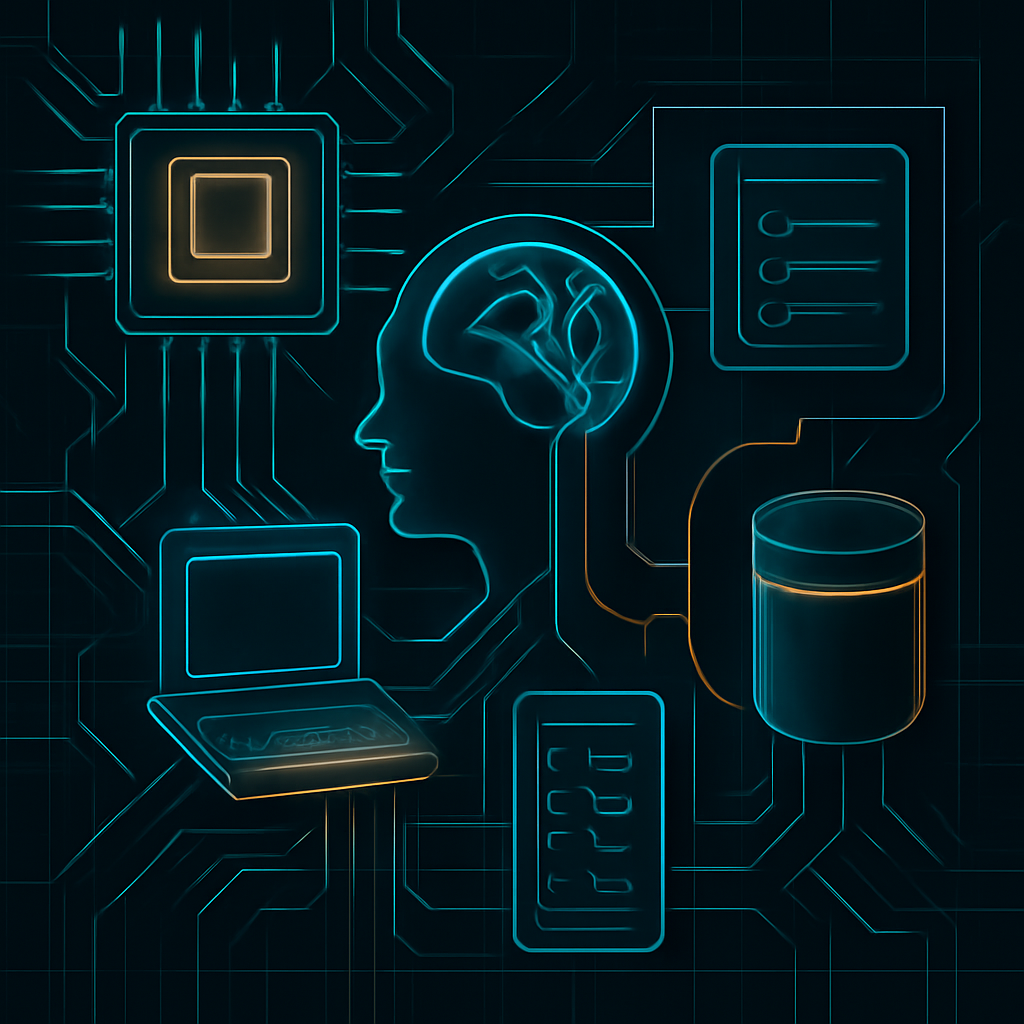
Building Your Digital Ecosystem: Personal AI Tools for Daily Life
Imagine a world where software is no longer something you buy, but something you grow. With AI coding assistants, the barrier between imagining a tool and owning it has vanished. You do not need to be a software engineer to build bespoke digital helpers. You only need to know what friction you want to remove from your day. From hyper-personalized fitness trackers that adapt to your mood, to custom email filters that read like a human assistant, the power to shape your digital environment is now entirely in your hands.
Start small. Build a simple scraper that watches your favorite niche hobby site, or an automated journal that prompts you based on the weather. These are not grand commercial applications; they are quiet, digital companions tailored to the unique contours of your life. By creating instead of consuming, you transform your relationship with technology from passive user to active architect.
“We are entering the era of disposable, deeply personal software, where an app can be built in minutes to solve a problem that only a single human being will ever have.”
Reflect
If coding becomes as effortless as speaking, what unique digital tools will you summon into existence to shape your daily environment?
Research·2 sources·Established confidence·Investigated 3 Aug 2026(1 month ago)·Grounded; verification trace not recorded·Investigation may be outdated
Your next question, in
Visual Trail
See Building Your Digital Ecosystem: Personal AI Tools for Daily Life
A guided visual explanation assembled from QE artwork and sourced documentary images.
01 / 02
QE visual interpretation
Frame 01
Building Your Digital Ecosystem: Personal AI Tools for Daily Life
With AI coding, you can build bespoke digital tools—from personalized habit trackers to custom news curators—tailored precisely to your life.
Image provenance and limitation
Source: AI-generated visual interpretation
Creator: Question Everything
Limitation: This image explains or evokes the subject. It is not documentary evidence and should not be used to verify a factual claim.
Evidence
What do we know?
Verified claims with confidence scoring and cited sources.
1 of 3 findings need extra caution. Finding 3 rests on weaker sourcing than the other findings.
Living footnotes
Claims remain in the reading flow. Select a citation number to inspect the source behind it.
01
ObservationalSupported
AI coding platforms enable non-programmers to build custom, niche applications from raw personal data.
Consider the collector who wants to browse their art gallery offline. Traditionally, hiring a developer for such a small, personal task was far too expensive. Now, platforms like Replit build these apps in days. You simply feed the AI a basic outline and a raw CSV file. The system writes the parsing code and builds the interface. It turns highly specific, personal ideas into functional software without requiring a single line of manual coding.
02
ObservationalSupported
AI dictation tools can clean up spoken rambles into polished text while preserving your unique writing voice.
We often think faster than we type. Yet, traditional voice-to-text tools leave behind a messy trail of filler words and stutters. New tools like Whisper Flow change this. They capture your spoken thoughts in traffic or during a walk, strip out the 'ums' and 'ahs', and deliver clean paragraphs. Crucially, they do not sterilize your output. They keep your natural rhythm, making your voice three to four times faster than typing.
03
ObservationalNot confirmed
Modern code editors integrate artificial intelligence directly into the active programming environment to suggest edits in real time.
Software development is changing. Instead of switching back and forth to an external chat window, developers now use tools like Cursor. This editor reads your files and understands your entire project layout. Its smart autocomplete feature, known as Tab, predicts your next move. It suggests edits and writes code inline as you type, acting as an intelligent companion that guides your hand through the digital wilderness.
The complete record below preserves every citation, confidence input and recorded limitation.
Read the full evidence record3 findings · citations · limitations
Evidence review3 findings2 openable sources
01
Finding 1 of 3Observational
0/1 verified
AI coding platforms enable non-programmers to build custom, niche applications from raw personal data.
Consider the collector who wants to browse their art gallery offline. Traditionally, hiring a developer for such a small, personal task was far too expensive. Now, platforms like Replit build these apps in days. You simply feed the AI a basic outline and a raw CSV file. The system writes the parsing code and builds the interface. It turns highly specific, personal ideas into functional software without requiring a single line of manual coding.
Supportedmodel score 90%
One source, not peer-reviewed. Thinner than the score suggests.
REFERENCE
›View sources and limits— 1 citation, limits
Supporting passage
Consider the collector who wants to browse their art gallery offline. Traditionally, hiring a developer for such a small, personal task was far too expensive. Now, platforms like Replit build these apps in days. You simply feed the AI a basic outline and a raw CSV file. The system writes the parsing code and builds the interface. It turns highly specific, personal ideas into functional software without requiring a single line of manual coding.
Rests on a single source. No independent corroboration.
No peer-reviewed source among the citations.
The generator scored this 90%, which would read as “Established”. Its citations reach only “Supported”, so that is what is shown.
02
Finding 2 of 3Observational
0/1 verified
AI dictation tools can clean up spoken rambles into polished text while preserving your unique writing voice.
We often think faster than we type. Yet, traditional voice-to-text tools leave behind a messy trail of filler words and stutters. New tools like Whisper Flow change this. They capture your spoken thoughts in traffic or during a walk, strip out the 'ums' and 'ahs', and deliver clean paragraphs. Crucially, they do not sterilize your output. They keep your natural rhythm, making your voice three to four times faster than typing.
Supportedmodel score 85%
One source, not peer-reviewed. Thinner than the score suggests.
REFERENCE
›View sources and limits— 1 citation, limits
Supporting passage
We often think faster than we type. Yet, traditional voice-to-text tools leave behind a messy trail of filler words and stutters. New tools like Whisper Flow change this. They capture your spoken thoughts in traffic or during a walk, strip out the 'ums' and 'ahs', and deliver clean paragraphs. Crucially, they do not sterilize your output. They keep your natural rhythm, making your voice three to four times faster than typing.
Rests on a single source. No independent corroboration.
No peer-reviewed source among the citations.
The generator scored this 85%, which would read as “Established”. Its citations reach only “Supported”, so that is what is shown.
03
Finding 3 of 3ObservationalNeeds caution
0/0 verified
Modern code editors integrate artificial intelligence directly into the active programming environment to suggest edits in real time.
Software development is changing. Instead of switching back and forth to an external chat window, developers now use tools like Cursor. This editor reads your files and understands your entire project layout. Its smart autocomplete feature, known as Tab, predicts your next move. It suggests edits and writes code inline as you type, acting as an intelligent companion that guides your hand through the digital wilderness.
Not confirmedmodel score 30%
Scored as if sourced, but every citation failed verification.
NO SURVIVING CITATION
›View sources and limits— limits
Supporting passage
Software development is changing. Instead of switching back and forth to an external chat window, developers now use tools like Cursor. This editor reads your files and understands your entire project layout. Its smart autocomplete feature, known as Tab, predicts your next move. It suggests edits and writes code inline as you type, acting as an intelligent companion that guides your hand through the digital wilderness.
Citations (0 of 1 survived verification)
Nothing openable. Every citation was removed by provenance validation.
What limits this
All 1 citation on this claim failed verification and were removed. Nothing openable supports it.
Interactive Exploration
Touch, drag, and discover
These visualizations respond to your curiosity. Interact to go deeper.
process flow
The Personal Software Creation Journey
Identify Friction
Gather Raw Data
Prompt the Agent
Iterate & Refine
spectrum
The Spectrum of AI Productivity Tools
Low Effort / General UseHigh Customization / Technical
15%
Grammarly
40%
Whisper Flow
75%
Cursor
95%
Replit Agent
Perspectives
How is this interpreted?
Enter a viewpoint. Notice what it reveals, what it leaves out, and whether it changes the question for you.
The EmpiricistScientific viewpointLive tension
Cognitive science reveals a delicate balance when humans partner with machines. While AI coding tools boost speed, they also trigger identity threats in the workplace. Employees fear losing their status or being replaced by the very systems they train. To survive this shift, we must view AI not as a replacement, but as an extension of our own minds. The goal is collaboration, not displacement.
What this lens notices
01AI integration changes the nature of traditional work roles
02Fear of replacement can lead to reduced workplace engagement
03Collaborative human-machine workflows achieve the best results
Application
Why does this matter to you?
Personal reflections and applications for your life.
Thought experimentPractical
What is the most annoying, repetitive digital task you perform every single day?
Why it changes the question
Identifying this friction point is the first step toward building your first personal tool. AI thrives on solving simple, repetitive annoyances.
Try this
Write down this task, export any related data to a CSV file, and ask an AI agent to design a simple tool to automate it.
Media
QE Smart Glass
Curated media selected for this investigation.
QE Glass
YOUTUBE
How will AI change the world?
TED-Ed
Explore the current limitations of artificial intelligence and the possibility of creating human-compatible technology. -- In the ...
QE Glass
YOUTUBE
What Is an AI Anyway? | Mustafa Suleyman | TED
TED
When it comes to artificial intelligence, what are we actually creating? Even those closest to its development are struggling to ...
QE Glass
YOUTUBE
Learning Software Engineering During the Era of AI | Raymond Fu | TEDxCSTU
TEDx Talks
What happens when the future of your profession is challenged by the very technology it helped create? In this eye-opening ...
QE Glass
YOUTUBE
Top 17 New Technology Trends That Will Define 2026
AI Uncovered
WATCH PART 2 HERE: https://www.youtube.com/watch?v=f-FyMY1LMwI&t=133s In this video, we reveal the top 17 breakthrough ...
QE Glass
YOUTUBE
Generative vs Agentic AI: Shaping the Future of AI Collaboration
IBM Technology
Ready to become a certified watsonx AI Assistant Engineer? Register now and use code IBMTechYT20 for 20% off of your exam ...
QE Glass
YOUTUBE
9 AI Skills You MUST Have to Become Rich in 2026
Dan Martell
Message me “PROMPT” on Instagram: https://bit.ly/4jcjD4s ▸▸ Building an AI-first software company? Partner with Martell ...
QE Glass
YOUTUBE
Everything You Need to Know About Coding with AI // NOT vibe coding
ForrestKnight
Warp is free to try but for a limited time, you can try Warp Pro free for 7 days with 2500 AI credits - no card required. Use my link ...
QE Glass
YOUTUBE
Building Apps with Replit Agent: A Beginner's Guide
Replit
Learn how to turn a simple text description into a fully functional web application using AI agents.
QE Glass
PODCAST
The World Without Work
Radiolab
An exploration of how intelligent machines are reshaping human identity and our daily routines.
Keep Going
Where this leads
Questions this investigation opens up — and what QE has already looked into.
No AI help here — no suggestions, no autocomplete, nothing finishing your sentences. That is deliberate. Working out what you think is effortful, and the effort is the part that changes you: reasoning is trained like a muscle, and a muscle that is always carried gets weaker. Let something else do the thinking and you keep the answer but lose the capacity to have reached it.
Write your current position.
Not what the page says. What you think, having read it.0 words · Nothing written yet.
Sign in to leave a mark. Your draft is saved here in the meantime.