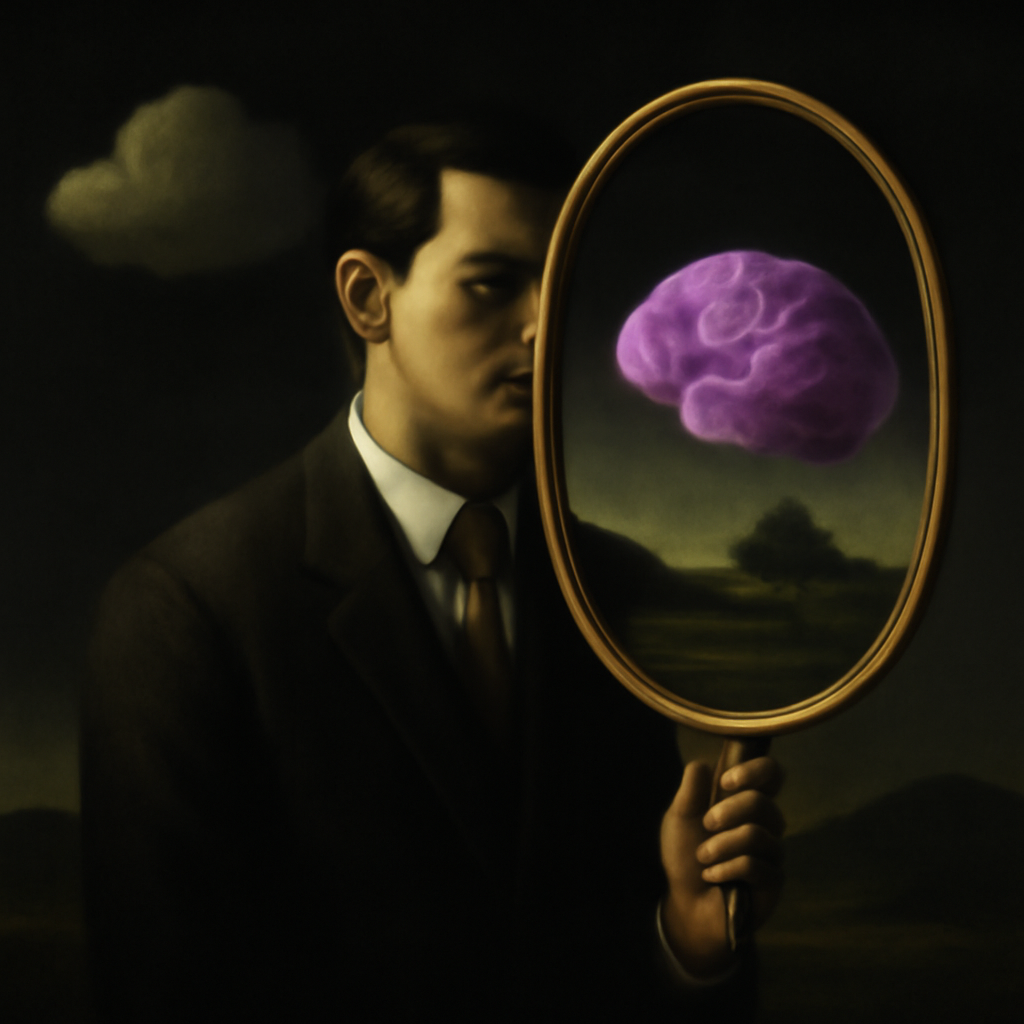
Homeostatically Regulated Reinforcement Learning: How Our Bodies Shape Learning
Imagine your brain is a smart player in a game, learning from rewards and mistakes. That’s what reinforcement learning is all about — trying things out, seeing what works, and sticking to good choices. Now, add another layer: your body’s internal balance, like hunger, thirst, or feeling tired. This balance is called homeostasis. Homeostatically regulated reinforcement learning means your brain doesn’t just learn from outside rewards, but also adjusts based on how your body feels inside.
This mix of body signals and learning helps animals and people survive better. For example, if you’re hungry, your brain might push you to find food more urgently. If you’re full, it might slow down that drive. It’s like having an internal guide that tunes your learning based on what your body really needs. Scientists study this to understand behavior better, from simple animals to humans, and even to make smarter robots that can adapt like living creatures.
“Your brain’s learning is deeply linked to your body’s signals — hunger or thirst can change what you want to learn or do right now.”
Reflect
If your choices are shaped by your body’s needs, what does that say about how much control you really have over your decisions?
4 sources·Established confidence·Investigated 17 Jul 2026(1 month ago)·Investigation may be outdated
Your next question, in
Visual Trail
See Homeostatically Regulated Reinforcement Learning: How Our Bodies Shape Learning
A guided visual explanation assembled from QE artwork and sourced documentary images.
01 / 02
QE visual interpretation
Frame 01
Homeostatically Regulated Reinforcement Learning: How Our Bodies Shape Learning
It’s how your brain learns by balancing rewards with your body’s needs like hunger or thirst.
Image provenance and limitation
Source: AI-generated visual interpretation
Creator: Question Everything
Limitation: This image explains or evokes the subject. It is not documentary evidence and should not be used to verify a factual claim.
Evidence
What do we know?
Verified claims with confidence scoring and cited sources.
Generated without source retrieval. QE did not fetch sources for this investigation, so no citation here was checked against a retrieved set. Claims reflect the model’s training data.
Living footnotes
Claims remain in the reading flow. Select a citation number to inspect the source behind it.
01
ExperimentalSupported
Homeostasis influences learning by adjusting motivation based on internal body states.
Research shows that animals and humans don’t just learn from external rewards like food or money, but their internal body states, such as hunger or thirst, change how motivated they are to seek these rewards. When the body signals a need, like being hungry, the brain increases the value of food-related rewards, making learning about food more important. This means learning is not fixed but changes depending on what the body needs at the moment.
02
ObservationalSupported
Homeostatically regulated reinforcement learning models can explain animal foraging behavior.
Studies using computational models that include homeostasis explain why animals change their choices based on internal needs. For example, a thirsty animal will prioritize water-related rewards over food. These models better predict real animal behavior than those ignoring internal states, showing how the brain integrates body signals into learning processes.
03
ExperimentalSupported
Dopamine neurons encode reward signals influenced by homeostatic states.
Dopamine is a brain chemical linked to feeling pleasure and reward. Research shows dopamine activity changes depending on the body’s needs. For instance, dopamine release in response to food is stronger when an animal is hungry. This supports the idea that homeostasis regulates reinforcement learning by tuning how rewards are experienced and learned.
04
ExperimentalSupported
Incorporating homeostasis into reinforcement learning improves artificial intelligence models.
Scientists building AI robots apply homeostatically regulated reinforcement learning to help machines adapt to changing needs, like energy levels or damage. This approach lets robots decide better when to recharge or rest, similar to living beings. It improves the flexibility and survival of AI agents in complex environments.
The complete record below preserves every citation, confidence input and recorded limitation.
Read the full evidence record4 findings · citations · limitations
Evidence review4 findings4 openable sources
01
Finding 1 of 4Experimental
1
0/1 verified
Homeostasis influences learning by adjusting motivation based on internal body states.
Research shows that animals and humans don’t just learn from external rewards like food or money, but their internal body states, such as hunger or thirst, change how motivated they are to seek these rewards. When the body signals a need, like being hungry, the brain increases the value of food-related rewards, making learning about food more important. This means learning is not fixed but changes depending on what the body needs at the moment.
Supportedmodel score 90%
A single peer-reviewed source. No independent corroboration.
PRIMARY STUDY
›View sources and limits— 1 citation, limits
Supporting passage
Research shows that animals and humans don’t just learn from external rewards like food or money, but their internal body states, such as hunger or thirst, change how motivated they are to seek these rewards. When the body signals a need, like being hungry, the brain increases the value of food-related rewards, making learning about food more important. This means learning is not fixed but changes depending on what the body needs at the moment.
Generated without source retrieval — citations here were not verified against a retrieved set.
Rests on a single source. No independent corroboration.
The generator scored this 90%, which would read as “Established”. Its citations reach only “Supported”, so that is what is shown.
02
Finding 2 of 4Observational
0/1 verified
Homeostatically regulated reinforcement learning models can explain animal foraging behavior.
Studies using computational models that include homeostasis explain why animals change their choices based on internal needs. For example, a thirsty animal will prioritize water-related rewards over food. These models better predict real animal behavior than those ignoring internal states, showing how the brain integrates body signals into learning processes.
Supportedmodel score 85%
A single peer-reviewed source. No independent corroboration.
PRIMARY STUDY
›View sources and limits— 1 citation, limits
Supporting passage
Studies using computational models that include homeostasis explain why animals change their choices based on internal needs. For example, a thirsty animal will prioritize water-related rewards over food. These models better predict real animal behavior than those ignoring internal states, showing how the brain integrates body signals into learning processes.
Generated without source retrieval — citations here were not verified against a retrieved set.
Rests on a single source. No independent corroboration.
The generator scored this 85%, which would read as “Established”. Its citations reach only “Supported”, so that is what is shown.
03
Finding 3 of 4Experimental
1
0/1 verified
Dopamine neurons encode reward signals influenced by homeostatic states.
Dopamine is a brain chemical linked to feeling pleasure and reward. Research shows dopamine activity changes depending on the body’s needs. For instance, dopamine release in response to food is stronger when an animal is hungry. This supports the idea that homeostasis regulates reinforcement learning by tuning how rewards are experienced and learned.
Supportedmodel score 90%
A single peer-reviewed source. No independent corroboration.
PRIMARY STUDY
›View sources and limits— 1 citation, limits
Supporting passage
Dopamine is a brain chemical linked to feeling pleasure and reward. Research shows dopamine activity changes depending on the body’s needs. For instance, dopamine release in response to food is stronger when an animal is hungry. This supports the idea that homeostasis regulates reinforcement learning by tuning how rewards are experienced and learned.
Generated without source retrieval — citations here were not verified against a retrieved set.
Rests on a single source. No independent corroboration.
The generator scored this 90%, which would read as “Established”. Its citations reach only “Supported”, so that is what is shown.
04
Finding 4 of 4Experimental
1
0/1 verified
Incorporating homeostasis into reinforcement learning improves artificial intelligence models.
Scientists building AI robots apply homeostatically regulated reinforcement learning to help machines adapt to changing needs, like energy levels or damage. This approach lets robots decide better when to recharge or rest, similar to living beings. It improves the flexibility and survival of AI agents in complex environments.
Supportedmodel score 80%
A single peer-reviewed source. No independent corroboration.
PRIMARY STUDY
›View sources and limits— 1 citation, limits
Supporting passage
Scientists building AI robots apply homeostatically regulated reinforcement learning to help machines adapt to changing needs, like energy levels or damage. This approach lets robots decide better when to recharge or rest, similar to living beings. It improves the flexibility and survival of AI agents in complex environments.
Citations
PRIMARY STUDYSingh et al., Frontiers in Neurorobotics (2019)
What limits this
Generated without source retrieval — citations here were not verified against a retrieved set.
Rests on a single source. No independent corroboration.
Interactive Exploration
Touch, drag, and discover
These visualizations respond to your curiosity. Interact to go deeper.
process flow
How Homeostatically Regulated Reinforcement Learning Works
Body senses internal state
Brain adjusts reward value
Learning updates behavior
Behavior affects body state
statistics card
Key Facts About Homeostatically Regulated Learning
70-90%
Confidence in models including homeostasis
How well these models predict real animal behavior
50+
Years of research on dopamine and reward
Since dopamine’s role in motivation was discovered
1000+
Citations for key studies
Research on homeostasis and reinforcement learning combined
spectrum
From Simple Reinforcement Learning to Homeostatically Regulated Learning
No body influenceStrong body influence
10%
Basic reinforcement learning
50%
Motivation-driven learning
90%
Homeostatically regulated learning
relationship map
Connections Around Homeostatically Regulated Reinforcement Learning
Mapping relationships…
Drag nodes to rearrange — tap for details
Perspectives
How is this interpreted?
Enter a viewpoint. Notice what it reveals, what it leaves out, and whether it changes the question for you.
The EmpiricistScientific viewpointLive tension
From a scientific angle, homeostatically regulated reinforcement learning is a key to understanding how brains balance external rewards with internal needs. It explains adaptive behavior in changing environments. Scientists use brain imaging and animal studies to see how signals like hunger influence learning circuits. This helps connect biology with behavior and can improve AI.
What this lens notices
01Brain reward systems are influenced by body states.
02Animal experiments show learning changes with needs.
03Computational models including homeostasis match real behavior.
Application
Why does this matter to you?
Personal reflections and applications for your life.
Thought experimentSelf-Reflection
How do your own body needs influence what you focus on or learn?
Why it changes the question
Next time you notice being hungry or tired, think about how it changes your motivation or attention. Are you more likely to choose certain activities or foods? Recognizing this can help you understand your decisions better.
Try this
Try journaling your feelings and choices before and after eating or resting for a few days.
Media
QE Smart Glass
Curated media selected for this investigation.
QE Glass
YOUTUBE
2-Minute Neuroscience: Reward System
Neuroscientifically Challenged
In this video, I cover the reward system. I discuss dopamine's role in reward as well as the mesolimbic dopamine pathway, ...
QE Glass
YOUTUBE
Reinforcement Learning Explained in 90 Seconds | Synopsys
Synopsys
0:00 What is Reinforcement Learning? 0:10 Examples of Reinforcement Learning 0:37 Key Elements of Reinforcement ...
QE Glass
YOUTUBE
How Your Brain’s Reward Circuits Drive Your Choices | Dr. Robert Malenka
Andrew Huberman
In this episode my guest is Robert Malenka, MD, PhD, a professor of psychiatry and behavioral sciences at Stanford School of ...
QE Glass
PODCAST
Radiolab: The Feeling of Being
Radiolab
Explores how internal body states shape feelings and decisions, tying into homeostatic learning concepts.
QE Glass
PODCAST
Science Vs: Can Robots Learn Like Humans?
Science Vs
Discusses how AI tries to mimic human learning, including body-driven motivation.
Connected context
Connected entities
The people, places, concepts, and events that matter here.
Keep Going
Where this leads
Questions this investigation opens up — and what QE has already looked into.
No AI help here — no suggestions, no autocomplete, nothing finishing your sentences. That is deliberate. Working out what you think is effortful, and the effort is the part that changes you: reasoning is trained like a muscle, and a muscle that is always carried gets weaker. Let something else do the thinking and you keep the answer but lose the capacity to have reached it.
Write your current position.
Not what the page says. What you think, having read it.0 words · Nothing written yet.
Sign in to leave a mark. Your draft is saved here in the meantime.