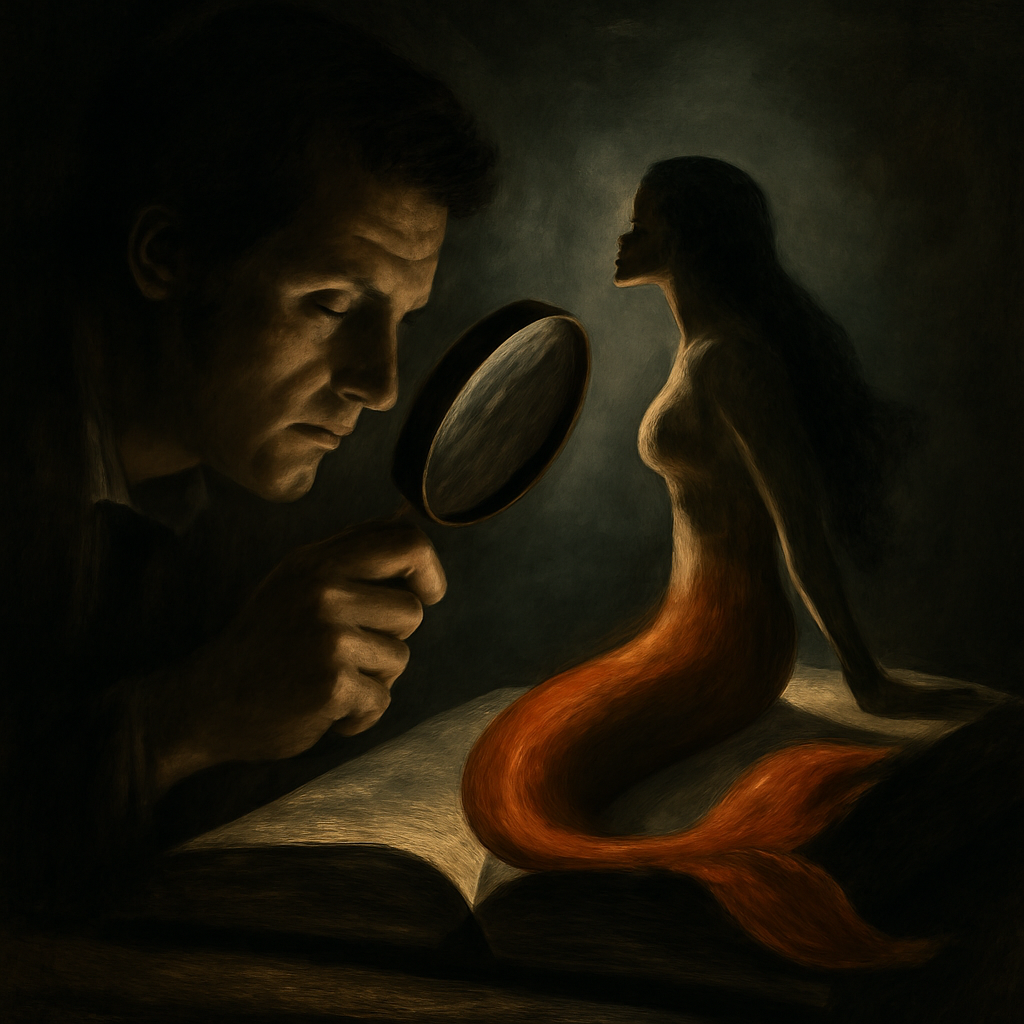
Are Mermaids Real? Exploring the Myth and Reality of Mermaid Stories
Mermaids are legendary creatures often described as half-human and half-fish. They have appeared in stories, myths, and art for thousands of years, from ancient Greek tales to sailors' legends around the world. While they capture our imagination and appear in movies and books, there is no scientific evidence that mermaids actually exist.
Scientists who study the ocean have looked for signs of mermaids but have found none. Many stories about mermaids likely came from sailors mistaking sea animals like manatees or dugongs for mermaids. Despite this, mermaids are meaningful in culture and art, connecting people with the mystery of the sea and the idea of magical beings beneath the waves.
“No mermaid has ever been found, but the stories about them have connected people across the world for thousands of years.”
Reflect
If mermaids aren’t real, what do our belief in them tell us about human imagination and the mysteries we seek in the world?
Research·1 source·Developing confidence·Investigated 19 Jul 2026(2 months ago)·Grounded; verification trace not recorded·Investigation may be outdated
Your next question, in
Visual Trail
See Are Mermaids Real? Exploring the Myth and Reality of Mermaid Stories
A guided visual explanation assembled from QE artwork and sourced documentary images.
01 / 05
QE visual interpretation
Frame 01
Are Mermaids Real? Exploring the Myth and Reality of Mermaid Stories
Mermaids are not real; they are myths inspired by stories and mistaken sightings of sea animals.
Image provenance and limitation
Source: AI-generated visual interpretation
Creator: Question Everything
Limitation: This image explains or evokes the subject. It is not documentary evidence and should not be used to verify a factual claim.
Evidence
What do we know?
Verified claims with confidence scoring and cited sources.
2 of 3 findings need extra caution. Finding 1, Finding 2 rest on weaker sourcing than the other findings.
Living footnotes
Claims remain in the reading flow. Select a citation number to inspect the source behind it.
01
AcademicNot confirmed
There is no scientific evidence that mermaids exist.
Scientists who study oceans have searched for proof of mermaids but have never found any. Mermaids are mythical creatures, often shown as half-human and half-fish, but no aquatic humanoids have been discovered. This means mermaids belong to stories and myths, not real biology or science.
02
HistoricalNot confirmed
Many mermaid stories likely came from sailors mistaking marine animals like manatees for mermaids.
Sailors in the past who spent long times at sea sometimes saw creatures like manatees or dugongs. These animals have bodies that might look a bit like a human with a tail when seen from a distance, especially in rough ocean conditions. These sightings probably inspired the idea of mermaids in many cultures.
03
HistoricalSupported
Mermaids have been part of human culture and stories for thousands of years.
Mermaids appear in myths from many regions and have captured imaginations for a very long time. Ancient poets like Homer mentioned them, and different cultures have their own versions of merfolk. These stories often reflect people's respect, fear, and fascination with the oceans and unknown creatures.
The complete record below preserves every citation, confidence input and recorded limitation.
Read the full evidence record3 findings · citations · limitations
Evidence review3 findings1 openable sources
01
Finding 1 of 3AcademicNeeds caution
0
0/0 verified
There is no scientific evidence that mermaids exist.
Scientists who study oceans have searched for proof of mermaids but have never found any. Mermaids are mythical creatures, often shown as half-human and half-fish, but no aquatic humanoids have been discovered. This means mermaids belong to stories and myths, not real biology or science.
Not confirmedmodel score 30%
Scored as if sourced, but every citation failed verification.
NO SURVIVING CITATION
›View sources and limits— limits
Supporting passage
Scientists who study oceans have searched for proof of mermaids but have never found any. Mermaids are mythical creatures, often shown as half-human and half-fish, but no aquatic humanoids have been discovered. This means mermaids belong to stories and myths, not real biology or science.
Citations (0 of 1 survived verification)
Nothing openable. Every citation was removed by provenance validation.
What limits this
All 1 citation on this claim failed verification and were removed. Nothing openable supports it.
02
Finding 2 of 3HistoricalNeeds caution
0/0 verified
Many mermaid stories likely came from sailors mistaking marine animals like manatees for mermaids.
Sailors in the past who spent long times at sea sometimes saw creatures like manatees or dugongs. These animals have bodies that might look a bit like a human with a tail when seen from a distance, especially in rough ocean conditions. These sightings probably inspired the idea of mermaids in many cultures.
Not confirmedmodel score 30%
Scored as if sourced, but every citation failed verification.
NO SURVIVING CITATION
›View sources and limits— limits
Supporting passage
Sailors in the past who spent long times at sea sometimes saw creatures like manatees or dugongs. These animals have bodies that might look a bit like a human with a tail when seen from a distance, especially in rough ocean conditions. These sightings probably inspired the idea of mermaids in many cultures.
Citations (0 of 1 survived verification)
Nothing openable. Every citation was removed by provenance validation.
What limits this
All 1 citation on this claim failed verification and were removed. Nothing openable supports it.
03
Finding 3 of 3Historical
0/1 verified
Mermaids have been part of human culture and stories for thousands of years.
Mermaids appear in myths from many regions and have captured imaginations for a very long time. Ancient poets like Homer mentioned them, and different cultures have their own versions of merfolk. These stories often reflect people's respect, fear, and fascination with the oceans and unknown creatures.
Supportedmodel score 95%
One source, not peer-reviewed. Thinner than the score suggests.
REFERENCE
›View sources and limits— 1 citation, limits
Supporting passage
Mermaids appear in myths from many regions and have captured imaginations for a very long time. Ancient poets like Homer mentioned them, and different cultures have their own versions of merfolk. These stories often reflect people's respect, fear, and fascination with the oceans and unknown creatures.
Rests on a single source. No independent corroboration.
No peer-reviewed source among the citations.
The generator scored this 95%, which would read as “Established”. Its citations reach only “Supported”, so that is what is shown.
Interactive Exploration
Touch, drag, and discover
These visualizations respond to your curiosity. Interact to go deeper.
timeline
Timeline of Mermaid Stories Through History
Loading timeline…
relationship map
Mermaids and Related Concepts
Mapping relationships…
Drag nodes to rearrange — tap for details
statistics card
Mermaid Sightings and Scientific Evidence
0
Confirmed evidence of mermaids
No verified scientific proof exists
Thousands
Years mermaid stories have existed
From ancient myths to modern tales
1
Most likely explanation for sightings
Manatees or dugongs mistaken for mermaids
Visual Gallery
Images & artifacts
Historical images, diagrams, and visual knowledge from Wikimedia Commons.
Perspectives
How is this interpreted?
Enter a viewpoint. Notice what it reveals, what it leaves out, and whether it changes the question for you.
The EmpiricistScientific viewpointEstablished lens
From a scientific viewpoint, mermaids do not exist. No evidence has ever been found to prove their reality. Scientists rely on observations and experiments, and none have documented anything resembling a mermaid. The ocean is vast and full of strange creatures, but mermaids remain a myth.
What this lens notices
01No confirmed sightings or physical evidence
02Explanations for sightings usually involve known marine animals
03Scientific methods require proof that is lacking for mermaids
Application
Why does this matter to you?
Personal reflections and applications for your life.
Thought experimentSelf-Reflection
Why do you think people have believed in mermaids for so long despite no proof?
Why it changes the question
Thinking about this helps us understand how stories and myths shape culture and beliefs. It shows how imagination plays a big role in human life.
Try this
Try writing your own short story about a mermaid or mythical sea creature and what it represents to you.
Media
QE Smart Glass
Curated media selected for this investigation.
QE Glass
YOUTUBE
The Book of Enoch Explained: Sirens & Mermaids
Divine Revelations
BookOfEnoch #MermaidMeaning #ancientwisdom In this exploration, we delve into the ancient text of The Book of Enoch to ...
QE Glass
YOUTUBE
The Truth Behind the Mermaid Myth
BRIGHT SIDE
Do mermaids really exist? How do these half-human half-fish mythical sea creatures look? Does Aquaman live among mermaids?
QE Glass
YOUTUBE
1 HOUR Of Twisted Legends About Mermaids & Fairies 🧚
Jessii Vee
Today's video is a compilation of dark & creepy legends about mermaids and fairies... Support Our Podcast & Watch Bonus ...
QE Glass
YOUTUBE
The 3,000-Year-Old DARK History of Mermaids | The REAL Origins
Mystik Manor
What are mermaids really? For thousands of years, people across continents have claimed to see them, half-human, half-fish ...
QE Glass
YOUTUBE
Mermaids: The Wives Of Fallen Angels
Anonymous Prophet
This Video is about mermaids being in the Bible. Or more accurately one of the secret hidden books in the Bible. Watch the video ...
No AI help here — no suggestions, no autocomplete, nothing finishing your sentences. That is deliberate. Working out what you think is effortful, and the effort is the part that changes you: reasoning is trained like a muscle, and a muscle that is always carried gets weaker. Let something else do the thinking and you keep the answer but lose the capacity to have reached it.
Write your current position.
Not what the page says. What you think, having read it.0 words · Nothing written yet.
Sign in to leave a mark. Your draft is saved here in the meantime.