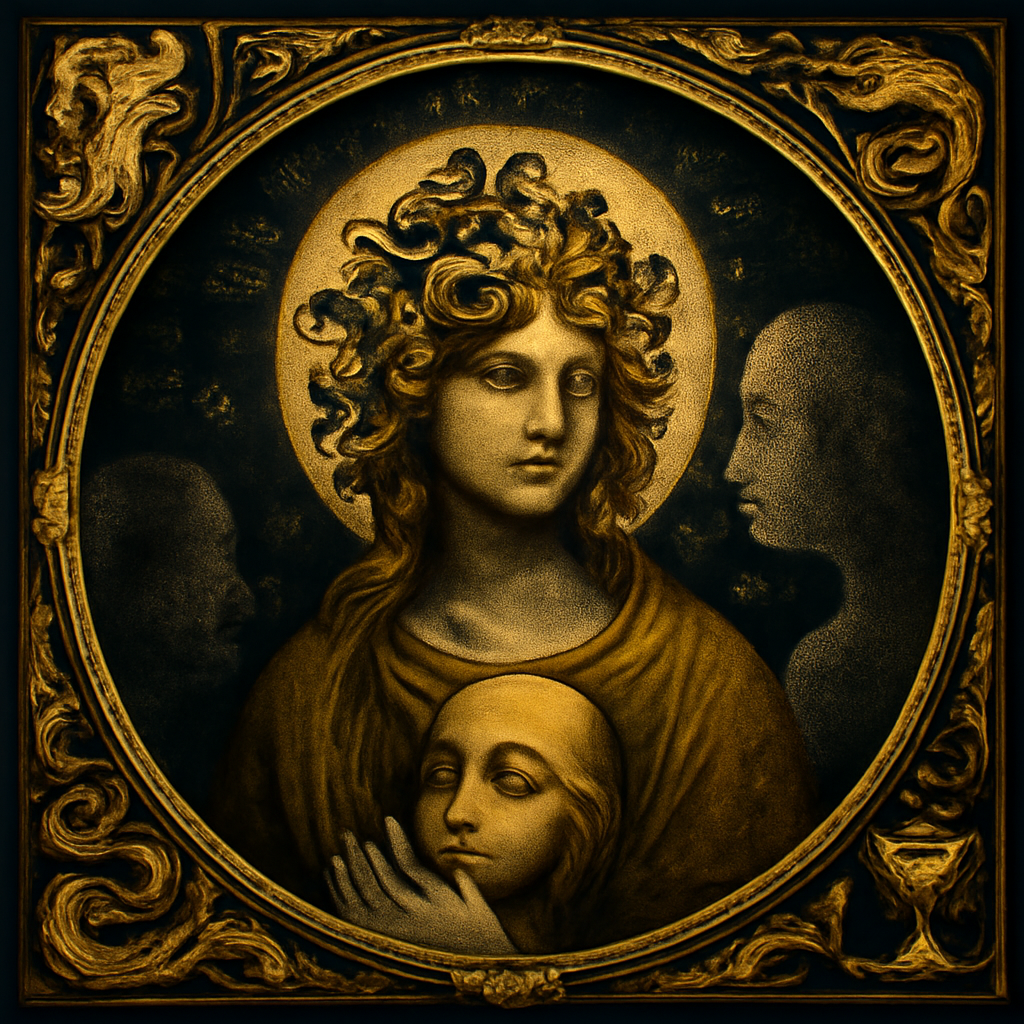
For millennia, the image of Medusa has haunted humanity – a monstrous figure with a snaking mane, whose very gaze turned flesh to stone. Yet, this terrifying visage conceals a deeper, more tragic narrative, one shaped by shifting cultural norms, divine power struggles, and the enduring human struggle with victimhood and transformation. Her story is not simply that of a monster slain by a hero; it is a complex tapestry woven from ancient Greek myth, a tale that has been reinterpreted across centuries, reflecting changing perspectives on justice, beauty, and female power.
To truly understand Medusa, we must journey beyond her petrifying stare, back to the earliest tellings of her myth, where she emerges not merely as an embodiment of terror, but as a figure entangled in the capricious whims of the gods. From Hesiod's ancient verses to Ovid's poignant retelling, her identity oscillates between an inherently monstrous being and a beautiful priestess cursed by divine wrath. This exploration uncovers not just the 'real' story, but the many 'realities' that have defined one of mythology's most enduring and enigmatic figures, challenging us to look deeper than the surface of fear to find the echoes of tragedy, resilience, and even a strange, fierce strength.
✨
Wonder Moment
“The Medusa we commonly imagine – a monster born of pure evil – is largely a Roman reimagining. For centuries prior, she was simply one of three monstrous Gorgons, her tragedy woven in much later.”
Reflect
If our most enduring myths can be so dramatically re-written over time, what foundational stories do we believe today that might be radically different from their original forms, and what might that say about our own contemporary values?
5 sources·Established confidence·Investigated 20 Jun 2026(2 months ago)·Investigation may be outdated
Your next question, in
Visual Trail
See Medusa Unveiled: Beyond the Gaze of Stone
A guided visual explanation assembled from QE artwork and sourced documentary images.
01 / 02
QE visual interpretation
Frame 01
Medusa Unveiled: Beyond the Gaze of Stone
Unravel the complex and tragic story of Medusa, from monstrous birth to cursed priestess, and her enduring legacy in art and culture.
Image provenance and limitation
Source: AI-generated visual interpretation
Creator: Question Everything
Limitation: This image explains or evokes the subject. It is not documentary evidence and should not be used to verify a factual claim.
Evidence
What do we know?
Verified claims with confidence scoring and cited sources.
Generated without source retrieval. QE did not fetch sources for this investigation, so no citation here was checked against a retrieved set. Claims reflect the model’s training data.
Living footnotes
Claims remain in the reading flow. Select a citation number to inspect the source behind it.
01
HistoricalSupported
In some of the earliest Greek myths, Medusa was born a monstrous Gorgon, sister to Stheno and Euryale.
The ancient Greek poet Hesiod, writing in the 8th or 7th century BCE, presents Medusa and her sisters, Stheno and Euryale, as monstrous beings from birth. In his work, *Theogony*, he describes them as daughters of the ancient marine deities Phorcys and Ceto, residing "beyond glorious Ocean at the world's end." This depiction suggests that Medusa was always a creature of dread, not transformed, but inherently monstrous, born with snakes for hair and a petrifying gaze.
This original portrayal focuses on her as an elemental force of terror, a primordial being rather than a victim of divine punishment. It establishes her as part of a lineage of chthonic (underworld) deities and monsters, reinforcing her connection to the dark and untamed aspects of the cosmos. This foundational version of the myth emphasizes her role as an antagonist for heroes and a symbol of primal danger.
02
HistoricalSupported
The Roman poet Ovid reimagined Medusa as a beautiful priestess who was violated by Poseidon in Athena's temple and subsequently cursed by Athena.
Centuries after Hesiod, the Roman poet Ovid offered a profoundly different and highly influential account of Medusa's origins in his epic poem, *Metamorphoses*, written around 8 CE. Ovid narrates that Medusa was once a maiden of extraordinary beauty, particularly renowned for her hair. She was a priestess in the temple of Athena (Minerva in Roman mythology), sworn to chastity.
According to Ovid, the sea god Poseidon (Neptune) saw Medusa and, overcome with desire, assaulted her within the very sanctuary of Athena. Outraged by the defilement of her temple and perhaps unable or unwilling to punish a fellow Olympian god, Athena redirected her fury onto Medusa, transforming her beautiful hair into venomous snakes and giving her the infamous petrifying gaze. This version introduces the tragic element of Medusa as a victim, punished for a transgression committed against her.
03
HistoricalSupported
Medusa was slain by the hero Perseus, a feat accomplished with divine aid, and from her severed neck sprang Pegasus and Chrysaor.
The climax of Medusa's story, consistent across most mythological tellings, is her death at the hands of the hero Perseus. Tasked by King Polydectes to bring him Medusa's head, Perseus embarked on a perilous quest, aided by several Olympian deities. Athena provided him with a highly polished bronze shield (or Aegis), Hermes lent him winged sandals and a curved sword (or adamantine sickle), and Hades contributed his Cap of Darkness, rendering him invisible.
Using the reflective shield to avoid her direct gaze, Perseus approached Medusa while she slept and decapitated her. From her severed neck, two beings sprang forth: Pegasus, the winged horse, and Chrysaor, the giant who carried a golden sword. Both are often considered the children of Poseidon, conceived during his violation of Medusa, their birth from her death signifying a profound, if tragic, act of creation. Her head, still retaining its petrifying power, was later used by Perseus as a formidable weapon before being given to Athena, who affixed it to her shield or breastplate, the Aegis, as a symbol of protection.
The complete record below preserves every citation, confidence input and recorded limitation.
Read the full evidence record3 findings · citations · limitations
Evidence review3 findings6 openable sources
01
Finding 1 of 3Historical
c. 700 BCE
1 dated source
In some of the earliest Greek myths, Medusa was born a monstrous Gorgon, sister to Stheno and Euryale.
The ancient Greek poet Hesiod, writing in the 8th or 7th century BCE, presents Medusa and her sisters, Stheno and Euryale, as monstrous beings from birth. In his work, *Theogony*, he describes them as daughters of the ancient marine deities Phorcys and Ceto, residing "beyond glorious Ocean at the world's end." This depiction suggests that Medusa was always a creature of dread, not transformed, but inherently monstrous, born with snakes for hair and a petrifying gaze.
This original portrayal focuses on her as an elemental force of terror, a primordial being rather than a victim of divine punishment. It establishes her as part of a lineage of chthonic (underworld) deities and monsters, reinforcing her connection to the dark and untamed aspects of the cosmos. This foundational version of the myth emphasizes her role as an antagonist for heroes and a symbol of primal danger.
Supportedmodel score 98%
2 sources agree, none peer-reviewed.
REFERENCE ×2
›View sources and limits— 2 citations, limits
Supporting passage
The ancient Greek poet Hesiod, writing in the 8th or 7th century BCE, presents Medusa and her sisters, Stheno and Euryale, as monstrous beings from birth. In his work, *Theogony*, he describes them as daughters of the ancient marine deities Phorcys and Ceto, residing "beyond glorious Ocean at the world's end." This depiction suggests that Medusa was always a creature of dread, not transformed, but inherently monstrous, born with snakes for hair and a petrifying gaze.
This original portrayal focuses on her as an elemental force of terror, a primordial being rather than a victim of divine punishment. It establishes her as part of a lineage of chthonic (underworld) deities and monsters, reinforcing her connection to the dark and untamed aspects of the cosmos. This foundational version of the myth emphasizes her role as an antagonist for heroes and a symbol of primal danger.
Generated without source retrieval — citations here were not verified against a retrieved set.
No peer-reviewed source among the citations.
The generator scored this 98%, which would read as “Established”. Its citations reach only “Supported”, so that is what is shown.
02
Finding 2 of 3Historical
c. 8 CE2018
2 dated sources
The Roman poet Ovid reimagined Medusa as a beautiful priestess who was violated by Poseidon in Athena's temple and subsequently cursed by Athena.
Centuries after Hesiod, the Roman poet Ovid offered a profoundly different and highly influential account of Medusa's origins in his epic poem, *Metamorphoses*, written around 8 CE. Ovid narrates that Medusa was once a maiden of extraordinary beauty, particularly renowned for her hair. She was a priestess in the temple of Athena (Minerva in Roman mythology), sworn to chastity.
According to Ovid, the sea god Poseidon (Neptune) saw Medusa and, overcome with desire, assaulted her within the very sanctuary of Athena. Outraged by the defilement of her temple and perhaps unable or unwilling to punish a fellow Olympian god, Athena redirected her fury onto Medusa, transforming her beautiful hair into venomous snakes and giving her the infamous petrifying gaze. This version introduces the tragic element of Medusa as a victim, punished for a transgression committed against her.
Supportedmodel score 97%
2 sources agree, none peer-reviewed.
REFERENCE ×2
›View sources and limits— 2 citations, limits
Supporting passage
Centuries after Hesiod, the Roman poet Ovid offered a profoundly different and highly influential account of Medusa's origins in his epic poem, *Metamorphoses*, written around 8 CE. Ovid narrates that Medusa was once a maiden of extraordinary beauty, particularly renowned for her hair. She was a priestess in the temple of Athena (Minerva in Roman mythology), sworn to chastity.
According to Ovid, the sea god Poseidon (Neptune) saw Medusa and, overcome with desire, assaulted her within the very sanctuary of Athena. Outraged by the defilement of her temple and perhaps unable or unwilling to punish a fellow Olympian god, Athena redirected her fury onto Medusa, transforming her beautiful hair into venomous snakes and giving her the infamous petrifying gaze. This version introduces the tragic element of Medusa as a victim, punished for a transgression committed against her.
Generated without source retrieval — citations here were not verified against a retrieved set.
No peer-reviewed source among the citations.
The generator scored this 97%, which would read as “Established”. Its citations reach only “Supported”, so that is what is shown.
03
Finding 3 of 3Historical
c. 700 BCE
1 dated source
Medusa was slain by the hero Perseus, a feat accomplished with divine aid, and from her severed neck sprang Pegasus and Chrysaor.
The climax of Medusa's story, consistent across most mythological tellings, is her death at the hands of the hero Perseus. Tasked by King Polydectes to bring him Medusa's head, Perseus embarked on a perilous quest, aided by several Olympian deities. Athena provided him with a highly polished bronze shield (or Aegis), Hermes lent him winged sandals and a curved sword (or adamantine sickle), and Hades contributed his Cap of Darkness, rendering him invisible.
Using the reflective shield to avoid her direct gaze, Perseus approached Medusa while she slept and decapitated her. From her severed neck, two beings sprang forth: Pegasus, the winged horse, and Chrysaor, the giant who carried a golden sword. Both are often considered the children of Poseidon, conceived during his violation of Medusa, their birth from her death signifying a profound, if tragic, act of creation. Her head, still retaining its petrifying power, was later used by Perseus as a formidable weapon before being given to Athena, who affixed it to her shield or breastplate, the Aegis, as a symbol of protection.
Supportedmodel score 99%
2 sources agree, none peer-reviewed.
REFERENCE ×2
›View sources and limits— 2 citations, limits
Supporting passage
The climax of Medusa's story, consistent across most mythological tellings, is her death at the hands of the hero Perseus. Tasked by King Polydectes to bring him Medusa's head, Perseus embarked on a perilous quest, aided by several Olympian deities. Athena provided him with a highly polished bronze shield (or Aegis), Hermes lent him winged sandals and a curved sword (or adamantine sickle), and Hades contributed his Cap of Darkness, rendering him invisible.
Using the reflective shield to avoid her direct gaze, Perseus approached Medusa while she slept and decapitated her. From her severed neck, two beings sprang forth: Pegasus, the winged horse, and Chrysaor, the giant who carried a golden sword. Both are often considered the children of Poseidon, conceived during his violation of Medusa, their birth from her death signifying a profound, if tragic, act of creation. Her head, still retaining its petrifying power, was later used by Perseus as a formidable weapon before being given to Athena, who affixed it to her shield or breastplate, the Aegis, as a symbol of protection.
Generated without source retrieval — citations here were not verified against a retrieved set.
No peer-reviewed source among the citations.
The generator scored this 99%, which would read as “Established”. Its citations reach only “Supported”, so that is what is shown.
Interactive Exploration
Touch, drag, and discover
These visualizations respond to your curiosity. Interact to go deeper.
timeline
The Evolution of Medusa's Myth
Loading timeline…
cause effect
The Cause and Effect of Medusa's Transformation (Ovid's Version)
Causes — tap to reveal
Tap to reveal cause 1
Tap to reveal cause 2
Tap to reveal cause 3
Tap to reveal cause 4
↓
comparison table
Medusa: Hesiod vs. Ovid
Hesiod's Theogony (c. 700 BCE)
Ovid's Metamorphoses (c. 8 CE)
Origin
Born inherently monstrous Gorgon
Born a beautiful human maiden
Beauty
No mention of beauty; always terrifying
Renowned for her exceptional beauty, especially her hair
Transformation
No transformation; always a monster
Transformed from human to monster by Athena's curse
Cause of Monstrosity
Born of primordial sea deities (Phorcys & Ceto)
Punishment for being violated by Poseidon in Athena's temple
Sympathy
Little to none; pure antagonist
Significant sympathy due to victimhood
Tap any row to highlight and compare
relationship map
Key Relationships in Medusa's Myth
Mapping relationships…
Drag nodes to rearrange — tap for details
spectrum
Perception of Medusa: From Monster to Symbol
Purely MonstrousEmpowered Symbol
5%
Hesiod's Gorgon
15%
Archaic Greek Art
35%
Classical Greek Art
55%
Ovid's Cursed Priestess
70%
Romantic Era Interpretations
95%
Feminist Icon
Perspectives
How is this interpreted?
Enter a viewpoint. Notice what it reveals, what it leaves out, and whether it changes the question for you.
The PhilosopherPhilosophical viewpointLive tension
The myth of Medusa, particularly Ovid's version, raises profound philosophical questions about justice, victimhood, and the nature of monstrosity. If Medusa was cursed for a violation committed against her, what does this say about divine justice and the arbitrary nature of suffering? Her transformation forces us to confront the idea that 'monsters' are not always inherently evil but can be products of trauma and injustice, embodying the very horror inflicted upon them.
Philosophically, Medusa's story challenges the simplistic dichotomy of good versus evil, introducing shades of grey where victims become perpetrators of terror. It asks us to consider who truly holds responsibility for her fate and what it means to be cursed with a gaze that compels fear and destruction. Is her monstrosity a punishment, a warning, or perhaps a shield – an outward manifestation of an internal, unspeakable pain?
What this lens notices
01Challenges traditional notions of divine justice.
02Explores the origins of evil through suffering and injustice.
03Questions the concept of agency when divine forces intervene.
Application
Why does this matter to you?
Personal reflections and applications for your life.
Thought experimentSelf-Reflection
How do narratives shape our perception of 'monsters' and 'heroes' in our own lives?
Why it changes the question
Medusa's story reveals how deeply narratives influence our understanding of individuals, turning a victim into a villain, or vice-versa. Consider how often we define people by a single, dramatic event or a specific perceived flaw, overlooking their complex histories or the circumstances that shaped them. Reflect on instances where you might have judged someone prematurely, based on an incomplete or biased 'story,' and how understanding their full narrative might alter your perception.
Try this
Choose a public figure or a historical event you feel strongly about. Research alternative perspectives or lesser-known details of their story. Note how new information shifts your initial judgment.
Media
QE Smart Glass
Curated media selected for this investigation.
QE Glass
YOUTUBE
The myth of Medusa
TED-Ed
TED-Ed has launched its first ever physical game: Pandora's Legacy! Learn more and get your copy here: ...
QE Glass
YOUTUBE
Medusa: Monster or Goddess? | Myths and Legends | History
HISTORY
The epic tragedy of Medusa, the most infamous female fiend in Greek mythology, whose look turned every living thing to stone.
QE Glass
YOUTUBE
The Story Of Medusa - Greek Mythology Explained
Mythology & Fiction Explained
Today we look at one of the most misunderstood characters in Greek mythology, Medusa. We examine how she became the ...
QE Glass
YOUTUBE
Medusa The Real History | Greek Mythology
History Hit
Natalie Haynes explores the myth of Medusa, and the story beyond her snakey hair and stoney gaze. History Hit goes on a ...
QE Glass
YOUTUBE
The ENTIRE Story of Greek Mythology Explained | Best Greek Mythology Documentary
The Life Guide
Greek Mythology and the Greek Gods have had a profound impact on the world, with the tales of Zeus, Pandora's Box, ...
QE Glass
YOUTUBE
The Story of Perseus & Medusa... kinda - Greek Mythology Explained
Jake Doubleyoo
I hope you enjoy my retelling of the adventures of the most famous Greek hero who isn't Heracles.
QE Glass
YOUTUBE
Fall Asleep to the ENTIRE Story of Medusa (Greek Mythology for Sleep)
Gods and Mortals
Medusa is one of the most haunting figures in Greek mythology, remembered for her snake-covered hair and a gaze that turned ...
QE Glass
YOUTUBE
The myth of Hades and Persephone - Iseult Gillespie
TED-Ed
Dig into the Greek myth of Persephone, who is abducted by Hades and is only allowed to leave the underworld every spring.
QE Glass
YOUTUBE
A Long and Difficult Journey, or The Odyssey: Crash Course Literature 201
CrashCourse
In which John Green teaches you about Homer's Odyssey. If it was Homer's If Homer was even real. Anyway, that stuff doesn't ...
QE Glass
PODCAST
Liv Albert on Medusa (and Perseus!)
Let's Talk About Myths, Baby!
A podcast episode that dives deep into the Medusa myth, often with a modern, feminist, and critical perspective, exploring different interpretations and historical contexts.
Keep Going
Where this leads
Questions this investigation opens up — and what QE has already looked into.
No AI help here — no suggestions, no autocomplete, nothing finishing your sentences. That is deliberate. Working out what you think is effortful, and the effort is the part that changes you: reasoning is trained like a muscle, and a muscle that is always carried gets weaker. Let something else do the thinking and you keep the answer but lose the capacity to have reached it.
Write your current position.
Not what the page says. What you think, having read it.0 words · Nothing written yet.
Sign in to leave a mark. Your draft is saved here in the meantime.