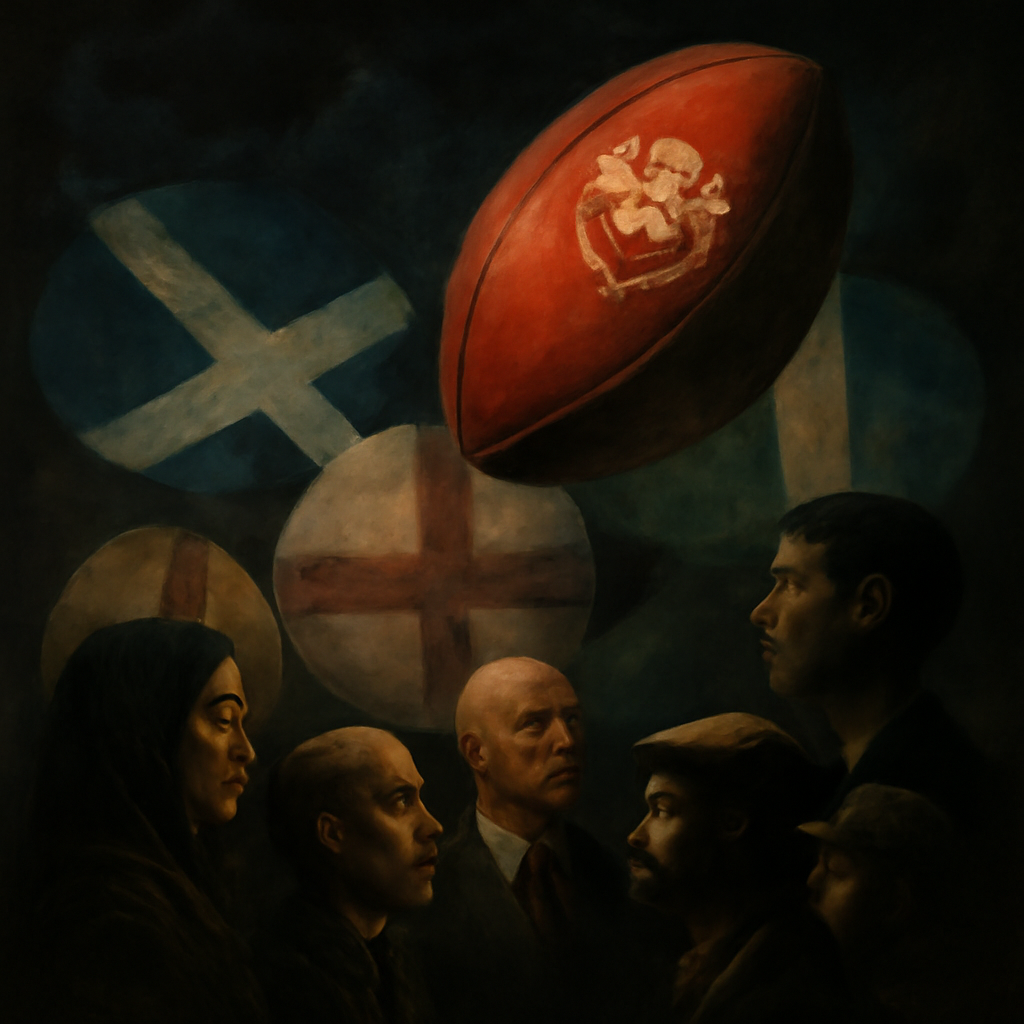
Who Watches the Six Nations? The Surprising Mix of Rugby Fans in the UK
Picture a freezing Saturday in February. Millions of people across the UK are glued to their TVs, shouting at the screen. They are watching the Six Nations, rugby's oldest and greatest tournament. But who are these people? If you think rugby is only for wealthy folks who went to fancy boarding schools, you might want to think again. The crowd is changing fast.
Today, the Six Nations is a massive national event that draws in families, casual viewers, and a huge number of women. In fact, women make up nearly half the fan base now. In Wales, the tournament is almost like a religion, bringing together people from every single walk of life. In England, the crowd still leans a bit wealthier, but the net is widening every year.
This is not just a game. It is a cultural moment that tells us a lot about class, identity, and community in modern Britain. Let us take a closer look at who actually makes up the crowd.
“In Wales, a Six Nations match can pull in more than 60% of the entire TV audience. That means rugby is a bigger national event in Wales than the Super Bowl is in the United States.”
Reflect
If sport can bring an entire country together across class lines in Wales, why does it divide people so deeply in other parts of the world?
Research·Developing confidence·Investigated 14 Jul 2026(2 months ago)·Investigation may be outdated
Your next question, in
Visual Trail
See Who Watches the Six Nations? The Surprising Mix of Rugby Fans in the UK
A guided visual explanation assembled from QE artwork and sourced documentary images.
01 / 03
QE visual interpretation
Frame 01
Who Watches the Six Nations? The Surprising Mix of Rugby Fans in the UK
The Six Nations brings together an unexpected mix of wealthy traditionalists, everyday families, and a massive wave of new female fans.
Image provenance and limitation
Source: AI-generated visual interpretation
Creator: Question Everything
Limitation: This image explains or evokes the subject. It is not documentary evidence and should not be used to verify a factual claim.
Evidence
What do we know?
Verified claims with confidence scoring and cited sources.
Generated without source retrieval. QE did not fetch sources for this investigation, so no citation here was checked against a retrieved set. Claims reflect the model’s training data. 3 of 3 findings carry no openable link at all.
Living footnotes
Claims remain in the reading flow. Select a citation number to inspect the source behind it.
01
StatisticalNot confirmed
Nearly 40% of the Six Nations TV audience in the UK is female.
For a long time, rugby was seen as a sport for men, run by men, and watched by men. But the data shows this is no longer true. During the Six Nations, women make up about 40% of the total TV audience. This is one of the highest female viewing rates for any major male sporting event in the world.
This high percentage is partly because the tournament is shown on free-to-air TV channels like the BBC and ITV. Because anyone can watch it without paying for an expensive sports package, it becomes a social event that families watch together at home rather than just a niche hobby for die-hard sports fans.
02
StatisticalNot confirmed
Rugby fans in the UK are generally wealthier than the average sports fan.
Advertisers love the Six Nations because the people watching have money to spend. Statistics show that rugby union fans are much more likely to fall into higher income brackets compared to football fans. They are also more likely to have university degrees.
This wealth profile is why you see sponsors like luxury watchmakers, premium car brands, and investment banks advertising during the matches. In contrast, football matches are often sponsored by betting companies and fast-food chains. Rugby fans are simply seen as a prime target for high-end products.
03
ObservationalNot confirmed
In Wales, rugby viewing crosses all class barriers, unlike in England.
In England, rugby is historically linked to private schools in the south, which makes it feel a bit exclusive. But in Wales, the story is completely different. Rugby is the national sport and belongs to everyone. It grew out of the working-class mining and industrial communities of South Wales.
During a big Six Nations match, more than half of the entire TV-watching population in Wales will tune in. It does not matter how much money you make or where you went to school; in Wales, the Six Nations is a core part of national identity.
The complete record below preserves every citation, confidence input and recorded limitation.
Read the full evidence record3 findings · citations · limitations
Evidence review3 findings0 openable sources
01
Finding 1 of 3Statistical
0/0 verified
Nearly 40% of the Six Nations TV audience in the UK is female.
For a long time, rugby was seen as a sport for men, run by men, and watched by men. But the data shows this is no longer true. During the Six Nations, women make up about 40% of the total TV audience. This is one of the highest female viewing rates for any major male sporting event in the world.
This high percentage is partly because the tournament is shown on free-to-air TV channels like the BBC and ITV. Because anyone can watch it without paying for an expensive sports package, it becomes a social event that families watch together at home rather than just a niche hobby for die-hard sports fans.
Not confirmedmodel score 95%
Written from the model's own knowledge. No source was retrieved or checked.
UNVERIFIED — NO RETRIEVAL
›View sources and limits— limits
Supporting passage
For a long time, rugby was seen as a sport for men, run by men, and watched by men. But the data shows this is no longer true. During the Six Nations, women make up about 40% of the total TV audience. This is one of the highest female viewing rates for any major male sporting event in the world.
This high percentage is partly because the tournament is shown on free-to-air TV channels like the BBC and ITV. Because anyone can watch it without paying for an expensive sports package, it becomes a social event that families watch together at home rather than just a niche hobby for die-hard sports fans.
Citations (0 of 1 survived verification)
Nothing openable. No sources were retrieved for this investigation, so none were checked.
What limits this
This investigation was generated without source retrieval. The model named a source but gave no link, and no verification step ran against it.
The claim reflects the model's training data, not a checked citation.
The generator scored this 95%, which would read as “Established”. Its citations reach only “Unresolved”, so that is what is shown.
02
Finding 2 of 3Statistical
0/0 verified
Rugby fans in the UK are generally wealthier than the average sports fan.
Advertisers love the Six Nations because the people watching have money to spend. Statistics show that rugby union fans are much more likely to fall into higher income brackets compared to football fans. They are also more likely to have university degrees.
This wealth profile is why you see sponsors like luxury watchmakers, premium car brands, and investment banks advertising during the matches. In contrast, football matches are often sponsored by betting companies and fast-food chains. Rugby fans are simply seen as a prime target for high-end products.
Not confirmedmodel score 92%
Written from the model's own knowledge. No source was retrieved or checked.
UNVERIFIED — NO RETRIEVAL
›View sources and limits— limits
Supporting passage
Advertisers love the Six Nations because the people watching have money to spend. Statistics show that rugby union fans are much more likely to fall into higher income brackets compared to football fans. They are also more likely to have university degrees.
This wealth profile is why you see sponsors like luxury watchmakers, premium car brands, and investment banks advertising during the matches. In contrast, football matches are often sponsored by betting companies and fast-food chains. Rugby fans are simply seen as a prime target for high-end products.
Citations (0 of 1 survived verification)
Nothing openable. No sources were retrieved for this investigation, so none were checked.
What limits this
This investigation was generated without source retrieval. The model named a source but gave no link, and no verification step ran against it.
The claim reflects the model's training data, not a checked citation.
The generator scored this 92%, which would read as “Established”. Its citations reach only “Unresolved”, so that is what is shown.
03
Finding 3 of 3Observational
0/0 verified
In Wales, rugby viewing crosses all class barriers, unlike in England.
In England, rugby is historically linked to private schools in the south, which makes it feel a bit exclusive. But in Wales, the story is completely different. Rugby is the national sport and belongs to everyone. It grew out of the working-class mining and industrial communities of South Wales.
During a big Six Nations match, more than half of the entire TV-watching population in Wales will tune in. It does not matter how much money you make or where you went to school; in Wales, the Six Nations is a core part of national identity.
Not confirmedmodel score 98%
Written from the model's own knowledge. No source was retrieved or checked.
UNVERIFIED — NO RETRIEVAL
›View sources and limits— limits
Supporting passage
In England, rugby is historically linked to private schools in the south, which makes it feel a bit exclusive. But in Wales, the story is completely different. Rugby is the national sport and belongs to everyone. It grew out of the working-class mining and industrial communities of South Wales.
During a big Six Nations match, more than half of the entire TV-watching population in Wales will tune in. It does not matter how much money you make or where you went to school; in Wales, the Six Nations is a core part of national identity.
Citations (0 of 1 survived verification)
Nothing openable. No sources were retrieved for this investigation, so none were checked.
What limits this
This investigation was generated without source retrieval. The model named a source but gave no link, and no verification step ran against it.
The claim reflects the model's training data, not a checked citation.
The generator scored this 98%, which would read as “Established”. Its citations reach only “Unresolved”, so that is what is shown.
Interactive Exploration
Touch, drag, and discover
These visualizations respond to your curiosity. Interact to go deeper.
comparison table
Rugby vs Football Fans in the UK
Six Nations Rugby Fans
Premier League Football Fans
Average Income
Higher (More middle & upper class)
Average (Very mixed, strong working-class roots)
Gender Split
Roughly 60% Male / 40% Female
Roughly 75% Male / 25% Female
Stadium Atmosphere
Fans sit together, family-focused
Fans strictly separated, high emotion
Tap any row to highlight and compare
statistics card
The Six Nations Fan by the Numbers
40%
Female Viewers
One of the highest female audiences for any major male sport.
60%+
Welsh TV Share
More than half of Wales tunes in during big matches.
45+
Average Age
The audience tends to be older, with high spending power.
spectrum
How Class Identity Varies by Nation
Working Class RootedTraditionally Posh
15%
Wales
60%
Scotland
85%
England
Visual Gallery
Images & artifacts
Historical images, diagrams, and visual knowledge from Wikimedia Commons.
Perspectives
How is this interpreted?
Enter a viewpoint. Notice what it reveals, what it leaves out, and whether it changes the question for you.
The EmpiricistScientific viewpointEstablished lens
From a data and marketing point of view, the Six Nations fan base is incredibly stable and valuable. Because the games are on free TV, it acts as a 'gateway drug' for casual viewers who do not watch rugby the rest of the year. This makes it a rare and precious shop window for the sport, attracting people who would never buy a ticket to a local club match.
Personal reflections and applications for your life.
Thought experimentPractical
How do advertisements change based on who is watching?
Why it changes the question
Next time you watch a Six Nations match, pay close attention to the commercial breaks. You will see luxury cars, premium watches, and financial services. This is a real-life lesson in how companies target different social classes. It shows you exactly who the TV channels think is sitting on the sofa.
Try this
Compare the adverts during a Six Nations rugby match with those during a Premier League football match to see the difference in target audiences.
Media
QE Smart Glass
Curated media selected for this investigation.
QE Glass
YOUTUBE
What Is Sociology?: Crash Course Sociology #1
CrashCourse
Today we kick off Crash Course Sociology by explaining what exactly sociology is. We'll introduce the sociological perspective ...
QE Glass
YOUTUBE
Cultures, Subcultures, and Countercultures: Crash Course Sociology #11
CrashCourse
What is culture? How do we define it and how does it change? We'll explore different categories of culture, like low culture, high ...
QE Glass
YOUTUBE
Social Stratification: Crash Course Sociology #21
CrashCourse
How do different societies establish a social hierarchy? Today we're starting our unit on social stratification, starting with four basic ...
QE Glass
YOUTUBE
Social Mobility: Crash Course Sociology #26
CrashCourse
Today we're exploring social mobility in some more depth. We'll look at intergenerational and intragenerational mobility and the ...
QE Glass
YOUTUBE
Race & Ethnicity: Crash Course Sociology #34
CrashCourse
What's the difference between race and ethnicity? Today we'll look at how definitions of races and ethnicities have changed over ...
QE Glass
YOUTUBE
MIT Has Predicted that Society Will Collapse in 2040 | Economics Explained
Economics Explained
The first 1000 fans to signup with this link will get a 1 month free trial of Skillshare https://skl.sh/economicsexplained11211 ...
QE Glass
YOUTUBE
Rugby: A Welsh Religion
BBC Sport
A great look at why rugby is so deeply tied to Welsh community and history.
QE Glass
PODCAST
The Good, The Bad & The Rugby
The Good, The Bad & The Rugby
A very funny, down-to-earth podcast that captures the friendly, beer-drinking culture of rugby fans.
Keep Going
Where this leads
Questions this investigation opens up — and what QE has already looked into.
No AI help here — no suggestions, no autocomplete, nothing finishing your sentences. That is deliberate. Working out what you think is effortful, and the effort is the part that changes you: reasoning is trained like a muscle, and a muscle that is always carried gets weaker. Let something else do the thinking and you keep the answer but lose the capacity to have reached it.
Write your current position.
Not what the page says. What you think, having read it.0 words · Nothing written yet.
Sign in to leave a mark. Your draft is saved here in the meantime.