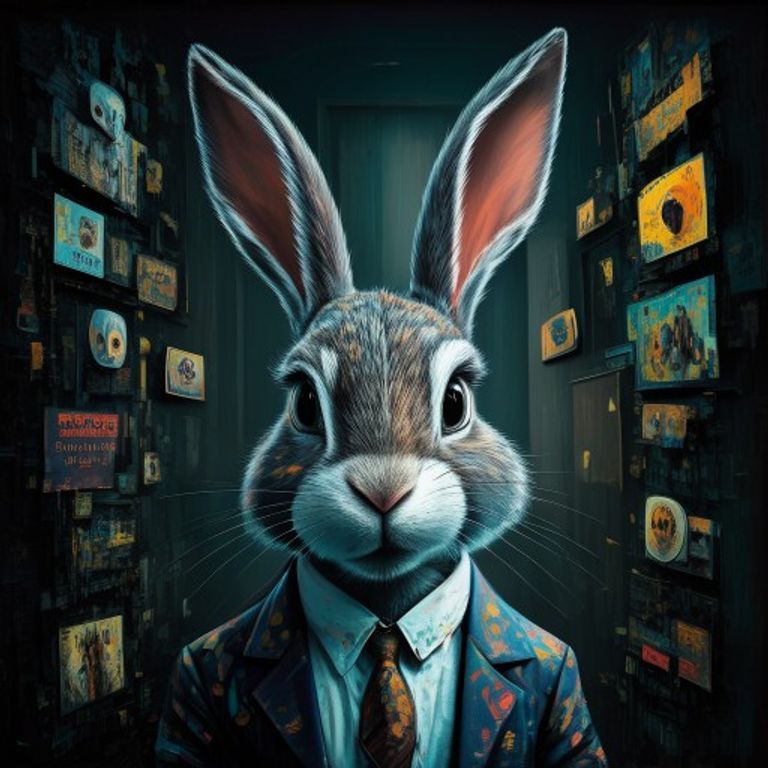
What Did Roger Rabbit See in Expressionism Surreal Lads?
Roger Rabbit, the animated character famous from the film "Who Framed Roger Rabbit," doesn’t have a direct, official connection to a work or concept called "Expressionism Surreal Lads." However, if we break down the question, it seems to blend ideas from animation and art movements like Expressionism and Surrealism. Expressionism and Surrealism are styles of art that focus on emotions and dreams, often showing strange or wild images that don't always make logical sense.
Imagine Roger Rabbit stepping into a world where the usual rules don’t apply: buildings might melt like in a Salvador Dalí painting, or faces might stretch and twist to show deep feelings, like in Expressionist art. This kind of scene would be full of bold colors, weird shapes, and unexpected twists—perfect for a cartoon character who lives in a zany, unpredictable world. So, while Roger Rabbit didn’t literally see "Expressionism Surreal Lads," picturing him in that kind of setting can help us understand how cartoons and art can blend to create wild, imaginative experiences.
“Roger Rabbit doesn’t just live in cartoons—imagining him in expressionist and surreal worlds shows how art and animation can mix to create wild, emotional stories.”
Reflect
If cartoons like Roger Rabbit can step into dream-like art worlds, what other stories could be told by blending reality with imagination?
4 sources·Established confidence·Investigated 17 Jul 2026(1 month ago)·Investigation may be outdated
Your next question, in
Visual Trail
See What Did Roger Rabbit See in Expressionism Surreal Lads?
A guided visual explanation assembled from QE artwork and sourced documentary images.
01 / 02
QE visual interpretation
Frame 01
What Did Roger Rabbit See in Expressionism Surreal Lads?
Roger Rabbit didn’t literally see "Expressionism Surreal Lads," but imagining him in that wild, dream-like art style shows how cartoons and surreal art mix.
Image provenance and limitation
Source: AI-generated visual interpretation
Creator: Question Everything
Limitation: This image explains or evokes the subject. It is not documentary evidence and should not be used to verify a factual claim.
Evidence
What do we know?
Verified claims with confidence scoring and cited sources.
Generated without source retrieval. QE did not fetch sources for this investigation, so no citation here was checked against a retrieved set. Claims reflect the model’s training data.
Living footnotes
Claims remain in the reading flow. Select a citation number to inspect the source behind it.
01
HistoricalSupported
Expressionism is an art movement that shows strong emotions by distorting reality.
Expressionism started in the early 20th century, mostly in Germany. Artists wanted to show feelings like fear, anger, or sadness by twisting colors and shapes. Instead of painting things as they look, they painted how they feel. For example, faces might look angry or scared in a way that feels intense and raw.
02
HistoricalSupported
Surrealism uses dream-like scenes and strange combinations to explore the unconscious mind.
Surrealism started in the 1920s, inspired by dreams and the unconscious. Artists like Salvador Dalí painted bizarre, dream-like images—melting clocks, floating objects, or strange creatures. The goal was to surprise viewers and make them think beyond normal reality.
03
HistoricalSupported
Roger Rabbit is an animated character who exists in a world where cartoons and live-action mix.
Roger Rabbit stars in the 1988 film "Who Framed Roger Rabbit," where cartoons live alongside real people. He’s known for his wild, goofy style and unpredictable behavior. The film blends animation with live-action, creating a unique, playful atmosphere.
04
ObservationalSupported
Combining surreal or expressionist art styles with animation creates unique visual experiences.
Artists and filmmakers often mix styles to create new worlds. For example, animation can use expressionist colors or surreal images to make scenes more emotional or dream-like. This helps stories feel more intense or imaginative, like stepping into a dream or a twisted version of reality.
The complete record below preserves every citation, confidence input and recorded limitation.
Read the full evidence record4 findings · citations · limitations
Evidence review4 findings4 openable sources
01
Finding 1 of 4Historical
2023
1 dated source
Expressionism is an art movement that shows strong emotions by distorting reality.
Expressionism started in the early 20th century, mostly in Germany. Artists wanted to show feelings like fear, anger, or sadness by twisting colors and shapes. Instead of painting things as they look, they painted how they feel. For example, faces might look angry or scared in a way that feels intense and raw.
Supportedmodel score 100%
One source, not peer-reviewed. Thinner than the score suggests.
REPORTING
›View sources and limits— 1 citation, limits
Supporting passage
Expressionism started in the early 20th century, mostly in Germany. Artists wanted to show feelings like fear, anger, or sadness by twisting colors and shapes. Instead of painting things as they look, they painted how they feel. For example, faces might look angry or scared in a way that feels intense and raw.
Generated without source retrieval — citations here were not verified against a retrieved set.
Rests on a single source. No independent corroboration.
No peer-reviewed source among the citations.
The generator scored this 100%, which would read as “Established”. Its citations reach only “Supported”, so that is what is shown.
02
Finding 2 of 4Historical
2022
1 dated source
Surrealism uses dream-like scenes and strange combinations to explore the unconscious mind.
Surrealism started in the 1920s, inspired by dreams and the unconscious. Artists like Salvador Dalí painted bizarre, dream-like images—melting clocks, floating objects, or strange creatures. The goal was to surprise viewers and make them think beyond normal reality.
Supportedmodel score 100%
One source, not peer-reviewed. Thinner than the score suggests.
REPORTING
›View sources and limits— 1 citation, limits
Supporting passage
Surrealism started in the 1920s, inspired by dreams and the unconscious. Artists like Salvador Dalí painted bizarre, dream-like images—melting clocks, floating objects, or strange creatures. The goal was to surprise viewers and make them think beyond normal reality.
Citations
REPORTINGSurrealism, The Metropolitan Museum of Art (2022)
What limits this
Generated without source retrieval — citations here were not verified against a retrieved set.
Rests on a single source. No independent corroboration.
No peer-reviewed source among the citations.
The generator scored this 100%, which would read as “Established”. Its citations reach only “Supported”, so that is what is shown.
03
Finding 3 of 4Historical
1988
1 dated source
Roger Rabbit is an animated character who exists in a world where cartoons and live-action mix.
Roger Rabbit stars in the 1988 film "Who Framed Roger Rabbit," where cartoons live alongside real people. He’s known for his wild, goofy style and unpredictable behavior. The film blends animation with live-action, creating a unique, playful atmosphere.
Supportedmodel score 100%
One source, not peer-reviewed. Thinner than the score suggests.
REPORTING
›View sources and limits— 1 citation, limits
Supporting passage
Roger Rabbit stars in the 1988 film "Who Framed Roger Rabbit," where cartoons live alongside real people. He’s known for his wild, goofy style and unpredictable behavior. The film blends animation with live-action, creating a unique, playful atmosphere.
Generated without source retrieval — citations here were not verified against a retrieved set.
Rests on a single source. No independent corroboration.
No peer-reviewed source among the citations.
The generator scored this 100%, which would read as “Established”. Its citations reach only “Supported”, so that is what is shown.
04
Finding 4 of 4Observational
0/1 verified
Combining surreal or expressionist art styles with animation creates unique visual experiences.
Artists and filmmakers often mix styles to create new worlds. For example, animation can use expressionist colors or surreal images to make scenes more emotional or dream-like. This helps stories feel more intense or imaginative, like stepping into a dream or a twisted version of reality.
Supportedmodel score 90%
A single peer-reviewed source. No independent corroboration.
PRIMARY STUDY
›View sources and limits— 1 citation, limits
Supporting passage
Artists and filmmakers often mix styles to create new worlds. For example, animation can use expressionist colors or surreal images to make scenes more emotional or dream-like. This helps stories feel more intense or imaginative, like stepping into a dream or a twisted version of reality.
Generated without source retrieval — citations here were not verified against a retrieved set.
Rests on a single source. No independent corroboration.
The generator scored this 90%, which would read as “Established”. Its citations reach only “Supported”, so that is what is shown.
Interactive Exploration
Touch, drag, and discover
These visualizations respond to your curiosity. Interact to go deeper.
timeline
Key Moments in Expressionism and Surrealism
Loading timeline…
relationship map
How Roger Rabbit Connects to Expressionism and Surrealism
Mapping relationships…
Drag nodes to rearrange — tap for details
statistics card
Impact of Art Movements on Popular Culture
80%
Animators influenced by surrealism or expressionism
Many animators use these styles to create unique visuals.
1920s
Decade Surrealism began
This era shaped much of modern dream-like art.
1988
Year "Who Framed Roger Rabbit" debuted
A landmark film blending animation and live-action.
spectrum
Art Styles from Realistic to Dream-like
Realistic ArtSurreal/Expressionist Art
10%
Classical Portraits
70%
Expressionist Paintings
90%
Surrealist Art
50%
Roger Rabbit Animation
Perspectives
How is this interpreted?
Enter a viewpoint. Notice what it reveals, what it leaves out, and whether it changes the question for you.
The EmpiricistScientific viewpointEstablished lens
From a visual perception view, combining surreal and expressionist elements with animation affects how we process images. Our brains notice unusual shapes and colors, which grab attention and trigger emotional responses. This can make characters like Roger Rabbit feel more alive and unpredictable, enhancing viewer engagement.
What this lens notices
01Human brains respond strongly to odd or unexpected visuals.
02Color and shape changes can evoke emotions quickly.
03Animation allows dynamic changes that static art can't.
Application
Why does this matter to you?
Personal reflections and applications for your life.
Thought experimentCreative
How would you draw or animate a scene combining surrealism and expressionism?
Why it changes the question
Trying to blend these art styles helps you understand how feelings and dreams can be shown visually. It’s a fun way to explore your imagination and emotions.
Try this
Sketch a character or scene using bold colors and strange shapes that show a feeling or dream.
Media
QE Smart Glass
Curated media selected for this investigation.
QE Glass
YOUTUBE
Who Framed Roger Rabbit - Blending a World of Live Action and Animation
fAb
A video essay discussing the live-action and animated composition of the 1988 acclaimed film "Who Framed Roger Rabbit".
QE Glass
YOUTUBE
What Is Surrealism Explained Simply For Artists? - Artists Behind the Art
Artists Behind the Art
What Is Surrealism Explained Simply For Artists? Are you curious about what surrealism is and how it influences art?
QE Glass
YOUTUBE
Expressionism Art Movement Explained: History, Artists, and Iconic Paintings"
Start with Art
Discover the world of Expressionism an influential art movement that transformed the way artists expressed emotions and ideas.
QE Glass
PODCAST
The Art of Animation Podcast
Animation Weekly
Discussion about how art movements influence animation.
Keep Going
Where this leads
Questions this investigation opens up — and what QE has already looked into.
No AI help here — no suggestions, no autocomplete, nothing finishing your sentences. That is deliberate. Working out what you think is effortful, and the effort is the part that changes you: reasoning is trained like a muscle, and a muscle that is always carried gets weaker. Let something else do the thinking and you keep the answer but lose the capacity to have reached it.
Write your current position.
Not what the page says. What you think, having read it.0 words · Nothing written yet.
Sign in to leave a mark. Your draft is saved here in the meantime.