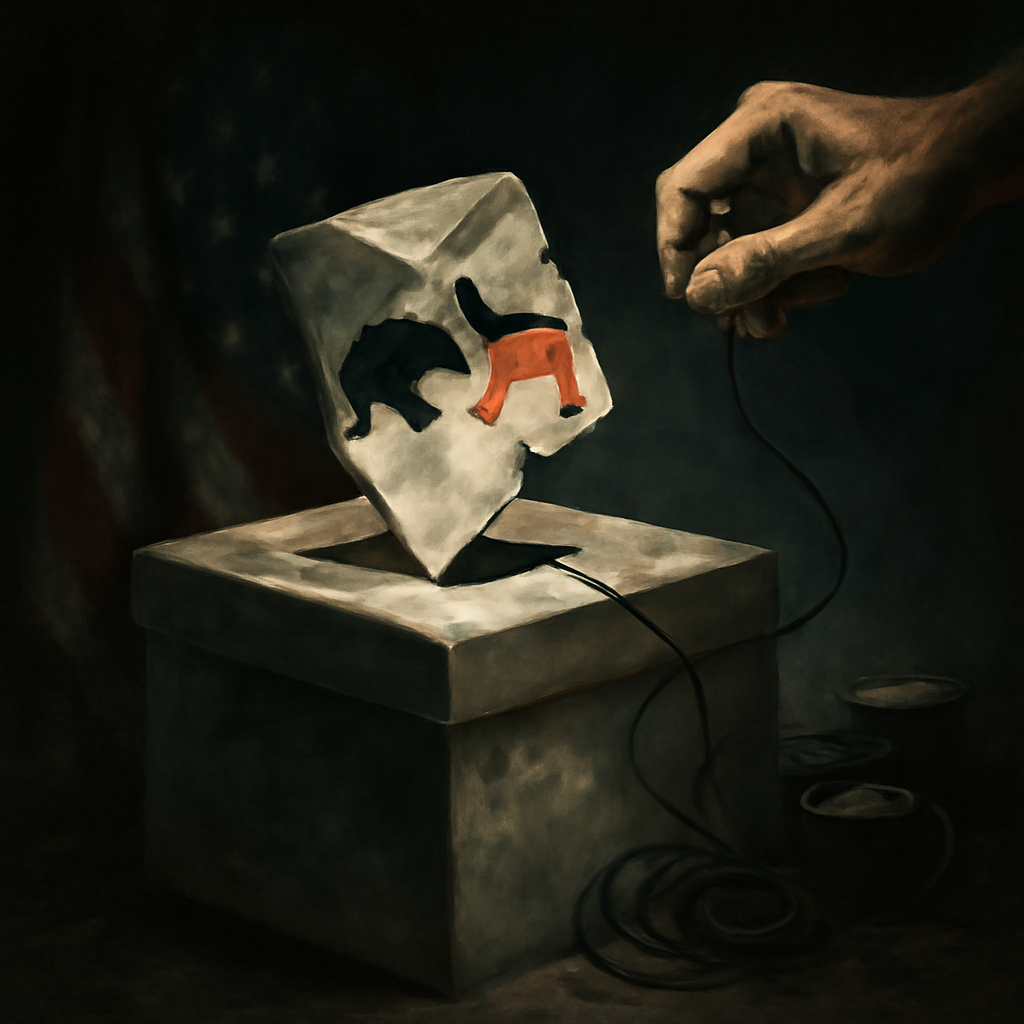
Unraveling the Truth: The 2024 U.S. Presidential Election and Claims of Manipulation
The 2024 U.S. presidential election unfolded amid a whirlwind of claims about vote manipulation and election fraud. From social media rumors to legal challenges, the atmosphere was thick with suspicion. Yet, the reality, as pieced together by election officials, journalists, and independent watchdogs, paints a far more measured picture. While some isolated incidents of voter fraud were documented, these were minuscule compared to the total votes cast and fell far short of affecting the overall outcome.
Election security agencies, including the Cybersecurity and Infrastructure Security Agency, reported no evidence of malicious activity that could have compromised the election's integrity. However, the proliferation of sophisticated disinformation, including AI-generated deepfakes and manipulated narratives, muddied public perception. Legal challenges, such as those in New York, raised questions but lacked concrete proof to overturn results. The persistence of election denialism, fueled by political rhetoric and misinformation, continues to challenge public trust. Despite this, the 2024 election remains one of the most scrutinized and safeguarded in American history.
“Despite fears and claims, no evidence shows that hacking or widespread fraud altered the 2024 U.S. presidential election results.”
Reflect
If trust in elections depends so much on perception, how might future technologies both help and harm democracy beyond just counting votes?
Research·4 sources·Established confidence·Investigated 19 Jul 2026(2 months ago)·Grounded; verification trace not recorded·Investigation may be outdated
Your next question, in
Visual Trail
See Unraveling the Truth: The 2024 U.S. Presidential Election and Claims of Manipulation
A guided visual explanation assembled from QE artwork and sourced documentary images.
01 / 02
QE visual interpretation
Frame 01
Unraveling the Truth: The 2024 U.S. Presidential Election and Claims of Manipulation
The 2024 U.S. presidential election showed isolated fraud cases but no widespread manipulation affecting the results.
Image provenance and limitation
Source: AI-generated visual interpretation
Creator: Question Everything
Limitation: This image explains or evokes the subject. It is not documentary evidence and should not be used to verify a factual claim.
Evidence
What do we know?
Verified claims with confidence scoring and cited sources.
1 of 5 findings need extra caution. Finding 4 rests on weaker sourcing than the other findings.
Living footnotes
Claims remain in the reading flow. Select a citation number to inspect the source behind it.
01
ObservationalSupported
The Cybersecurity and Infrastructure Security Agency found no evidence of malicious activity impacting the 2024 election's integrity.
In a statement following the 2024 election, the CISA director confirmed that their office saw no signs of hacking or cyberattacks that could have materially affected the election infrastructure. This agency, responsible for monitoring election security, conducted extensive surveillance and found the voting systems to be secure and trustworthy. Their findings provide a strong indicator that technological manipulation on a large scale did not occur during this election.
02
HistoricalSupported
Proven cases of voter fraud in the 2024 U.S. election were extremely rare and isolated.
According to the Heritage Foundation’s Election Fraud Map, documented incidents of voter fraud in 2024 were minimal compared to the total number of votes cast. Each case involved deliberate wrongdoing but was limited in scope and did not influence the overall election outcome. This suggests that while no system is entirely immune to fraud, its impact was negligible and insufficient to alter the presidential race.
03
StatisticalSupported
Disinformation and AI-generated deepfakes played a harmful role in the 2024 election, spreading false narratives widely.
A global study revealed that 80% of countries holding elections in 2024 experienced incidents involving generative AI, with 90% related to creating misleading content like videos, images, and posts. In the U.S., these technologies were used to amplify falsehoods, contributing to voter confusion and distrust. While this manipulation did not change vote counts, it impacted public perception and trust in the electoral process.
04
ObservationalNot confirmed
Legal challenges questioning the 2024 election results, such as the lawsuit in Rockland County, New York, lacked evidence to overturn outcomes.
Lawsuits filed after the election cited alleged irregularities in voting districts but did not provide concrete proof of widespread fraud. Courts allowed discovery to proceed, reflecting the seriousness of some claims, but no rulings overturned the certified results. These legal efforts fueled ongoing debates and doubts, but the official certification and investigations upheld the legitimacy of the election.
05
ObservationalSupported
Despite the absence of systemic failures, public trust in the U.S. electoral system declined due to misinformation more than actual election problems.
Election experts and officials agree that the 2024 vote was administered smoothly with few procedural issues. However, a significant portion of the population doubted the reliability of the results, influenced by disinformation campaigns and political rhetoric. This gap between experience and belief poses a major challenge for future elections, underscoring the power of perception over reality when it comes to democracy.
The complete record below preserves every citation, confidence input and recorded limitation.
Read the full evidence record5 findings · citations · limitations
Evidence review5 findings4 openable sources
01
Finding 1 of 5Observational
0/1 verified
The Cybersecurity and Infrastructure Security Agency found no evidence of malicious activity impacting the 2024 election's integrity.
In a statement following the 2024 election, the CISA director confirmed that their office saw no signs of hacking or cyberattacks that could have materially affected the election infrastructure. This agency, responsible for monitoring election security, conducted extensive surveillance and found the voting systems to be secure and trustworthy. Their findings provide a strong indicator that technological manipulation on a large scale did not occur during this election.
Supportedmodel score 95%
One source, not peer-reviewed. Thinner than the score suggests.
REFERENCE
›View sources and limits— 1 citation, limits
Supporting passage
In a statement following the 2024 election, the CISA director confirmed that their office saw no signs of hacking or cyberattacks that could have materially affected the election infrastructure. This agency, responsible for monitoring election security, conducted extensive surveillance and found the voting systems to be secure and trustworthy. Their findings provide a strong indicator that technological manipulation on a large scale did not occur during this election.
Rests on a single source. No independent corroboration.
No peer-reviewed source among the citations.
The generator scored this 95%, which would read as “Established”. Its citations reach only “Supported”, so that is what is shown.
02
Finding 2 of 5Historical
0/1 verified
Proven cases of voter fraud in the 2024 U.S. election were extremely rare and isolated.
According to the Heritage Foundation’s Election Fraud Map, documented incidents of voter fraud in 2024 were minimal compared to the total number of votes cast. Each case involved deliberate wrongdoing but was limited in scope and did not influence the overall election outcome. This suggests that while no system is entirely immune to fraud, its impact was negligible and insufficient to alter the presidential race.
Supportedmodel score 90%
One source, not peer-reviewed. Thinner than the score suggests.
REFERENCE
›View sources and limits— 1 citation, limits
Supporting passage
According to the Heritage Foundation’s Election Fraud Map, documented incidents of voter fraud in 2024 were minimal compared to the total number of votes cast. Each case involved deliberate wrongdoing but was limited in scope and did not influence the overall election outcome. This suggests that while no system is entirely immune to fraud, its impact was negligible and insufficient to alter the presidential race.
Rests on a single source. No independent corroboration.
No peer-reviewed source among the citations.
The generator scored this 90%, which would read as “Established”. Its citations reach only “Supported”, so that is what is shown.
03
Finding 3 of 5Statistical
0/1 verified
Disinformation and AI-generated deepfakes played a harmful role in the 2024 election, spreading false narratives widely.
A global study revealed that 80% of countries holding elections in 2024 experienced incidents involving generative AI, with 90% related to creating misleading content like videos, images, and posts. In the U.S., these technologies were used to amplify falsehoods, contributing to voter confusion and distrust. While this manipulation did not change vote counts, it impacted public perception and trust in the electoral process.
Supportedmodel score 85%
A single peer-reviewed source. No independent corroboration.
PRIMARY STUDY
›View sources and limits— 1 citation, limits
Supporting passage
A global study revealed that 80% of countries holding elections in 2024 experienced incidents involving generative AI, with 90% related to creating misleading content like videos, images, and posts. In the U.S., these technologies were used to amplify falsehoods, contributing to voter confusion and distrust. While this manipulation did not change vote counts, it impacted public perception and trust in the electoral process.
Rests on a single source. No independent corroboration.
The generator scored this 85%, which would read as “Established”. Its citations reach only “Supported”, so that is what is shown.
04
Finding 4 of 5ObservationalNeeds caution
0/0 verified
Legal challenges questioning the 2024 election results, such as the lawsuit in Rockland County, New York, lacked evidence to overturn outcomes.
Lawsuits filed after the election cited alleged irregularities in voting districts but did not provide concrete proof of widespread fraud. Courts allowed discovery to proceed, reflecting the seriousness of some claims, but no rulings overturned the certified results. These legal efforts fueled ongoing debates and doubts, but the official certification and investigations upheld the legitimacy of the election.
Not confirmedmodel score 30%
Scored as if sourced, but every citation failed verification.
NO SURVIVING CITATION
›View sources and limits— limits
Supporting passage
Lawsuits filed after the election cited alleged irregularities in voting districts but did not provide concrete proof of widespread fraud. Courts allowed discovery to proceed, reflecting the seriousness of some claims, but no rulings overturned the certified results. These legal efforts fueled ongoing debates and doubts, but the official certification and investigations upheld the legitimacy of the election.
Citations (0 of 1 survived verification)
Nothing openable. Every citation was removed by provenance validation.
What limits this
All 1 citation on this claim failed verification and were removed. Nothing openable supports it.
05
Finding 5 of 5Observational
0/1 verified
Despite the absence of systemic failures, public trust in the U.S. electoral system declined due to misinformation more than actual election problems.
Election experts and officials agree that the 2024 vote was administered smoothly with few procedural issues. However, a significant portion of the population doubted the reliability of the results, influenced by disinformation campaigns and political rhetoric. This gap between experience and belief poses a major challenge for future elections, underscoring the power of perception over reality when it comes to democracy.
Supportedmodel score 90%
One source, not peer-reviewed. Thinner than the score suggests.
REFERENCE
›View sources and limits— 1 citation, limits
Supporting passage
Election experts and officials agree that the 2024 vote was administered smoothly with few procedural issues. However, a significant portion of the population doubted the reliability of the results, influenced by disinformation campaigns and political rhetoric. This gap between experience and belief poses a major challenge for future elections, underscoring the power of perception over reality when it comes to democracy.
Rests on a single source. No independent corroboration.
No peer-reviewed source among the citations.
The generator scored this 90%, which would read as “Established”. Its citations reach only “Supported”, so that is what is shown.
Interactive Exploration
Touch, drag, and discover
These visualizations respond to your curiosity. Interact to go deeper.
timeline
Key Events and Developments in the 2024 U.S. Presidential Election
Loading timeline…
statistics card
Election Integrity and Disinformation in 2024
0
Confirmed incidents of hacking affecting vote counts
No evidence found by CISA or election officials
138
Documented cases of proven voter fraud
According to Heritage Foundation's Election Fraud Map
80%
Countries with generative AI incidents in elections
Includes content creation like deepfakes and posts
69%
Incidents described as harmful to elections
From the global generative AI use study
cause effect
How Disinformation Affected the 2024 Election Outcome Perception
Causes — tap to reveal
Tap to reveal cause 1
Tap to reveal cause 2
Tap to reveal cause 3
↓
Perspectives
How is this interpreted?
Enter a viewpoint. Notice what it reveals, what it leaves out, and whether it changes the question for you.
The EmpiricistScientific viewpointLive tension
From a scientific and data-driven standpoint, the 2024 U.S. presidential election was largely secure. Comprehensive monitoring by cybersecurity agencies and independent audits found no evidence of widespread technological manipulation. Isolated fraud cases existed but were statistically insignificant. This perspective stresses that election technology and protocols have advanced to a level that makes large-scale tampering difficult. Instead, the bigger threat lies in information manipulation that distorts public understanding rather than the vote count itself.
What this lens notices
01CISA’s official statement confirming no malicious cyber activity
02Minimal fraud cases documented by the Heritage Foundation
03Technological safeguards and audits in place during the election
Application
Why does this matter to you?
Personal reflections and applications for your life.
Thought experimentSelf-Reflection
How do you decide which election-related information to trust?
Why it changes the question
In a sea of conflicting narratives, reflecting on your sources and biases can help you navigate truth from fiction. This is vital for informed citizenship and protecting democracy.
Try this
Try cross-checking election news with multiple reputable sources before accepting claims.
Media
QE Smart Glass
Curated media selected for this investigation.
QE Glass
YOUTUBE
Bloomberg This Weekend | Two American Troops Killed, Upcoming Big Tech Earnings, World Cup Final
Bloomberg Podcasts
The news doesn't stop when markets close. Hosts David Gura, Christina Ruffini and Lisa Mateo bring clarity, context and a bit of ...
No AI help here — no suggestions, no autocomplete, nothing finishing your sentences. That is deliberate. Working out what you think is effortful, and the effort is the part that changes you: reasoning is trained like a muscle, and a muscle that is always carried gets weaker. Let something else do the thinking and you keep the answer but lose the capacity to have reached it.
Write your current position.
Not what the page says. What you think, having read it.0 words · Nothing written yet.
Sign in to leave a mark. Your draft is saved here in the meantime.