The Wealth of the Wild: How Local Pow… | Question Everything
economics66% confidencepartly supported
25 min deep dive
Complexity
The Wealth of the Wild: How Local Power Shapes Resource Taxes
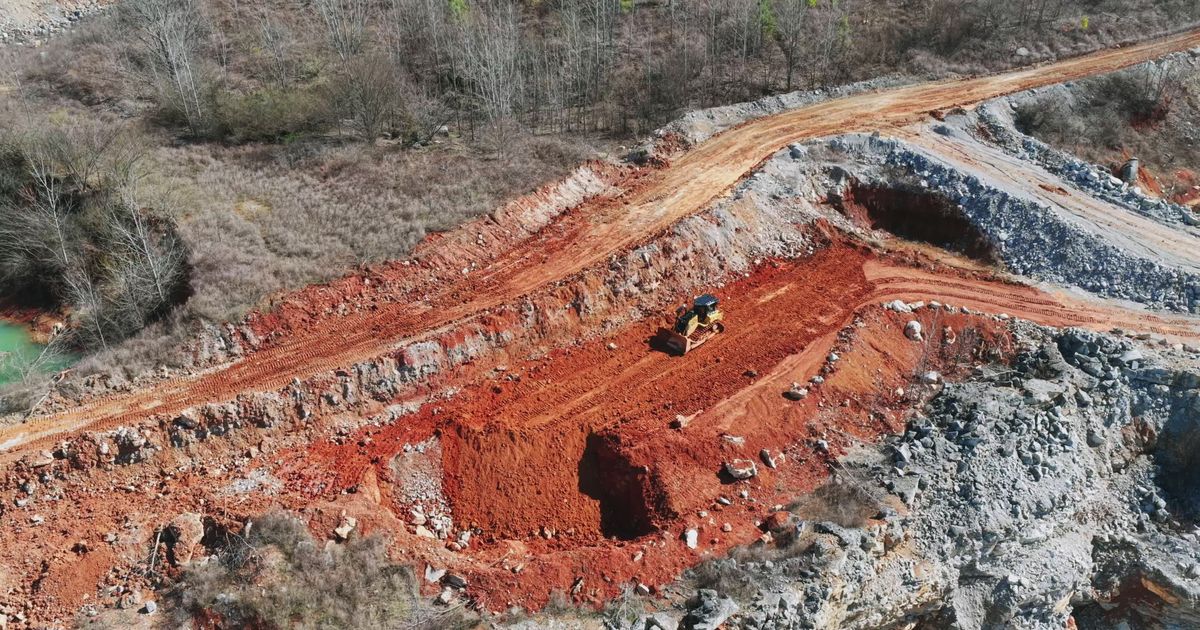
Imagine a land rich in gold, oil, or timber. Who owns this subterranean wealth? When central governments hold the purse strings, resource taxes flow to a single, national pot. But grant fiscal autonomy to the regions, and the landscape changes. Suddenly, local provinces become sovereign competitors. They can slash tax rates to lure global mining giants, or raise them high to fund local schools and roads. It is a delicate, high-stakes game of economic survival.
This decentralization creates a double-edged sword. On one side, local communities directly benefit from the scars left on their land, gaining modern infrastructure and public services. On the other, it triggers a fierce race to the bottom. Regions underbid each other, starving the national treasury and leaving non-resource zones behind. The result is a fragile ecosystem of wealth, where the lines on a map dictate who prospers and who is left in the dust.
“When local governments rely on resource windfalls handed down from the capital rather than taxes they collect themselves, their actual financial independence often plummets.”
Reflect
If the ground beneath your feet holds vast wealth, who truly owns it—the community living above it, or the nation state that draws its borders?
Research·2 sources·Established confidence·Investigated 4 Aug 2026(1 month ago)·Grounded; verification trace not recorded·Investigation may be outdated
Your next question, in
Evidence
What do we know?
Verified claims with confidence scoring and cited sources.
1 of 3 findings need extra caution. Finding 1 rests on weaker sourcing than the other findings.
Living footnotes
Claims remain in the reading flow. Select a citation number to inspect the source behind it.
01
StatisticalNot confirmed
Relying on central government resource revenue-sharing transfers actually reduces a local region's financial independence.
In regions rich with primary resources, you might expect local treasuries to overflow with independent wealth. But the reality is surprising. A study of 140 resource-rich districts in Indonesia revealed that receiving natural resource revenue-sharing funds and general allocation transfers actually has a negative impact on regional financial independence. When central transfers flow too freely, local governments stop optimizing their own tax bases. They become dependent on the capital's handouts, weakening their self-reliance.
02
ObservationalSupported
High dependence on centralized natural resource transfers, like Peru's Canon system, limits the efficiency and accountability of subnational governments.
Look at Peru's dramatic landscapes. Half of the income tax collected from extractive industries is sent back to the regions as a transfer called the Canon. Yet, this wealth is highly concentrated, with Lima collecting twice the per capita revenue of intermediate cities. Because these subnational governments rely heavily on these pre-packaged transfers rather than raising their own taxes, their local efficiency drops. They escape the healthy discipline of borrowing and struggle to manage the volatile, unpredictable waves of resource wealth.
03
StatisticalSupported
Under fiscal revenue decentralization, local tax competition can cause green taxes to inadvertently increase regional pollution.
In the race for local growth, decentralization can backfire. Evidence from China shows that when provinces gain more fiscal autonomy, they compete fiercely for investment. If one region strictly enforces green taxes, carbon-heavy enterprises simply pack up and move to neighboring areas with laxer rules. This "race to the bottom" creates pollution havens. However, when local governments achieve true fiscal self-sufficiency, their interests finally align with long-term carbon reduction, showing that the design of local power dictates environmental survival.
The complete record below preserves every citation, confidence input and recorded limitation.
Read the full evidence record3 findings · citations · limitations
Evidence review3 findings2 openable sources
01
Finding 1 of 3StatisticalNeeds caution
0/0 verified
Relying on central government resource revenue-sharing transfers actually reduces a local region's financial independence.
In regions rich with primary resources, you might expect local treasuries to overflow with independent wealth. But the reality is surprising. A study of 140 resource-rich districts in Indonesia revealed that receiving natural resource revenue-sharing funds and general allocation transfers actually has a negative impact on regional financial independence. When central transfers flow too freely, local governments stop optimizing their own tax bases. They become dependent on the capital's handouts, weakening their self-reliance.
Not confirmedmodel score 30%
Scored as if sourced, but every citation failed verification.
NO SURVIVING CITATION
›View sources and limits— limits
Supporting passage
In regions rich with primary resources, you might expect local treasuries to overflow with independent wealth. But the reality is surprising. A study of 140 resource-rich districts in Indonesia revealed that receiving natural resource revenue-sharing funds and general allocation transfers actually has a negative impact on regional financial independence. When central transfers flow too freely, local governments stop optimizing their own tax bases. They become dependent on the capital's handouts, weakening their self-reliance.
Citations (0 of 1 survived verification)
Nothing openable. Every citation was removed by provenance validation.
What limits this
All 1 citation on this claim failed verification and were removed. Nothing openable supports it.
02
Finding 2 of 3Observational
0/1 verified
High dependence on centralized natural resource transfers, like Peru's Canon system, limits the efficiency and accountability of subnational governments.
Look at Peru's dramatic landscapes. Half of the income tax collected from extractive industries is sent back to the regions as a transfer called the Canon. Yet, this wealth is highly concentrated, with Lima collecting twice the per capita revenue of intermediate cities. Because these subnational governments rely heavily on these pre-packaged transfers rather than raising their own taxes, their local efficiency drops. They escape the healthy discipline of borrowing and struggle to manage the volatile, unpredictable waves of resource wealth.
Supportedmodel score 85%
One source, not peer-reviewed. Thinner than the score suggests.
REFERENCE
›View sources and limits— 1 citation, limits
Supporting passage
Look at Peru's dramatic landscapes. Half of the income tax collected from extractive industries is sent back to the regions as a transfer called the Canon. Yet, this wealth is highly concentrated, with Lima collecting twice the per capita revenue of intermediate cities. Because these subnational governments rely heavily on these pre-packaged transfers rather than raising their own taxes, their local efficiency drops. They escape the healthy discipline of borrowing and struggle to manage the volatile, unpredictable waves of resource wealth.
Rests on a single source. No independent corroboration.
No peer-reviewed source among the citations.
The generator scored this 85%, which would read as “Established”. Its citations reach only “Supported”, so that is what is shown.
03
Finding 3 of 3Statistical
0/1 verified
Under fiscal revenue decentralization, local tax competition can cause green taxes to inadvertently increase regional pollution.
In the race for local growth, decentralization can backfire. Evidence from China shows that when provinces gain more fiscal autonomy, they compete fiercely for investment. If one region strictly enforces green taxes, carbon-heavy enterprises simply pack up and move to neighboring areas with laxer rules. This "race to the bottom" creates pollution havens. However, when local governments achieve true fiscal self-sufficiency, their interests finally align with long-term carbon reduction, showing that the design of local power dictates environmental survival.
Supportedmodel score 88%
One source, not peer-reviewed. Thinner than the score suggests.
REFERENCE
›View sources and limits— 1 citation, limits
Supporting passage
In the race for local growth, decentralization can backfire. Evidence from China shows that when provinces gain more fiscal autonomy, they compete fiercely for investment. If one region strictly enforces green taxes, carbon-heavy enterprises simply pack up and move to neighboring areas with laxer rules. This "race to the bottom" creates pollution havens. However, when local governments achieve true fiscal self-sufficiency, their interests finally align with long-term carbon reduction, showing that the design of local power dictates environmental survival.
Rests on a single source. No independent corroboration.
No peer-reviewed source among the citations.
The generator scored this 88%, which would read as “Established”. Its citations reach only “Supported”, so that is what is shown.
Interactive Exploration
Touch, drag, and discover
These visualizations respond to your curiosity. Interact to go deeper.
spectrum
The Spectrum of Local Resource Tax Control
Highly CentralizedHighly Decentralized
10%
Unitary assignment
45%
Revenue Sharing (Canon)
70%
Joint Tax Assignment
95%
Local Autonomy
cause effect
The Paradox of Central Resource Transfers
Causes — tap to reveal
Tap to reveal cause 1
Tap to reveal cause 2
↓
Perspectives
How is this interpreted?
Enter a viewpoint. Notice what it reveals, what it leaves out, and whether it changes the question for you.
The EmpiricistScientific viewpointLive tension
Economists argue that fiscal decentralization must match a region's administrative capacity to avoid economic disaster. If a tiny local administration with limited staff is suddenly flooded with massive, volatile resource tax windfalls, they cannot absorb the capital. It leads to waste and corruption. Conversely, larger regions with robust institutions, like Indonesia's Bojonegoro regency, can manage these fluctuations. The economic success of decentralization depends entirely on scale and institutional maturity.
What this lens notices
01Small administrations lack the capacity to absorb sudden revenue windfalls.
02Volatile resource prices destabilize local budgets without federal smoothing.
03Institutional maturity determines if resource wealth becomes a blessing or a curse.
Application
Why does this matter to you?
Personal reflections and applications for your life.
Thought experimentSelf-Reflection
Where does the tax money from resources in your own region go?
Why it changes the question
Understanding the flow of resource wealth connects you to the physical land you inhabit. It reveals whether your community is self-sufficient or dependent on centralized decisions.
Try this
Look up your local municipality's annual budget to see what percentage of revenue comes from local taxes versus national transfers.
Media
QE Smart Glass
Curated media selected for this investigation.
QE Glass
YOUTUBE
indian economy for ras | TAX part 1
The Thinking board
for upsc ,rpsc ,ias ,ras,teachers exam, 1st grade,2nd grade,reet patwar,police, ssc ,bank ,railway, and other exam. in these vedio ...
QE Glass
YOUTUBE
Counting the Costs: Defining Boundaries in the Full Devolution of Environmental and Disaster Mgmt.
UP CLRG
The 'Counting the Costs (CTC)' series aims to provide a platform for exchange between national and local governance ...
QE Glass
YOUTUBE
How important is Alberta to Canada's economy?
CBC News
Is Alberta the economic engine of Canada? Andrew Chang explains. Images provided by Getty Images, The Canadian Press and ...
QE Glass
YOUTUBE
How Much Oil Is Estimated To Be In ANWR? - The Right Politics
The Right Politics
How Much Oil Is Estimated To Be In ANWR? In this informative video, we will discuss the oil reserves located in the Arctic National ...
QE Glass
YOUTUBE
Lecture 22 Renewable Energy and Fuel Policy
An Introduction to Bioenergy & Biofuels
Despite the challenges, blending of ethanol in gasoline continues to be practiced in the U.S. and will likely continue to become a ...
QE Glass
YOUTUBE
Rural - Urban Imbalances, By C. Ravinder, JL in Economics, TSRJC, Hasanparthy.
treis academic
QE Glass
YOUTUBE
The Resource Curse: Why Resource-Rich Countries Stay Poor
Economic World Events
Why do some of the world's richest countries in natural resources remain among the poorest? ⛏️ This paradox is known as ...
QE Glass
PODCAST
The Paradox of Plenty
NPR Planet Money
This episode explores how local communities fight for the rights to tax the gold, oil, and copper extracted from their backyards.
Connected context
Connected entities
The people, places, concepts, and events that matter here.
Keep Going
Where this leads
Questions this investigation opens up — and what QE has already looked into.
No AI help here — no suggestions, no autocomplete, nothing finishing your sentences. That is deliberate. Working out what you think is effortful, and the effort is the part that changes you: reasoning is trained like a muscle, and a muscle that is always carried gets weaker. Let something else do the thinking and you keep the answer but lose the capacity to have reached it.
Write your current position.
Not what the page says. What you think, having read it.0 words · Nothing written yet.
Sign in to leave a mark. Your draft is saved here in the meantime.