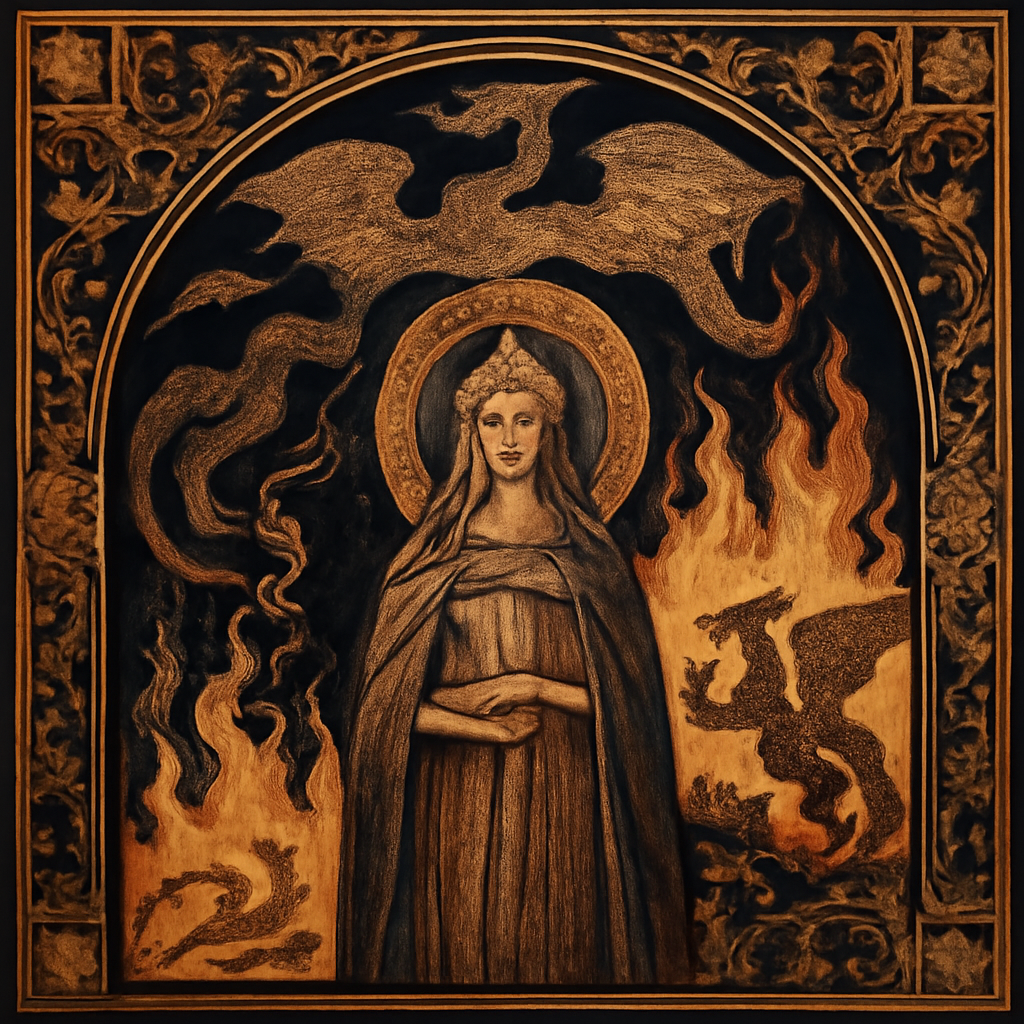
The Dragon's Ascent and Fiery Fall: A Targaryen Dynasty Timeline
From the ashes of a fallen empire, they rose. For nearly three centuries, the Targaryens, dragonlords of old Valyria, shaped the destiny of Westeros with fire and blood. Their story is a tapestry woven with conquest, political intrigue, civil war, and the slow, agonizing descent into madness. Guided by the might of their winged beasts, they united a fractured continent, establishing a dynasty that would leave an indelible mark on history, even after its dramatic collapse.
This journey explores the rise of Aegon the Conqueror and his sisters, the golden age of dragon rule, the devastating kin-strife known as the Dance of the Dragons, and the eventual decay that led to their overthrow. It's a tale of inherited power, the intoxicating allure of absolute rule, and the ever-present threat of prophecy and personal ambition tearing apart the fabric of an entire realm. To understand Westeros, one must first comprehend the dragons who once ruled it.
✨
Wonder Moment
“The Targaryens, despite ruling Westeros for nearly 300 years with the ultimate weapon (dragons), ultimately fell due to internal conflict and inherited madness, proving that even absolute power is fragile.”
Reflect
What institutions or figures today seem invincible, and what hidden weaknesses might ultimately lead to their decline?
2 sources·Established confidence·Investigated 28 Jun 2026(2 months ago)·Investigation may be outdated
Your next question, in
Visual Trail
See The Dragon's Ascent and Fiery Fall: A Targaryen Dynasty Timeline
A guided visual explanation assembled from QE artwork and sourced documentary images.
01 / 02
QE visual interpretation
Frame 01
The Dragon's Ascent and Fiery Fall: A Targaryen Dynasty Timeline
Explore the fiery 300-year saga of the Targaryen dynasty, from conquest and golden ages to civil war and eventual collapse.
Image provenance and limitation
Source: AI-generated visual interpretation
Creator: Question Everything
Limitation: This image explains or evokes the subject. It is not documentary evidence and should not be used to verify a factual claim.
Evidence
What do we know?
Verified claims with confidence scoring and cited sources.
Generated without source retrieval. QE did not fetch sources for this investigation, so no citation here was checked against a retrieved set. Claims reflect the model’s training data. 1 of 4 findings carry no openable link at all.
1 of 4 findings need extra caution. Finding 1 rests on weaker sourcing than the other findings.
Living footnotes
Claims remain in the reading flow. Select a citation number to inspect the source behind it.
01
ObservationalNot confirmed
Aegon I Targaryen, known as Aegon the Conqueror, founded the Targaryen dynasty in Westeros through military conquest, uniting six of the seven kingdoms under a single rule.
Around 300 years before the events of 'Game of Thrones,' Aegon Targaryen, the last remaining dragonlord from Valyria, launched his invasion of Westeros. Accompanied by his sister-wives, Visenya and Rhaenys, and their three dragons, Balerion, Vhagar, and Meraxes, Aegon systematically defeated the reigning kings and lords. Through a combination of overwhelming force, strategic alliances, and calculated mercy, he forced most of the kingdoms to bend the knee, forging the Iron Throne from the swords of his vanquished enemies. This event marked the beginning of the Targaryen reign and the establishment of a unified Westeros, with 'After Conquest' (AC) becoming the new calendar standard.
02
ObservationalSupported
The Targaryen dynasty was severely fractured by the 'Dance of the Dragons,' a brutal civil war (129-131 AC) fought between rival claimants to the Iron Throne, culminating in the near extinction of dragons.
Approximately a century after Aegon's Conquest, a succession crisis erupted following the death of King Viserys I Targaryen. His designated heir, his daughter Princess Rhaenyra, was challenged by his second wife, Queen Alicent Hightower, who crowned her own son, Aegon II. This conflict plunged Westeros into a devastating two-year war known as the Dance of the Dragons, pitting Targaryen against Targaryen, often with their dragons as weapons. The war resulted in immense casualties, including almost all the adult dragons, forever changing the balance of power and leading to the long decline of the Targaryen's unique advantage.
03
ObservationalSupported
The reign of Aerys II Targaryen, the 'Mad King,' marked the end of the Targaryen dynasty's direct rule over Westeros, leading to Robert's Rebellion (282-283 AC).
King Aerys II Targaryen ascended the Iron Throne with great promise, but his reign gradually descended into paranoia and extreme cruelty, earning him the moniker 'The Mad King.' His irrational acts, including the execution of noble lords and the burning alive of Rickard Stark and Brandon Stark, ignited a rebellion led by Robert Baratheon, Ned Stark, and Jon Arryn. This conflict, known as Robert's Rebellion, culminated in the Battle of the Trident, where Robert killed Aerys's heir, Rhaegar Targaryen, and the Sack of King's Landing, where Aerys II was assassinated by Jaime Lannister. The 'Mad King's' demise brought an end to nearly 300 years of Targaryen rule, ushering in the Baratheon dynasty.
04
ObservationalSupported
Daenerys Targaryen, a survivor of the dynasty's fall, attempted to reclaim the Iron Throne centuries later, initially as a liberator but ultimately descending into tyranny.
After Robert's Rebellion, the remaining Targaryens, including young Daenerys and Viserys, were exiled across the Narrow Sea. Daenerys, born into exile and stripped of her heritage, grew up with the singular goal of reclaiming her family's throne. Through the hatching of three dragons, securing vast armies, and conquering cities in Essos, she returned to Westeros as a formidable claimant. Her journey, however, was marked by complex moral choices and escalating violence. Despite her initial vision of a better world, the pressures of war, loss, and inherited madness ultimately led her to destroy King's Landing, cementing a tyrannical image that led to her own demise and the final extinguishing of the Targaryen claim to the Iron Throne.
The complete record below preserves every citation, confidence input and recorded limitation.
Read the full evidence record4 findings · citations · limitations
Evidence review4 findings3 openable sources
01
Finding 1 of 4ObservationalNeeds caution
0/0 verified
Aegon I Targaryen, known as Aegon the Conqueror, founded the Targaryen dynasty in Westeros through military conquest, uniting six of the seven kingdoms under a single rule.
Around 300 years before the events of 'Game of Thrones,' Aegon Targaryen, the last remaining dragonlord from Valyria, launched his invasion of Westeros. Accompanied by his sister-wives, Visenya and Rhaenys, and their three dragons, Balerion, Vhagar, and Meraxes, Aegon systematically defeated the reigning kings and lords. Through a combination of overwhelming force, strategic alliances, and calculated mercy, he forced most of the kingdoms to bend the knee, forging the Iron Throne from the swords of his vanquished enemies. This event marked the beginning of the Targaryen reign and the establishment of a unified Westeros, with 'After Conquest' (AC) becoming the new calendar standard.
Not confirmedmodel score 100%
Written from the model's own knowledge. No source was retrieved or checked.
UNVERIFIED — NO RETRIEVAL
›View sources and limits— limits
Supporting passage
Around 300 years before the events of 'Game of Thrones,' Aegon Targaryen, the last remaining dragonlord from Valyria, launched his invasion of Westeros. Accompanied by his sister-wives, Visenya and Rhaenys, and their three dragons, Balerion, Vhagar, and Meraxes, Aegon systematically defeated the reigning kings and lords. Through a combination of overwhelming force, strategic alliances, and calculated mercy, he forced most of the kingdoms to bend the knee, forging the Iron Throne from the swords of his vanquished enemies. This event marked the beginning of the Targaryen reign and the establishment of a unified Westeros, with 'After Conquest' (AC) becoming the new calendar standard.
Citations (0 of 2 survived verification)
Nothing openable. No sources were retrieved for this investigation, so none were checked.
What limits this
This investigation was generated without source retrieval. The model named a source but gave no link, and no verification step ran against it.
The claim reflects the model's training data, not a checked citation.
The generator scored this 100%, which would read as “Established”. Its citations reach only “Unresolved”, so that is what is shown.
02
Finding 2 of 4Observational
0/1 verified
The Targaryen dynasty was severely fractured by the 'Dance of the Dragons,' a brutal civil war (129-131 AC) fought between rival claimants to the Iron Throne, culminating in the near extinction of dragons.
Approximately a century after Aegon's Conquest, a succession crisis erupted following the death of King Viserys I Targaryen. His designated heir, his daughter Princess Rhaenyra, was challenged by his second wife, Queen Alicent Hightower, who crowned her own son, Aegon II. This conflict plunged Westeros into a devastating two-year war known as the Dance of the Dragons, pitting Targaryen against Targaryen, often with their dragons as weapons. The war resulted in immense casualties, including almost all the adult dragons, forever changing the balance of power and leading to the long decline of the Targaryen's unique advantage.
Supportedmodel score 99%
One source, not peer-reviewed. Thinner than the score suggests.
REPORTING
›View sources and limits— 1 citation, limits
Supporting passage
Approximately a century after Aegon's Conquest, a succession crisis erupted following the death of King Viserys I Targaryen. His designated heir, his daughter Princess Rhaenyra, was challenged by his second wife, Queen Alicent Hightower, who crowned her own son, Aegon II. This conflict plunged Westeros into a devastating two-year war known as the Dance of the Dragons, pitting Targaryen against Targaryen, often with their dragons as weapons. The war resulted in immense casualties, including almost all the adult dragons, forever changing the balance of power and leading to the long decline of the Targaryen's unique advantage.
Generated without source retrieval — citations here were not verified against a retrieved set.
1 of 2 citations failed verification and are not shown.
Rests on a single source. No independent corroboration.
No peer-reviewed source among the citations.
The generator scored this 99%, which would read as “Established”. Its citations reach only “Supported”, so that is what is shown.
03
Finding 3 of 4Observational
0/1 verified
The reign of Aerys II Targaryen, the 'Mad King,' marked the end of the Targaryen dynasty's direct rule over Westeros, leading to Robert's Rebellion (282-283 AC).
King Aerys II Targaryen ascended the Iron Throne with great promise, but his reign gradually descended into paranoia and extreme cruelty, earning him the moniker 'The Mad King.' His irrational acts, including the execution of noble lords and the burning alive of Rickard Stark and Brandon Stark, ignited a rebellion led by Robert Baratheon, Ned Stark, and Jon Arryn. This conflict, known as Robert's Rebellion, culminated in the Battle of the Trident, where Robert killed Aerys's heir, Rhaegar Targaryen, and the Sack of King's Landing, where Aerys II was assassinated by Jaime Lannister. The 'Mad King's' demise brought an end to nearly 300 years of Targaryen rule, ushering in the Baratheon dynasty.
Supportedmodel score 100%
One source, not peer-reviewed. Thinner than the score suggests.
REPORTING
›View sources and limits— 1 citation, limits
Supporting passage
King Aerys II Targaryen ascended the Iron Throne with great promise, but his reign gradually descended into paranoia and extreme cruelty, earning him the moniker 'The Mad King.' His irrational acts, including the execution of noble lords and the burning alive of Rickard Stark and Brandon Stark, ignited a rebellion led by Robert Baratheon, Ned Stark, and Jon Arryn. This conflict, known as Robert's Rebellion, culminated in the Battle of the Trident, where Robert killed Aerys's heir, Rhaegar Targaryen, and the Sack of King's Landing, where Aerys II was assassinated by Jaime Lannister. The 'Mad King's' demise brought an end to nearly 300 years of Targaryen rule, ushering in the Baratheon dynasty.
Generated without source retrieval — citations here were not verified against a retrieved set.
1 of 2 citations failed verification and are not shown.
Rests on a single source. No independent corroboration.
No peer-reviewed source among the citations.
The generator scored this 100%, which would read as “Established”. Its citations reach only “Supported”, so that is what is shown.
04
Finding 4 of 4Observational
0/1 verified
Daenerys Targaryen, a survivor of the dynasty's fall, attempted to reclaim the Iron Throne centuries later, initially as a liberator but ultimately descending into tyranny.
After Robert's Rebellion, the remaining Targaryens, including young Daenerys and Viserys, were exiled across the Narrow Sea. Daenerys, born into exile and stripped of her heritage, grew up with the singular goal of reclaiming her family's throne. Through the hatching of three dragons, securing vast armies, and conquering cities in Essos, she returned to Westeros as a formidable claimant. Her journey, however, was marked by complex moral choices and escalating violence. Despite her initial vision of a better world, the pressures of war, loss, and inherited madness ultimately led her to destroy King's Landing, cementing a tyrannical image that led to her own demise and the final extinguishing of the Targaryen claim to the Iron Throne.
Supportedmodel score 99%
One source, not peer-reviewed. Thinner than the score suggests.
REPORTING
›View sources and limits— 1 citation, limits
Supporting passage
After Robert's Rebellion, the remaining Targaryens, including young Daenerys and Viserys, were exiled across the Narrow Sea. Daenerys, born into exile and stripped of her heritage, grew up with the singular goal of reclaiming her family's throne. Through the hatching of three dragons, securing vast armies, and conquering cities in Essos, she returned to Westeros as a formidable claimant. Her journey, however, was marked by complex moral choices and escalating violence. Despite her initial vision of a better world, the pressures of war, loss, and inherited madness ultimately led her to destroy King's Landing, cementing a tyrannical image that led to her own demise and the final extinguishing of the Targaryen claim to the Iron Throne.
Generated without source retrieval — citations here were not verified against a retrieved set.
1 of 2 citations failed verification and are not shown.
Rests on a single source. No independent corroboration.
No peer-reviewed source among the citations.
The generator scored this 99%, which would read as “Established”. Its citations reach only “Supported”, so that is what is shown.
Interactive Exploration
Touch, drag, and discover
These visualizations respond to your curiosity. Interact to go deeper.
timeline
Key Events in the Targaryen Dynasty of Westeros
Loading timeline…
hierarchy
The Targaryen Dynasty: Key Rulers
Building hierarchy…
Tap nodes to explore the hierarchy
relationship map
Targaryen Connections & Influence
Mapping relationships…
Drag nodes to rearrange — tap for details
spectrum
Targaryen Reigns: Stability and Wisdom
Chaotic & DestructiveStable & Prosperous
5%
Maegor I 'The Cruel'
10%
Aerys II 'The Mad King'
25%
Aegon II
30%
Rhaenyra Targaryen
40%
Aenys I
55%
Aegon III 'Dragonbane'
65%
Viserys I
80%
Aegon I 'The Conqueror'
95%
Jaehaerys I 'The Conciliator'
Perspectives
How is this interpreted?
Enter a viewpoint. Notice what it reveals, what it leaves out, and whether it changes the question for you.
The EmpiricistScientific viewpointEstablished lens
From a meta-narrative perspective, George R.R. Martin's construction of the Targaryen dynasty reflects a meticulous approach to world-building, drawing heavily from real-world history. Scholars and critics often point to the Wars of the Roses, the Roman Empire, and historical figures like Henry VII and Nero as inspirations for various Targaryen monarchs and conflicts. Martin uses historical tropes—such as the inherent instability of inherited power, the cyclical nature of empires, and the 'madness' often attributed to inbred royal lines—to create a believable yet fantastical history. This approach gives the fictional history a weight and complexity that resonates with readers, allowing for nuanced interpretations of character motivations and political dynamics.
What this lens notices
01Use of historical parallels (e.g., Wars of the Roses for the Dance of the Dragons).
02Exploration of genetic predispositions (Targaryen 'madness').
03Complex political structures mirroring feudal societies.
Application
Why does this matter to you?
Personal reflections and applications for your life.
Thought experimentSelf-Reflection
How do our historical narratives, both real and fictional, shape our understanding of power and governance?
Why it changes the question
The Targaryen saga, like many historical accounts, shows how the 'truth' of a ruling power can be interpreted vastly differently depending on one's perspective. Reflecting on this can help us critically evaluate the narratives presented in our own world, whether by media, political figures, or even our own cultural background, understanding that history is often a story told by the powerful, or those who seek to challenge them. It encourages us to seek out multiple viewpoints to build a more complete picture.
Try this
Choose a historical event you're familiar with and try to research it from the perspective of different groups involved, noting how their experiences and interpretations diverge.
Media
QE Smart Glass
Curated media selected for this investigation.
QE Glass
YOUTUBE
The wars that inspired Game of Thrones - Alex Gendler
TED-Ed
View full lesson: http://ed.ted.com/lessons/the-wars-that-inspired-game-of-thrones-alex-gendler Beginning around 1377, medieval ...
QE Glass
YOUTUBE
Rise and Fall of the Targaryens - House of the Dragon Lore DOCUMENTARY
Wizards and Warriors
Support our channel and protect your passwords with NordPass https://nordpass.com/wizards - use our code wizards to get the ...
QE Glass
YOUTUBE
A Timeline of Ice and Fire (Complete: Prehistory - 300 AC)
CivilizationEx
A Timeline spanning from the Dawn Age to the dragonlords of Valyria who ruled thousands of years later and the Targaryen Kings ...
QE Glass
YOUTUBE
Game of Thrones Lore to Sleep to | The Rise and Fall of Old Valyria
Midnight Lorekeeper
Step into the ancient world of Westeros and Essos as this episode explores the rise and fall of Old Valyria, once the greatest ...
QE Glass
YOUTUBE
Game of Thrones - History and Lore - House Targaryen
XEgalmothOfGondolin
Game of Thrones Season 1 Extras: History and Lore - House Targaryen. Narrated by Viserys Targaryen. Visit my other channel, ...
QE Glass
YOUTUBE
Game of Thrones - Full Story Before the Winds of Winter - Lore DOCUMENTARY
Wizards and Warriors
Subscribe to Czepeku - https://patreon.com/czepeku and get full access to the full archive of over 4000 maps for just $5 per month!
QE Glass
YOUTUBE
The Untold Story of House Targaryen and the Dragons of Valyria | History Recap Official
History Recap Official
"Before the Iron Throne, before Westeros knew the Targaryens, there was fire, dragons, and a lost empire. In this full-length ...
QE Glass
YOUTUBE
House of the Dragon | Official Trailer | Max
HBO Max
All the dragons roar as one. The #HouseoftheDragon trailer has arrived. House of the Dragon premieres August 21. Download the ...
QE Glass
YOUTUBE
Fall Asleep To The History of House Targaryen | Calm Game of Thrones Lore To Sleep To
Midnight Lorekeeper
Let the soft retelling of ancient Valyrian history guide you into sleep. In this calm, slow-paced bedtime lore video, we explore the ...
QE Glass
PODCAST
Binge Mode: Game of Thrones - The Targaryens
The Ringer
A dedicated episode from a popular pop culture podcast offering an engaging and often humorous discussion of the Targaryen dynasty's most famous and infamous members.
Keep Going
Where this leads
Questions this investigation opens up — and what QE has already looked into.
No AI help here — no suggestions, no autocomplete, nothing finishing your sentences. That is deliberate. Working out what you think is effortful, and the effort is the part that changes you: reasoning is trained like a muscle, and a muscle that is always carried gets weaker. Let something else do the thinking and you keep the answer but lose the capacity to have reached it.
Write your current position.
Not what the page says. What you think, having read it.0 words · Nothing written yet.
Sign in to leave a mark. Your draft is saved here in the meantime.