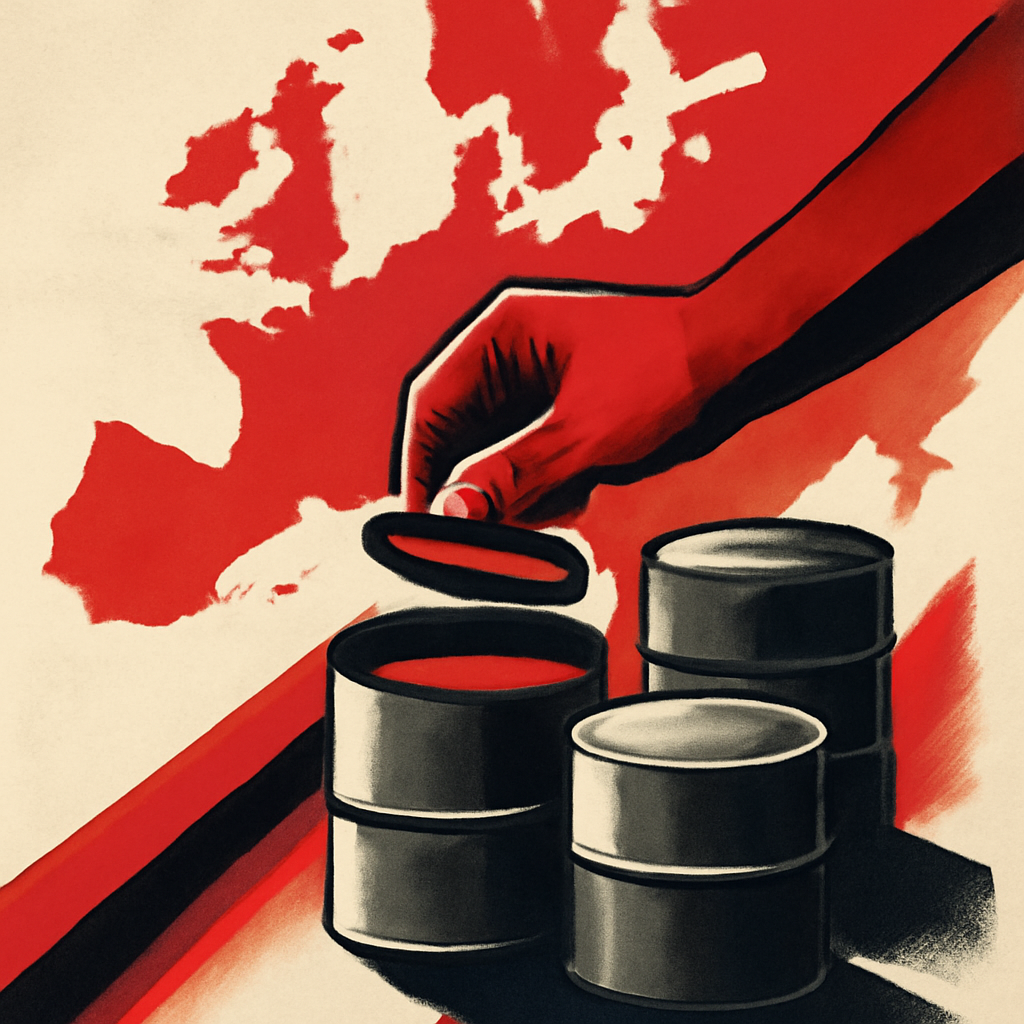
Europe relies on natural gas to keep homes warm and industries running, especially in winter. To make sure there's enough gas even when supplies drop, many countries have underground storage sites. These storages hold a huge amount of natural gas, acting like giant savings accounts for energy. Across Europe, the total capacity to store natural gas is around 110 billion cubic meters. That's enough to supply millions of homes for months. These storage sites come in different types, like old gas fields, salt caverns, and aquifers—each with its own way of holding gas safely underground.
The biggest storage capacities are found in countries like Germany, Italy, and the Netherlands. These places have built large facilities to prepare for cold winters or supply disruptions. Storing gas helps Europe stay stable during shortages or price spikes. It’s a smart way to keep the lights on and the heating working, no matter what surprises come from outside.
“Europe has about 110 billion cubic meters of natural gas storage capacity, enough to act as a giant winter buffer for the continent.”
Reflect
How might Europe's energy security change if these storage capacities were doubled or cut in half?
Research·5 sources·6 primary·15 independent publishers·Limited evidence coverage·Established confidence·Investigated 5 Oct 2026(29 days ago)·Source-verified
Your next question, in
Visual Trail
See How Much Natural Gas Europe Can Store
A guided visual explanation assembled from QE artwork and sourced documentary images.
01 / 02
QE visual interpretation
Frame 01
How Much Natural Gas Europe Can Store
Europe can store about 110 billion cubic meters of natural gas underground to keep energy safe and steady.
Image provenance and limitation
Source: AI-generated visual interpretation
Creator: Question Everything
Limitation: This image explains or evokes the subject. It is not documentary evidence and should not be used to verify a factual claim.
Evidence
What do we know?
Verified claims with confidence scoring and cited sources.
2 of 5 findings need extra caution. Finding 1, Finding 2 rest on weaker sourcing than the other findings.
Living footnotes
Claims remain in the reading flow. Select a citation number to inspect the source behind it.
01
StatisticalMixed evidence
Europe’s total natural gas storage capacity is around 110 billion cubic meters (bcm).
The combined storage capacity of European facilities is about 110 bcm, which is roughly the volume needed to supply Europe during peak winter months. This capacity is spread across many countries, with Germany, Italy, France, and the Netherlands holding the largest shares. These storages help Europe manage seasonal demand swings and supply disruptions by storing excess gas in warmer months for use in winter.
02
StatisticalMixed evidence
Germany, Italy, France, and the Netherlands hold about two-thirds of the EU’s total gas storage capacity.
Most of Europe’s gas storage is concentrated in just a few countries. Germany leads with about 25 bcm, Italy around 20 bcm, France and the Netherlands also have large capacities. Smaller countries either have much smaller storage or none at all, relying on agreements to access reserves stored elsewhere. This uneven spread means some countries play a bigger role in Europe’s energy security.
03
AcademicWell supported
Europe’s gas storage facilities are crucial for balancing supply and demand, especially during winter peaks.
Natural gas use swings a lot with the seasons. In winter, demand can be six times higher than in summer. Storage facilities hold gas injected during low-demand months and release it when demand spikes. This system stabilizes prices and ensures homes and businesses keep warm. It also helps Europe handle supply disruptions, like cuts in pipeline gas or reduced LNG imports.
04
StatisticalSupported
European Union countries without storage facilities must arrange to store 15% of their annual gas needs in other member states’ facilities.
Some EU countries lack their own gas storage. To keep energy security strong, EU rules require these countries to have agreements ensuring access to gas stored in neighbors’ facilities. This sharing system spreads the financial burden and reduces risks. It helps countries without storage maintain a reliable supply during shortages or emergencies.
05
StatisticalSupported
Europe’s gas storage levels fluctuate seasonally, with injections mainly from April to October and withdrawals in winter months.
Gas is injected into storage during warmer months when demand is lower, usually from April through October. This timing gives enough time to fill the storage before winter. Withdrawals start as heating needs rise in late fall and peak during the coldest months. This cycle is critical for managing supply through seasonal changes and unexpected cold snaps.
The complete record below preserves every citation, confidence input and recorded limitation.
Read the full evidence record5 findings · citations · limitations
Evidence review5 findings7 openable sources
01
Finding 1 of 5StatisticalNeeds caution
1/1 verified
Europe’s total natural gas storage capacity is around 110 billion cubic meters (bcm).
The combined storage capacity of European facilities is about 110 bcm, which is roughly the volume needed to supply Europe during peak winter months. This capacity is spread across many countries, with Germany, Italy, France, and the Netherlands holding the largest shares. These storages help Europe manage seasonal demand swings and supply disruptions by storing excess gas in warmer months for use in winter.
Mixed evidencemodel score 55%
Verification was mixed across 1 source.
REFERENCE
›View sources and limits— 1 citation, limits
Supporting passage
The combined storage capacity of European facilities is about 110 bcm, which is roughly the volume needed to supply Europe during peak winter months. This capacity is spread across many countries, with Germany, Italy, France, and the Netherlands holding the largest shares. These storages help Europe manage seasonal demand swings and supply disruptions by storing excess gas in warmer months for use in winter.
QE used this as an authoritative first-party source. It appeared in 3 complementary searches.
“Europe’s 110 billion cubic meters (bcm) of gas storage capacity had acted as the world’s “virtual storage” hub, historically absorbing excess global LNG and pipeline gas from April to October. But it is starting this year in a precarious position, with only 31 bcm in storage—the lowest level since 2018—requiring a mas…”
This passage was checked against the claim.
Retrieved 05/10/2026
What limits this
1 of 2 citations failed verification and are not shown.
Rests on a single source. No independent corroboration.
No peer-reviewed source among the citations.
Verification was mixed — some citations supported the claim and some did not.
02
Finding 2 of 5StatisticalNeeds caution
1/1 verified
Germany, Italy, France, and the Netherlands hold about two-thirds of the EU’s total gas storage capacity.
Most of Europe’s gas storage is concentrated in just a few countries. Germany leads with about 25 bcm, Italy around 20 bcm, France and the Netherlands also have large capacities. Smaller countries either have much smaller storage or none at all, relying on agreements to access reserves stored elsewhere. This uneven spread means some countries play a bigger role in Europe’s energy security.
Mixed evidencemodel score 55%
Verification was mixed across 1 source.
REPORTING
›View sources and limits— 1 citation, limits
Supporting passage
Most of Europe’s gas storage is concentrated in just a few countries. Germany leads with about 25 bcm, Italy around 20 bcm, France and the Netherlands also have large capacities. Smaller countries either have much smaller storage or none at all, relying on agreements to access reserves stored elsewhere. This uneven spread means some countries play a bigger role in Europe’s energy security.
QE used this established reporting source for independently documented context. It appeared in 2 complementary searches.
“s does not always correspond to the physical capacity of the sites [...] Most EU member states have gas storage facilities on their territory. Storage capacities in five countries (Germany, Italy, France, the Netherlands and Austria) make up two thirds of the EU's total capacity. Under the regulation on gas storage, c…”
This passage was checked against the claim.
Retrieved 05/10/2026
What limits this
1 of 2 citations failed verification and are not shown.
Rests on a single source. No independent corroboration.
No peer-reviewed source among the citations.
Verification was mixed — some citations supported the claim and some did not.
03
Finding 3 of 5Academic
2
2/2 verified
Europe’s gas storage facilities are crucial for balancing supply and demand, especially during winter peaks.
Natural gas use swings a lot with the seasons. In winter, demand can be six times higher than in summer. Storage facilities hold gas injected during low-demand months and release it when demand spikes. This system stabilizes prices and ensures homes and businesses keep warm. It also helps Europe handle supply disruptions, like cuts in pipeline gas or reduced LNG imports.
Well supportedmodel score 90%
2 sources agree, 1 peer-reviewed.
PRIMARY STUDYREFERENCE
›View sources and limits— 2 citations, limits
Supporting passage
Natural gas use swings a lot with the seasons. In winter, demand can be six times higher than in summer. Storage facilities hold gas injected during low-demand months and release it when demand spikes. This system stabilizes prices and ensures homes and businesses keep warm. It also helps Europe handle supply disruptions, like cuts in pipeline gas or reduced LNG imports.
QE used this research source for direct evidence relevant to the claim.
“Within the context of an evolving global market for natural gas and restructuring efforts in the European market, natural gas storage is an important element. Providing additional flexibility, promoting competition, and enhancing supply security are crucial elements for natural gas sector liberalization. The objective…”
QE used this source because its retrieved passage directly addresses the claim.
“To make optimal use of the production and transport systems natural gas is being imported continuously in contractually fixed volumes, irrespective of the actual demand. This differs substantially according to the season: Sales on cold winter days can be six times as high as on summer days. In times of low consumption…”
This passage was checked against the claim.
Retrieved 05/10/2026
What limits this
Nothing further is recorded. QE stores no methodology field, so absence here is not a clean bill of health.
04
Finding 4 of 5Statistical
1/1 verified
European Union countries without storage facilities must arrange to store 15% of their annual gas needs in other member states’ facilities.
Some EU countries lack their own gas storage. To keep energy security strong, EU rules require these countries to have agreements ensuring access to gas stored in neighbors’ facilities. This sharing system spreads the financial burden and reduces risks. It helps countries without storage maintain a reliable supply during shortages or emergencies.
Supportedmodel score 70%
One source, not peer-reviewed. Thinner than the score suggests.
REPORTING
›View sources and limits— 1 citation, limits
Supporting passage
Some EU countries lack their own gas storage. To keep energy security strong, EU rules require these countries to have agreements ensuring access to gas stored in neighbors’ facilities. This sharing system spreads the financial burden and reduces risks. It helps countries without storage maintain a reliable supply during shortages or emergencies.
QE used this established reporting source for independently documented context. It appeared in 2 complementary searches.
“Under the regulation on gas storage, countries that do not have storage facilities must store 15% of their annual domestic gas consumption in stocks located in other member states, thereby ensuring access to gas reserves stored in other member states. This mechanism strengthens the security of EU gas supplies and ensu…”
This passage was checked against the claim.
Retrieved 05/10/2026
What limits this
Rests on a single source. No independent corroboration.
No peer-reviewed source among the citations.
05
Finding 5 of 5Statistical
2/2 verified
Europe’s gas storage levels fluctuate seasonally, with injections mainly from April to October and withdrawals in winter months.
Gas is injected into storage during warmer months when demand is lower, usually from April through October. This timing gives enough time to fill the storage before winter. Withdrawals start as heating needs rise in late fall and peak during the coldest months. This cycle is critical for managing supply through seasonal changes and unexpected cold snaps.
Supportedmodel score 90%
2 sources agree, none peer-reviewed.
REFERENCE ×2
›View sources and limits— 2 citations, limits
Supporting passage
Gas is injected into storage during warmer months when demand is lower, usually from April through October. This timing gives enough time to fill the storage before winter. Withdrawals start as heating needs rise in late fall and peak during the coldest months. This cycle is critical for managing supply through seasonal changes and unexpected cold snaps.
QE used this as an authoritative first-party source. It appeared in 3 complementary searches.
“Europe’s 110 billion cubic meters (bcm) of gas storage capacity had acted as the world’s “virtual storage” hub, historically absorbing excess global LNG and pipeline gas from April to October. But it is starting this year in a precarious position, with only 31 bcm in storage—the lowest level since 2018—requiring a mas…”
QE used this as an authoritative first-party source. It appeared in 3 complementary searches.
“U.S. Energy Information Administration logo # U.S. Energy Information Administration - EIA - Independent Statistics and Analysis Menu # Today in Energy # Europe ended winter 2022–23 with the most natural gas in storage on record monthly natural gas storage levels in Europe As of April 1, natural gas storage inventorie…”
This passage was checked against the claim.
Retrieved 05/10/2026
What limits this
No peer-reviewed source among the citations.
The generator scored this 90%, which would read as “Established”. Its citations reach only “Supported”, so that is what is shown.
The reference archive
Sources & Further Reading
Continue exploring the research, reporting and reference material available on this subject.
These were found while researching this question but are not used as evidence for any claim above.
These visualizations respond to your curiosity. Interact to go deeper.
timeline
Seasonal Cycle of Natural Gas Storage in Europe
Loading timeline…
relationship map
Natural Gas Storage Capacity Across Europe
Mapping relationships…
Drag nodes to rearrange — tap for details
Contested
This one is genuinely argued over
Both cases are put as strongly as their own supporters would put them, from evidence rather than from who holds the view. Read them and decide for yourself.
The case that it's true
Natural gas storage capacity in Europe is essential for energy security and market stability. It allows countries to prepare for cold winters and supply interruptions by stockpiling gas during low-demand periods. This flexibility prevents sharp price spikes and supply shortages, especially when pipeline imports are uncertain. The existing infrastructure, though challenged by recent geopolitical shifts, remains a strong backbone for the continent's energy needs.
What this rests on
Storage provides a buffer against supply disruptions.
It helps balance seasonal demand swings.
Capacity concentration in key countries supports efficient management.
The case against
While natural gas storage is important, Europe’s current capacity and infrastructure may not be enough against extreme weather or geopolitical crises. The loss of Russian pipeline gas and some LNG imports has exposed vulnerabilities. Also, storage capacity is unevenly distributed, leaving some countries dependent on others. Without significant investments to increase capacity and improve flexibility, Europe risks shortages and price spikes in harsh winters.
What this rests on
Recent supply cuts reveal storage limits.
Capacity gaps cause regional vulnerabilities.
Existing infrastructure may not handle extreme demand peaks.
What both sides accept
Both sides agree that natural gas storage is vital for Europe’s energy system. Storage facilities help smooth out supply and demand differences over the year and protect against temporary shortages. There is consensus that current storage capacity is significant but must be managed carefully and possibly expanded to meet future challenges, especially given changing supply patterns and climate uncertainties.
Documented, and not in dispute
Storage is key for seasonal balancing.
Current capacity is substantial but not limitless.
Strategic management and upgrades are needed.
Application
Why does this matter to you?
Personal reflections and applications for your life.
Thought experimentSelf-Reflection
How might my country's reliance on imported gas affect energy prices during winter?
Why it changes the question
Understanding storage capacity helps grasp why some countries face higher prices or shortages in cold months. It reflects how well-prepared they are for supply shocks.
Try this
Look up your country's gas storage levels and compare them with neighbors to see potential vulnerabilities.
Media
QE Smart Glass
Curated media selected for this investigation.
QE Glass
YOUTUBE
Pippo Ranci - The Economics of Natural Gas Storage: conclusions
Bocconi University
The Economics of Natural Gas Storage: A European Perspective - Workshop Università Bocconi 06/03/2009 Pippo Ranci - Head, ...
QE Glass
YOUTUBE
What is the EU’s gas plan and does it have support of the bloc?
EU Debates | eudebates.tv
Bloc says rationing is necessary amid Russian 'blackmail' but some member states have rejected the proposal. The European ...
QE Glass
YOUTUBE
Gas Storage Bergermeer Animation
TAQA GasstorageBergermeer
Gas Storage Bergermeer will provide the Northwest European gas market with 4.1 billion cubic metres (BCM) of seasonal storage, ...
QE Glass
YOUTUBE
Route4Gas Webinar - NATURAL GAS STORAGES: SECURITY OF SUPPLY AND TRADING INSTRUMENT
Route4Gas
00:00 Welcome speech of moderator Justin Colley, Argus European electricity editor; Alexey Mileev, CEO & Founder of ...
QE Glass
YOUTUBE
Webinar Energy Storage: a Key Resource for Cross-Sectoral Flexibility 2020.07.02 | NEBS
New Energy Coalition
With 1200 terawatt hours (TWh) of existing capacity, underground gas storages across Europe provide the largest component of ...
QE Glass
YOUTUBE
EU leader called out the members to reduce gas use by 15%
ETBTV
The European Union's head office set an emergency plan on Wednesday that members to cut their gas use by 15%, equivalent to ...
QE Glass
YOUTUBE
Why an LNG tanker traffic jam is building off the coast of Spain
CGTN Europe
Dozens of Liquid Natural Gas (LNG) tankers have been waiting just off the Spanish coast to unload their cargo. But a bottleneck ...
QE Glass
YOUTUBE
EC proposes 80% minimum gas storage obligation by Nov. 1, 2022 and solutions for high gas prices!!!
EU Debates | eudebates.tv
The European Commission March 23 proposed new rules on minimum gas storage obligations, saying storage sites in the EU ...
QE Glass
YOUTUBE
Natural Gas Lecture | Jane Woodward | Stanford Understand Energy
Stanford Understand Energy
Significance and history of natural gas (NG); what and where NG is; how the NG system works; environmental impacts; economics ...
QE Glass
PODCAST
Energy Security in Europe: The Role of Natural Gas Storage
The Energy Transition Podcast
A podcast episode discussing Europe's gas storage capacity and the challenges it faces.
Keep Going
Where this leads
Questions this investigation opens up — and what QE has already looked into.
No AI help here — no suggestions, no autocomplete, nothing finishing your sentences. That is deliberate. Working out what you think is effortful, and the effort is the part that changes you: reasoning is trained like a muscle, and a muscle that is always carried gets weaker. Let something else do the thinking and you keep the answer but lose the capacity to have reached it.
Write your current position.
Not what the page says. What you think, having read it.0 words · Nothing written yet.
Sign in to leave a mark. Your draft is saved here in the meantime.