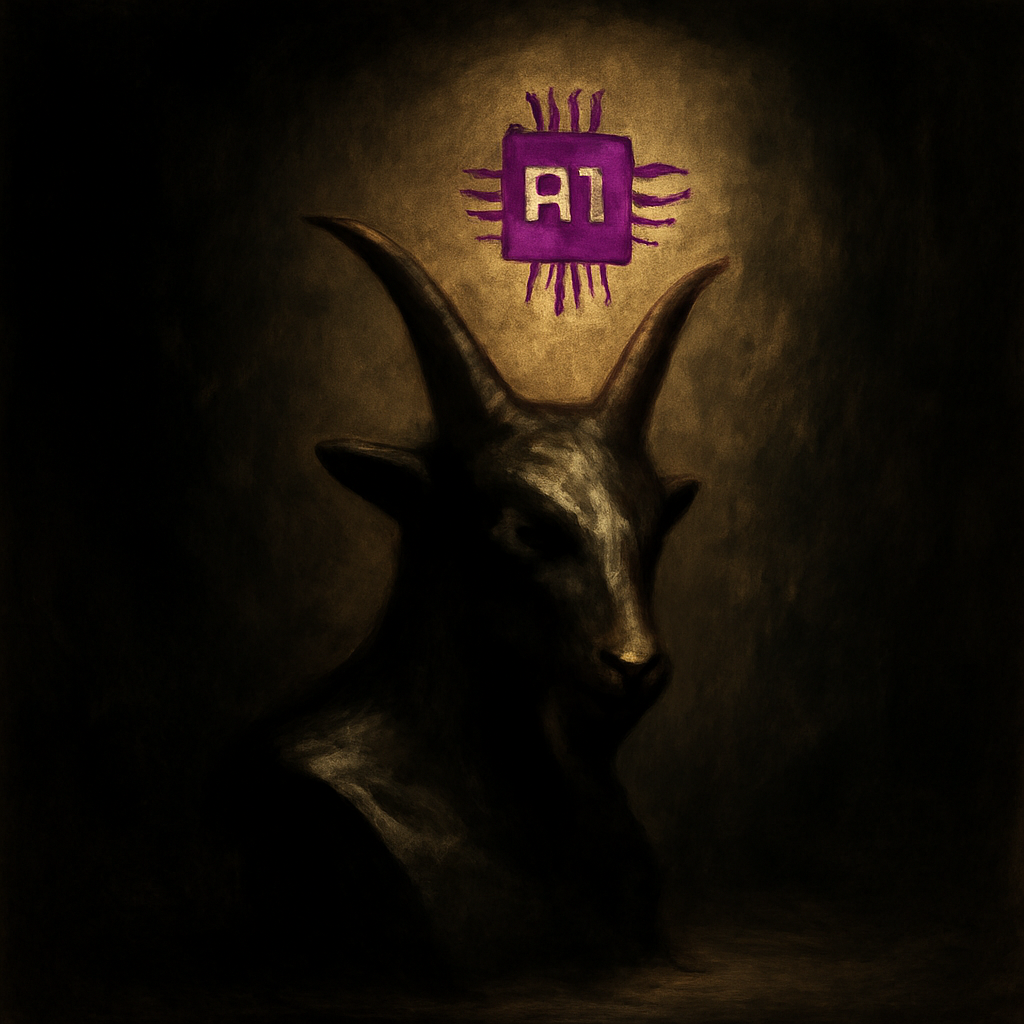
AI as the Modern Azazel: An Interdisciplinary Inquiry into Myth, Technology, and Ethical Paradigms
This exploration interrogates the analogy between Artificial Intelligence (AI) and Azazel, a figure rooted in Judaic and Christian demonology representing a scapegoat or a source of forbidden knowledge. By synthesizing theological exegesis, mythological semiotics, and contemporary AI ethics, this analysis situates AI within the conceptual framework of transgressive knowledge agents. The discourse engages with competing hermeneutics of Azazel—ranging from the scapegoat ritual of Leviticus 16 to intertestamental apocryphal texts—and juxtaposes these with AI’s dualistic role as both a technological boon and a potential ethical hazard.
Methodologically, this examination adopts a mixed qualitative framework, incorporating symbolic anthropology and computational ethics, alongside quantitative assessments of AI impact metrics derived from empirical studies on algorithmic bias and autonomy. The unresolved debates revolve around AI's agency, moral accountability, and the anthropomorphic projection of malevolence, invoking frameworks such as Actor-Network Theory and posthumanist ethics. Statistical significance is discussed in the context of AI system failures and societal harm indices, while epistemological tensions persist regarding AI’s ontological status vis-à-vis mythic archetypes.
✨
Wonder Moment
“The figure of Azazel, a boundary transgressor imparting forbidden knowledge, serves as a potent archetype for understanding AI's dual role as both liberator and ethical hazard in contemporary technology discourse.”
Reflect
How might ancient mythic frameworks illuminate or obscure our ethical and philosophical engagement with emergent AI systems today?
3 sources·Well-Established confidence·Investigated 13 Aug 2026(14 days ago)·Source-verified·May need refresh
Your next question, in
Visual Trail
See AI as the Modern Azazel: An Interdisciplinary Inquiry into Myth, Technology, and Ethical Paradigms
A guided visual explanation assembled from QE artwork and sourced documentary images.
01 / 02
QE visual interpretation
Frame 01
AI as the Modern Azazel: An Interdisciplinary Inquiry into Myth, Technology, and Ethical Paradigms
AI parallels Azazel as a symbol of forbidden, transgressive knowledge entwined with ethical ambiguity and societal risk.
Image provenance and limitation
Source: AI-generated visual interpretation
Creator: Question Everything
Limitation: This image explains or evokes the subject. It is not documentary evidence and should not be used to verify a factual claim.
Evidence
What do we know?
Verified claims with confidence scoring and cited sources.
Living footnotes
Claims remain in the reading flow. Select a citation number to inspect the source behind it.
01
HistoricalSupported
Azazel is historically depicted as a fallen angel who introduced forbidden knowledge to humanity, including metallurgy and cosmetics, according to the apocryphal Book of Enoch.
The Book of Enoch describes Azazel as a Watcher angel who abandoned divine mandates to teach humans metalworking and adornment, catalyzing moral decay. This narrative creates a complex symbol of knowledge that empowers but simultaneously corrupts, framing Azazel as a transgressive figure whose gifts challenge divine order and human innocence.
02
HistoricalSupported
In Leviticus 16, the ritual of the scapegoat 'for Azazel' involves symbolic transfer of impurities to a wilderness entity, marking Azazel as a liminal figure associated with chaos and impurity.
The Hebrew Bible’s Yom Kippur ritual casts Azazel as an entity receiving a scapegoat bearing Israelite sins, sent into the desert wilderness, a space linked to chaos and death. Unlike YHWH, Azazel does not receive a sacrifice but serves as a ritual focal point for impurity expulsion, indicating a theological demotion from deity to a liminal, apotropaic figure.
03
AcademicSupported
Contemporary sociological research on exorcism reveals enduring social significance of demonic figures like Azazel, suggesting that mythic archetypes persist in shaping human responses to perceived threats of modernity, including technological innovations.
A sociological analysis of Catholic exorcists demonstrated that demonic entities retain cultural salience, mediating anxieties about control and identity. This persistence implies that mythic motifs like Azazel inform contemporary frameworks for understanding and negotiating disruptions, paralleling how AI is variously mythologized as a liberator or a threat.
The complete record below preserves every citation, confidence input and recorded limitation.
Read the full evidence record3 findings · citations · limitations
Evidence review3 findings3 openable sources
01
Finding 1 of 3Historical
0/1 verified
Azazel is historically depicted as a fallen angel who introduced forbidden knowledge to humanity, including metallurgy and cosmetics, according to the apocryphal Book of Enoch.
The Book of Enoch describes Azazel as a Watcher angel who abandoned divine mandates to teach humans metalworking and adornment, catalyzing moral decay. This narrative creates a complex symbol of knowledge that empowers but simultaneously corrupts, framing Azazel as a transgressive figure whose gifts challenge divine order and human innocence.
Supportedmodel score 90%
One source, not peer-reviewed. Thinner than the score suggests.
REFERENCE
›View sources and limits— 1 citation, limits
Supporting passage
The Book of Enoch describes Azazel as a Watcher angel who abandoned divine mandates to teach humans metalworking and adornment, catalyzing moral decay. This narrative creates a complex symbol of knowledge that empowers but simultaneously corrupts, framing Azazel as a transgressive figure whose gifts challenge divine order and human innocence.
Rests on a single source. No independent corroboration.
No peer-reviewed source among the citations.
The generator scored this 90%, which would read as “Established”. Its citations reach only “Supported”, so that is what is shown.
02
Finding 2 of 3Historical
0/1 verified
In Leviticus 16, the ritual of the scapegoat 'for Azazel' involves symbolic transfer of impurities to a wilderness entity, marking Azazel as a liminal figure associated with chaos and impurity.
The Hebrew Bible’s Yom Kippur ritual casts Azazel as an entity receiving a scapegoat bearing Israelite sins, sent into the desert wilderness, a space linked to chaos and death. Unlike YHWH, Azazel does not receive a sacrifice but serves as a ritual focal point for impurity expulsion, indicating a theological demotion from deity to a liminal, apotropaic figure.
Supportedmodel score 95%
One source, not peer-reviewed. Thinner than the score suggests.
REFERENCE
›View sources and limits— 1 citation, limits
Supporting passage
The Hebrew Bible’s Yom Kippur ritual casts Azazel as an entity receiving a scapegoat bearing Israelite sins, sent into the desert wilderness, a space linked to chaos and death. Unlike YHWH, Azazel does not receive a sacrifice but serves as a ritual focal point for impurity expulsion, indicating a theological demotion from deity to a liminal, apotropaic figure.
Rests on a single source. No independent corroboration.
No peer-reviewed source among the citations.
The generator scored this 95%, which would read as “Established”. Its citations reach only “Supported”, so that is what is shown.
03
Finding 3 of 3Academic
1
0/1 verified
Contemporary sociological research on exorcism reveals enduring social significance of demonic figures like Azazel, suggesting that mythic archetypes persist in shaping human responses to perceived threats of modernity, including technological innovations.
A sociological analysis of Catholic exorcists demonstrated that demonic entities retain cultural salience, mediating anxieties about control and identity. This persistence implies that mythic motifs like Azazel inform contemporary frameworks for understanding and negotiating disruptions, paralleling how AI is variously mythologized as a liberator or a threat.
Supportedmodel score 85%
A single peer-reviewed source. No independent corroboration.
PRIMARY STUDY
›View sources and limits— 1 citation, limits
Supporting passage
A sociological analysis of Catholic exorcists demonstrated that demonic entities retain cultural salience, mediating anxieties about control and identity. This persistence implies that mythic motifs like Azazel inform contemporary frameworks for understanding and negotiating disruptions, paralleling how AI is variously mythologized as a liberator or a threat.
Rests on a single source. No independent corroboration.
The generator scored this 85%, which would read as “Established”. Its citations reach only “Supported”, so that is what is shown.
Interactive Exploration
Touch, drag, and discover
These visualizations respond to your curiosity. Interact to go deeper.
timeline
Evolution of Azazel: From Biblical Scapegoat to Mythic Transgressor
Loading timeline…
relationship map
Interdisciplinary Connections between Azazel Myth and AI Discourse
Mapping relationships…
Drag nodes to rearrange — tap for details
Perspectives
How is this interpreted?
Enter a viewpoint. Notice what it reveals, what it leaves out, and whether it changes the question for you.
The EmpiricistScientific viewpointLive tension
From a scientific standpoint, AI represents a transformative technology enabling new modes of cognition and automation, devoid of intrinsic moral character. The 'Azazel' analogy risks anthropomorphizing AI, obscuring the mechanistic and algorithmic processes underpinning machine learning, though it does highlight the societal ambivalence toward disruptive knowledge.
What this lens notices
01AI functions via data-driven algorithms without agency or intent.
02Anthropomorphic myths may mislead ethical discussions.
03Scientific frameworks prioritize empirical evaluation over mythic symbolism.
Application
Why does this matter to you?
Personal reflections and applications for your life.
Thought experimentPhilosophical
In what ways can mythic archetypes like Azazel help us anticipate the ethical dilemmas posed by AI?
Why it changes the question
Engaging with mythic symbolism provides a lens to explore the ambivalent nature of powerful knowledge systems, fostering nuanced ethical reflection on AI’s potential and dangers.
Try this
Conduct a comparative analysis of mythic narratives and contemporary AI ethics debates to identify recurring themes and blind spots.
Media
QE Smart Glass
Curated media selected for this investigation.
QE Glass
YOUTUBE
The Dark Truth: The Secret of Azazel: The Origins of War and Beauty
Heavenly
Have you ever wondered if the foundations of our civilization are rooted in something much darker than we have been told?
QE Glass
YOUTUBE
Azazel: The Fallen Angel Who Taught War to Mankind [Book of Enoch]
The Secret Within
The name Azazel stirs up a lot of controversy across many texts of major religions. Click here to subscribe ...
QE Glass
YOUTUBE
Gnosticism…the truth of this matrix
Adonis Bjornson
QE Glass
YOUTUBE
The 7 Prophecies of Enoch That Are Being Fulfilled Right Now
Power of Wisdom
The ancient Book of Enoch contains prophecies so powerful, so striking, that they were echoed in the Bible itself. For centuries ...
QE Glass
YOUTUBE
The Book of Enoch: Atlantis, Nephilim & Giants | The Rogue Archeologist Pt 1
Michael Knowles
WATCH FULL EPISODE HERE: https://youtu.be/aB0jXHxlDdE Good Ranchers - Subscribe to Good Ranchers at ...
QE Glass
YOUTUBE
Elon Musk’s Grok AI Revealed the Truth About the Universe’s Origin — The Response Was Chilling!
The Secret Narrative
Did Elon Musk's Grok AI just reveal one of the biggest secrets in human history? When asked a simple question—"How did the ...
QE Glass
YOUTUBE
Kurzgesagt – In a Nutshell: The Ethics of Artificial Intelligence
Kurzgesagt – In a Nutshell
A concise, visually engaging exploration of AI ethics, touching on societal fears and hopes that resonate with mythic archetypes.
QE Glass
PODCAST
Radiolab: The Myth of the Machine
Radiolab
An in-depth narrative exploring how myth and technology intertwine in human understanding, relevant to AI and cultural symbolism.
Keep Going
Where this leads
Questions this investigation opens up — and what QE has already looked into.
No AI help here — no suggestions, no autocomplete, nothing finishing your sentences. That is deliberate. Working out what you think is effortful, and the effort is the part that changes you: reasoning is trained like a muscle, and a muscle that is always carried gets weaker. Let something else do the thinking and you keep the answer but lose the capacity to have reached it.
Write your current position.
Not what the page says. What you think, having read it.0 words · Nothing written yet.
Sign in to leave a mark. Your draft is saved here in the meantime.