Understanding UK Corporation Tax for Small Businesses: Nuances and Practical Realities
In the UK, corporation tax is a fundamental obligation for business entities, including small businesses structured as limited companies. Unlike sole traders or partnerships, which pay income tax on profits, limited companies pay corporation tax on their taxable profits at rates set by HMRC. The current framework features a main rate and a small profits rate, designed to ease the fiscal burden on smaller enterprises. However, the precise calculation involves complex considerations, including allowable expenses, capital allowances, and the interaction with dividend taxation.
Small businesses often face challenges deciphering the nuances around thresholds, reliefs, and the impact of recent reforms, such as the introduction of a tapered rate system. Methodologically, accurate tax planning requires meticulous bookkeeping and awareness of legislation changes. Moreover, the interplay between corporation tax and other fiscal duties—like VAT and employer contributions—adds layers of complexity. Understanding these factors is crucial for strategic financial management and compliance in the UK’s evolving tax landscape.
✨
Wonder Moment
“In 2026, UK small businesses with profits under £50,000 pay a 19% corporation tax rate, while those with profits above £250,000 face a 25% rate, with a complex marginal relief system bridging the gap.”
Reflect
How do the thresholds and relief mechanisms in corporation tax influence small business growth strategies and financial planning in practice?
5 sources·Established confidence·Investigated 27 Aug 2026(today)·Source-verified
Your next question, in
Visual Trail
See Understanding UK Corporation Tax for Small Businesses: Nuances and Practical Realities
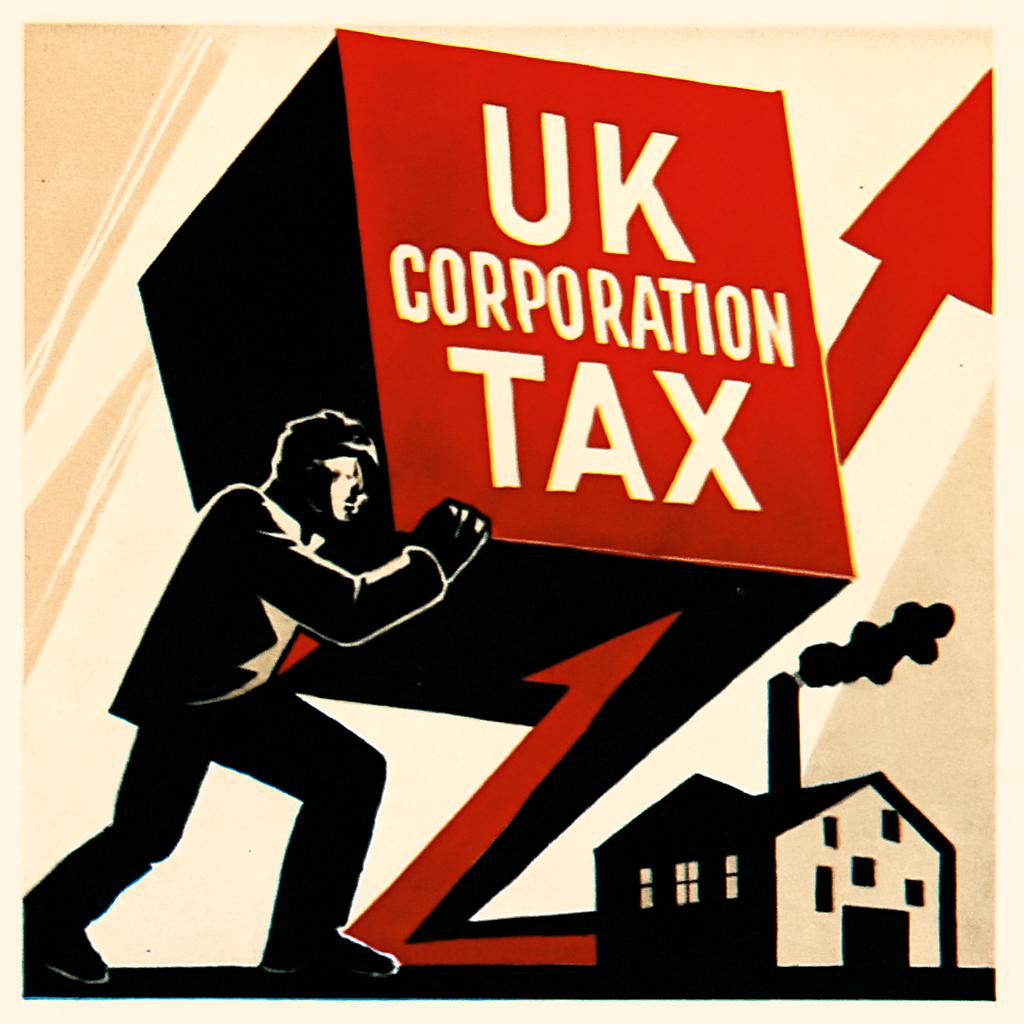
A guided visual explanation assembled from QE artwork and sourced documentary images.
01 / 02
QE visual interpretation
Frame 01
Understanding UK Corporation Tax for Small Businesses: Nuances and Practical Realities
UK small businesses pay corporation tax on profits with special rates and rules that require careful navigation.
Image provenance and limitation
Source: AI-generated visual interpretation
Creator: Question Everything
Limitation: This image explains or evokes the subject. It is not documentary evidence and should not be used to verify a factual claim.
Evidence
What do we know?
Verified claims with confidence scoring and cited sources.
1 of 4 findings need extra caution. Finding 4 rests on weaker sourcing than the other findings.
Living footnotes
Claims remain in the reading flow. Select a citation number to inspect the source behind it.
01
StatisticalSupported
The UK corporation tax small profits rate for 2026 is fixed at 19% for companies with profits up to £50,000.
For the financial year starting April 2025, companies with taxable profits not exceeding £50,000 benefit from the small profits rate of 19%, a rate designed to reduce the tax burden on smaller enterprises and encourage economic activity. This rate applies irrespective of the company's accounting period alignment with the tax year, providing a clear tax advantage for truly small businesses.
02
StatisticalSupported
Companies with profits between £50,000 and £250,000 pay corporation tax at the main rate of 25%, but may qualify for marginal relief that effectively reduces their tax rate.
The UK tax system implements a marginal relief mechanism for companies whose profits fall between the £50,000 and £250,000 thresholds. This relief ensures a gradual increase in tax liability from 19% to 25%, preventing sudden jumps in effective tax rates as profits grow. The precise calculation adjusts taxable profits by apportioned thresholds, accounting for associated companies and short accounting periods, adding complexity to tax planning.
03
HistoricalSupported
The 25% main corporation tax rate applies to UK companies with profits exceeding £250,000, marking a significant increase from prior years' rates.
From April 2023 the UK increased its main corporation tax rate to 25%, up from 19%, impacting medium and larger companies directly. This policy shift aims to align tax revenue with fiscal goals but introduces challenges for growing small businesses that cross the upper profit threshold, requiring careful financial forecasting to mitigate sudden tax increases.
04
StatisticalMixed evidence
Corporation tax is payable by all UK limited companies on their taxable profits, which include trading income, investment profits, and capital gains.
Corporation tax liability is calculated on a company's total taxable profits, encompassing income from business activities, investment earnings, and gains from asset disposals. This broad tax base means that businesses must accurately track and report all profit sources to HMRC, and that tax planning requires a holistic view of all income streams, not just core operations.
The complete record below preserves every citation, confidence input and recorded limitation.
Read the full evidence record4 findings · citations · limitations
Evidence review4 findings7 openable sources
01
Finding 1 of 4Statistical
0/2 verified
The UK corporation tax small profits rate for 2026 is fixed at 19% for companies with profits up to £50,000.
For the financial year starting April 2025, companies with taxable profits not exceeding £50,000 benefit from the small profits rate of 19%, a rate designed to reduce the tax burden on smaller enterprises and encourage economic activity. This rate applies irrespective of the company's accounting period alignment with the tax year, providing a clear tax advantage for truly small businesses.
Supportedmodel score 80%
2 sources agree, none peer-reviewed.
REFERENCE ×2
›View sources and limits— 2 citations, limits
Supporting passage
For the financial year starting April 2025, companies with taxable profits not exceeding £50,000 benefit from the small profits rate of 19%, a rate designed to reduce the tax burden on smaller enterprises and encourage economic activity. This rate applies irrespective of the company's accounting period alignment with the tax year, providing a clear tax advantage for truly small businesses.
Companies with profits between £50,000 and £250,000 pay corporation tax at the main rate of 25%, but may qualify for marginal relief that effectively reduces their tax rate.
The UK tax system implements a marginal relief mechanism for companies whose profits fall between the £50,000 and £250,000 thresholds. This relief ensures a gradual increase in tax liability from 19% to 25%, preventing sudden jumps in effective tax rates as profits grow. The precise calculation adjusts taxable profits by apportioned thresholds, accounting for associated companies and short accounting periods, adding complexity to tax planning.
Supportedmodel score 80%
2 sources agree, none peer-reviewed.
REFERENCE ×2
›View sources and limits— 2 citations, limits
Supporting passage
The UK tax system implements a marginal relief mechanism for companies whose profits fall between the £50,000 and £250,000 thresholds. This relief ensures a gradual increase in tax liability from 19% to 25%, preventing sudden jumps in effective tax rates as profits grow. The precise calculation adjusts taxable profits by apportioned thresholds, accounting for associated companies and short accounting periods, adding complexity to tax planning.
The 25% main corporation tax rate applies to UK companies with profits exceeding £250,000, marking a significant increase from prior years' rates.
From April 2023 the UK increased its main corporation tax rate to 25%, up from 19%, impacting medium and larger companies directly. This policy shift aims to align tax revenue with fiscal goals but introduces challenges for growing small businesses that cross the upper profit threshold, requiring careful financial forecasting to mitigate sudden tax increases.
Supportedmodel score 80%
2 sources agree, none peer-reviewed.
REFERENCE ×2
›View sources and limits— 2 citations, limits
Supporting passage
From April 2023 the UK increased its main corporation tax rate to 25%, up from 19%, impacting medium and larger companies directly. This policy shift aims to align tax revenue with fiscal goals but introduces challenges for growing small businesses that cross the upper profit threshold, requiring careful financial forecasting to mitigate sudden tax increases.
Corporation tax is payable by all UK limited companies on their taxable profits, which include trading income, investment profits, and capital gains.
Corporation tax liability is calculated on a company's total taxable profits, encompassing income from business activities, investment earnings, and gains from asset disposals. This broad tax base means that businesses must accurately track and report all profit sources to HMRC, and that tax planning requires a holistic view of all income streams, not just core operations.
Mixed evidencemodel score 55%
Verification was mixed across 1 source.
REFERENCE
›View sources and limits— 1 citation, limits
Supporting passage
Corporation tax liability is calculated on a company's total taxable profits, encompassing income from business activities, investment earnings, and gains from asset disposals. This broad tax base means that businesses must accurately track and report all profit sources to HMRC, and that tax planning requires a holistic view of all income streams, not just core operations.
These visualizations respond to your curiosity. Interact to go deeper.
comparison table
UK Corporation Tax Rates and Thresholds for 2026
Tax Rate
Up to £50,000
19%
Between £50,000 and £250,000
Marginal Relief between 19% and 25%
Above £250,000
25%
Tap any row to highlight and compare
process flow
Steps to Calculate Corporation Tax for a Small Business
Determine taxable profits
Identify applicable tax rate
Apply marginal relief if applicable
Calculate final tax due
Submit tax return and pay
Perspectives
How is this interpreted?
Enter a viewpoint. Notice what it reveals, what it leaves out, and whether it changes the question for you.
The EmpiricistScientific viewpointLive tension
From an economic perspective, the tiered corporation tax rates with marginal relief aim to balance revenue generation with incentives for small business growth. However, the complexity of marginal relief calculations can introduce inefficiencies and compliance costs that disproportionately affect smaller firms, potentially dampening entrepreneurial activity despite the intention to support it.
03Higher rates on growing profits may discourage scaling.
Application
Why does this matter to you?
Personal reflections and applications for your life.
Thought experimentPractical
How can small business owners optimize their tax planning given the corporation tax thresholds and reliefs?
Why it changes the question
Understanding where your profits fall relative to tax thresholds can help you avoid unexpected tax jumps and make strategic decisions about timing revenue recognition or expenses. Proper planning reduces tax liabilities and improves cash flow management.
Try this
Review your profit projections quarterly and consult with a tax advisor to leverage marginal relief and allowable deductions effectively.
Media
QE Smart Glass
Curated media selected for this investigation.
QE Glass
YOUTUBE
What is Corporation Tax in the UK?
Workhy
In this video, we talked about corporation tax, one of the essential issues entrepreneurs who want to establish a company in the ...
QE Glass
YOUTUBE
Why do small UK businesses pay more tax than amazon, google & Netflix?
Thorne Widgery
Why do small UK businesses pay more tax than amazon, google & Netflix? #netflix #amazon #google #ukbusiness #tax ...
QE Glass
YOUTUBE
Inflation UK | How does it impact Small Business Owners (Part 1)
Tony D | The Chief Finance Officer
Inflation, and your small to medium business. Over the last 2 decades here in the UK, it has not been too problematic overall to ...
QE Glass
YOUTUBE
The economics of small business
Richard J Murphy
Small businesses do not work as microeconomic theory suggests. They don't maximise profit. Most, at best, provide their owners ...
QE Glass
YOUTUBE
The UK Has an Awkward Tax Avoidance Problem
Damien Talks Money
In modern Britain, two businesses can sell the same product on the same street, to the same people, for pretty much the same ...
QE Glass
YOUTUBE
What is TURNOVER? Self employed and small business basics
Small Business Toolbox
In this video I'm explaining what is meant by turnover in business. Sometimes referred to as total sales, gross sales, total income, ...
QE Glass
YOUTUBE
UK Corporation Tax Basics for Beginners (2026): Rates, Deadlines, Traps for Small Businesses!
Basics of Business UK
Corporation Tax traps are everywhere — and limited companies fall into the same ones every year. In this video we break down: ...
QE Glass
PODCAST
Navigating Small Business Taxes in the UK
The TaxCast
This episode explores the practical challenges small business owners face with UK corporation tax and offers expert advice on planning and compliance.
Keep Going
Where this leads
Questions this investigation opens up — and what QE has already looked into.
No AI help here — no suggestions, no autocomplete, nothing finishing your sentences. That is deliberate. Working out what you think is effortful, and the effort is the part that changes you: reasoning is trained like a muscle, and a muscle that is always carried gets weaker. Let something else do the thinking and you keep the answer but lose the capacity to have reached it.
Write your current position.
Not what the page says. What you think, having read it.0 words · Nothing written yet.
Sign in to leave a mark. Your draft is saved here in the meantime.