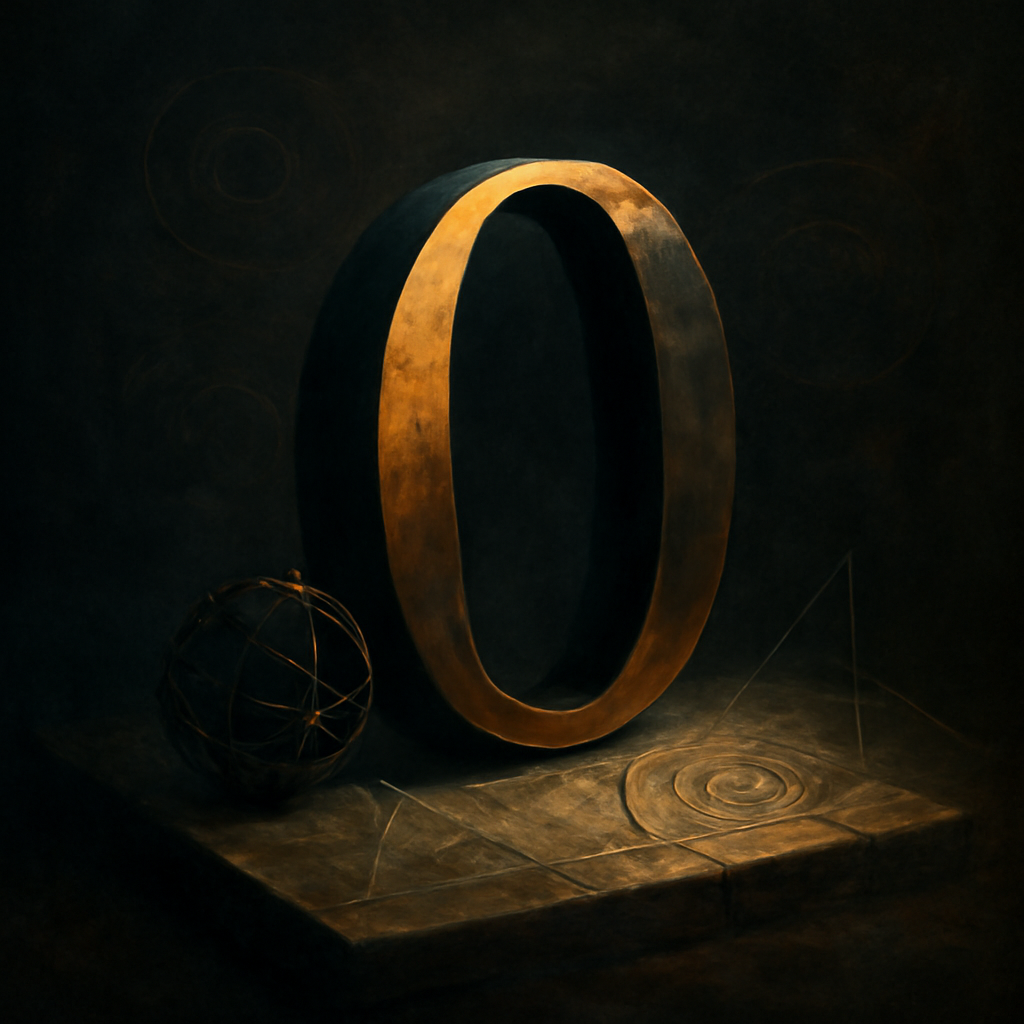
The Fascinating History of Zero: How Nothing Changed Everything
Zero is a number that means 'nothing,' but its story is full of surprises. It didn’t start out as a number, but as a placeholder — a way to show that a certain spot in a number was empty. Imagine writing 105 without zero: it might look like 15, which is very different! This idea first popped up in ancient civilizations like the Babylonians, who lived thousands of years ago in what is now Iraq. They used symbols to mark empty places in numbers, but they didn’t think of zero as a real number.
The real breakthrough came in ancient India. By around 650 AD, Indian mathematicians fully embraced zero as a number on its own. They used the word 'shunya,' meaning empty or void. This was a huge step because it let people do complex math more easily. From India, zero traveled through the Middle East, where scholars like al-Khwarizmi promoted it during the Islamic Golden Age. Finally, in the 12th century, it reached Europe through Italian mathematician Fibonacci, who helped spread the idea with his book for merchants. Today, zero is everywhere — in computers, science, and daily life — proving that sometimes, nothing can mean everything.
“Zero started as a symbol for 'nothing here' and became the cornerstone of all modern math and technology.”
Reflect
If zero means 'nothing,' how can 'nothing' be so powerful that it runs our computers, phones, and even space rockets?
Research·1 source·Developing confidence·Investigated 18 Jul 2026(2 months ago)·Grounded; verification trace not recorded·Investigation may be outdated
Your next question, in
Visual Trail
See The Fascinating History of Zero: How Nothing Changed Everything
A guided visual explanation assembled from QE artwork and sourced documentary images.
01 / 05
QE visual interpretation
Frame 01
The Fascinating History of Zero: How Nothing Changed Everything
Zero began as an empty spot in numbers and became a powerful number thanks to ancient Indian math.
Image provenance and limitation
Source: AI-generated visual interpretation
Creator: Question Everything
Limitation: This image explains or evokes the subject. It is not documentary evidence and should not be used to verify a factual claim.
Evidence
What do we know?
Verified claims with confidence scoring and cited sources.
3 of 4 findings need extra caution. Finding 1, Finding 2, Finding 3 rest on weaker sourcing than the other findings.
Living footnotes
Claims remain in the reading flow. Select a citation number to inspect the source behind it.
01
HistoricalNot confirmed
The Babylonians used a symbol as a placeholder to mark empty positions in numbers around 300 BC.
Ancient Babylonian mathematics had a base-60 number system. They used a symbol, like two slanted wedges, to show an empty spot in a number, helping to distinguish numbers like 1, 60, or 3600. However, they did not think of this symbol as a real number zero, just as a way to avoid confusion in writing numbers.
02
HistoricalNot confirmed
By around 650 AD, Indian mathematicians started using zero as an actual number in their calculations.
Indian scholars like Aryabhata and Brahmagupta developed the idea of zero as more than a placeholder. Brahmagupta described rules for zero in arithmetic, treating it as a number you could add, subtract, and use in equations. This was a big leap forward because it allowed more advanced math and paved the way for algebra and calculus.
03
HistoricalNot confirmed
The concept of zero was introduced to the Islamic world by Persian mathematician al-Khwarizmi in the 9th century.
During the Islamic Golden Age, al-Khwarizmi studied Indian math texts and explained the use of zero in his book. This helped spread zero and the Hindu-Arabic numeral system across the Middle East and later into Europe. His work formed the foundation for algebra and modern arithmetic.
04
HistoricalSupported
Zero reached Europe around the 12th century, popularized by Fibonacci in his book Liber Abaci.
Fibonacci, an Italian mathematician, traveled in North Africa and learned about the Hindu-Arabic numeral system, including zero. In 1202, he published Liber Abaci, a book explaining the new numbers to European merchants and scholars. This helped Europe move away from Roman numerals and adopt the more efficient system including zero.
The complete record below preserves every citation, confidence input and recorded limitation.
Read the full evidence record4 findings · citations · limitations
Evidence review4 findings1 openable sources
01
Finding 1 of 4HistoricalNeeds caution
0/0 verified
The Babylonians used a symbol as a placeholder to mark empty positions in numbers around 300 BC.
Ancient Babylonian mathematics had a base-60 number system. They used a symbol, like two slanted wedges, to show an empty spot in a number, helping to distinguish numbers like 1, 60, or 3600. However, they did not think of this symbol as a real number zero, just as a way to avoid confusion in writing numbers.
Not confirmedmodel score 30%
Scored as if sourced, but every citation failed verification.
NO SURVIVING CITATION
›View sources and limits— limits
Supporting passage
Ancient Babylonian mathematics had a base-60 number system. They used a symbol, like two slanted wedges, to show an empty spot in a number, helping to distinguish numbers like 1, 60, or 3600. However, they did not think of this symbol as a real number zero, just as a way to avoid confusion in writing numbers.
Citations (0 of 1 survived verification)
Nothing openable. Every citation was removed by provenance validation.
What limits this
All 1 citation on this claim failed verification and were removed. Nothing openable supports it.
02
Finding 2 of 4HistoricalNeeds caution
0/0 verified
By around 650 AD, Indian mathematicians started using zero as an actual number in their calculations.
Indian scholars like Aryabhata and Brahmagupta developed the idea of zero as more than a placeholder. Brahmagupta described rules for zero in arithmetic, treating it as a number you could add, subtract, and use in equations. This was a big leap forward because it allowed more advanced math and paved the way for algebra and calculus.
Not confirmedmodel score 30%
Scored as if sourced, but every citation failed verification.
NO SURVIVING CITATION
›View sources and limits— limits
Supporting passage
Indian scholars like Aryabhata and Brahmagupta developed the idea of zero as more than a placeholder. Brahmagupta described rules for zero in arithmetic, treating it as a number you could add, subtract, and use in equations. This was a big leap forward because it allowed more advanced math and paved the way for algebra and calculus.
Citations (0 of 1 survived verification)
Nothing openable. Every citation was removed by provenance validation.
What limits this
All 1 citation on this claim failed verification and were removed. Nothing openable supports it.
03
Finding 3 of 4HistoricalNeeds caution
0/0 verified
The concept of zero was introduced to the Islamic world by Persian mathematician al-Khwarizmi in the 9th century.
During the Islamic Golden Age, al-Khwarizmi studied Indian math texts and explained the use of zero in his book. This helped spread zero and the Hindu-Arabic numeral system across the Middle East and later into Europe. His work formed the foundation for algebra and modern arithmetic.
Not confirmedmodel score 30%
Scored as if sourced, but every citation failed verification.
NO SURVIVING CITATION
›View sources and limits— limits
Supporting passage
During the Islamic Golden Age, al-Khwarizmi studied Indian math texts and explained the use of zero in his book. This helped spread zero and the Hindu-Arabic numeral system across the Middle East and later into Europe. His work formed the foundation for algebra and modern arithmetic.
Citations (0 of 1 survived verification)
Nothing openable. Every citation was removed by provenance validation.
What limits this
All 1 citation on this claim failed verification and were removed. Nothing openable supports it.
04
Finding 4 of 4Historical
0/1 verified
Zero reached Europe around the 12th century, popularized by Fibonacci in his book Liber Abaci.
Fibonacci, an Italian mathematician, traveled in North Africa and learned about the Hindu-Arabic numeral system, including zero. In 1202, he published Liber Abaci, a book explaining the new numbers to European merchants and scholars. This helped Europe move away from Roman numerals and adopt the more efficient system including zero.
Supportedmodel score 95%
One source, not peer-reviewed. Thinner than the score suggests.
REFERENCE
›View sources and limits— 1 citation, limits
Supporting passage
Fibonacci, an Italian mathematician, traveled in North Africa and learned about the Hindu-Arabic numeral system, including zero. In 1202, he published Liber Abaci, a book explaining the new numbers to European merchants and scholars. This helped Europe move away from Roman numerals and adopt the more efficient system including zero.
Rests on a single source. No independent corroboration.
No peer-reviewed source among the citations.
The generator scored this 95%, which would read as “Established”. Its citations reach only “Supported”, so that is what is shown.
Interactive Exploration
Touch, drag, and discover
These visualizations respond to your curiosity. Interact to go deeper.
timeline
Key Events in the History of Zero
Loading timeline…
relationship map
How Zero Connects to Other Mathematical Ideas
Mapping relationships…
Drag nodes to rearrange — tap for details
comparison table
Zero as Placeholder vs Zero as Number
Zero as Placeholder
Zero as Number
Meaning
Marks empty position in numbers
Represents the number zero itself
Example
105 (zero shows empty tens place)
0 + 5 = 5
Used by
Babylonians and early cultures
Indian mathematicians like Brahmagupta
Mathematical use
Helps write large numbers clearly
Used in arithmetic and algebra
Tap any row to highlight and compare
statistics card
Why Zero Matters Today
0 and 1
Numbers at the core of binary code
Foundation of all modern computing and digital devices
1202
Year Fibonacci published Liber Abaci
Year zero and Hindu-Arabic numerals reached Europe widely
650 AD
Approximate time zero was first used as a number in India
Birth of zero as a true number
Visual Gallery
Images & artifacts
Historical images, diagrams, and visual knowledge from Wikimedia Commons.
Perspectives
How is this interpreted?
Enter a viewpoint. Notice what it reveals, what it leaves out, and whether it changes the question for you.
The EmpiricistScientific viewpointEstablished lens
From a scientific point of view, zero is essential because it lets us do math that describes the world around us. Without zero, we couldn't write numbers clearly, do algebra, or develop calculus. It also underpins computer science, where everything is built on zeros and ones in binary code. The invention of zero opened the door to modern science and technology.
What this lens notices
01Zero allows positional number systems to work, making math easier and more flexible.
02It enables the use of negative numbers and advanced calculations.
03Binary code, which uses zero and one, is the foundation of all modern computers.
Application
Why does this matter to you?
Personal reflections and applications for your life.
Thought experimentSelf-Reflection
How does the idea of 'nothing' influence how you think about problems or creativity?
Why it changes the question
Understanding zero shows that 'nothing' can be powerful. In life, empty spaces or pauses can be just as important as things themselves. This might help you see challenges or silence as opportunities.
Try this
Next time you face a problem, try to see what 'empty' or missing parts might reveal before rushing to fill them.
Media
QE Smart Glass
Curated media selected for this investigation.
QE Glass
YOUTUBE
What is Zero? Getting Something from Nothing - with Hannah Fry
The Royal Institution
Is zero really a number? How did it come about? Hannah Fry tells the story of how zero went from nothing to something. Subscribe ...
QE Glass
YOUTUBE
Is math discovered or invented? - Jeff Dekofsky
TED-Ed
Explore some of the most famous arguments in the ancient debate: is math a human construct or part of the fabric of the universe?
QE Glass
YOUTUBE
How Imaginary Numbers Were Invented
Veritasium
A general solution to the cubic equation was long considered impossible, until we gave up the requirement that math reflect reality ...
QE Glass
YOUTUBE
Why can't you divide by zero? - TED-Ed
TED-Ed
Check out our Patreon page: https://www.patreon.com/teded View full lesson: ...
QE Glass
YOUTUBE
The Oldest Unsolved Problem in Math
Veritasium
Do odd perfect numbers exist? Head to https://brilliant.org/veritasium to start your free 30-day trial, and the first 200 people get ...
QE Glass
YOUTUBE
A brief history of numerical systems - Alessandra King
TED-Ed
View full lesson: http://ed.ted.com/lessons/a-brief-history-of-numerical-systems-alessandra-king 1, 2, 3, 4, 5, 6, 7, 8, 9... and 0.
QE Glass
YOUTUBE
Kurzgesagt – Zero: The Most Powerful Number in the Universe
Kurzgesagt – In a Nutshell
A clear and engaging video explaining the history and importance of zero in math and science.
QE Glass
YOUTUBE
Numberphile: The Story of Zero
Numberphile
A fun video showing the journey of zero and why it’s so special.
QE Glass
PODCAST
The story of zero: How 'nothing' changed the world
CBC Radio Ideas
An audio journey exploring the origins and impact of zero on human history.
Keep Going
Where this leads
Questions this investigation opens up — and what QE has already looked into.
No AI help here — no suggestions, no autocomplete, nothing finishing your sentences. That is deliberate. Working out what you think is effortful, and the effort is the part that changes you: reasoning is trained like a muscle, and a muscle that is always carried gets weaker. Let something else do the thinking and you keep the answer but lose the capacity to have reached it.
Write your current position.
Not what the page says. What you think, having read it.0 words · Nothing written yet.
Sign in to leave a mark. Your draft is saved here in the meantime.