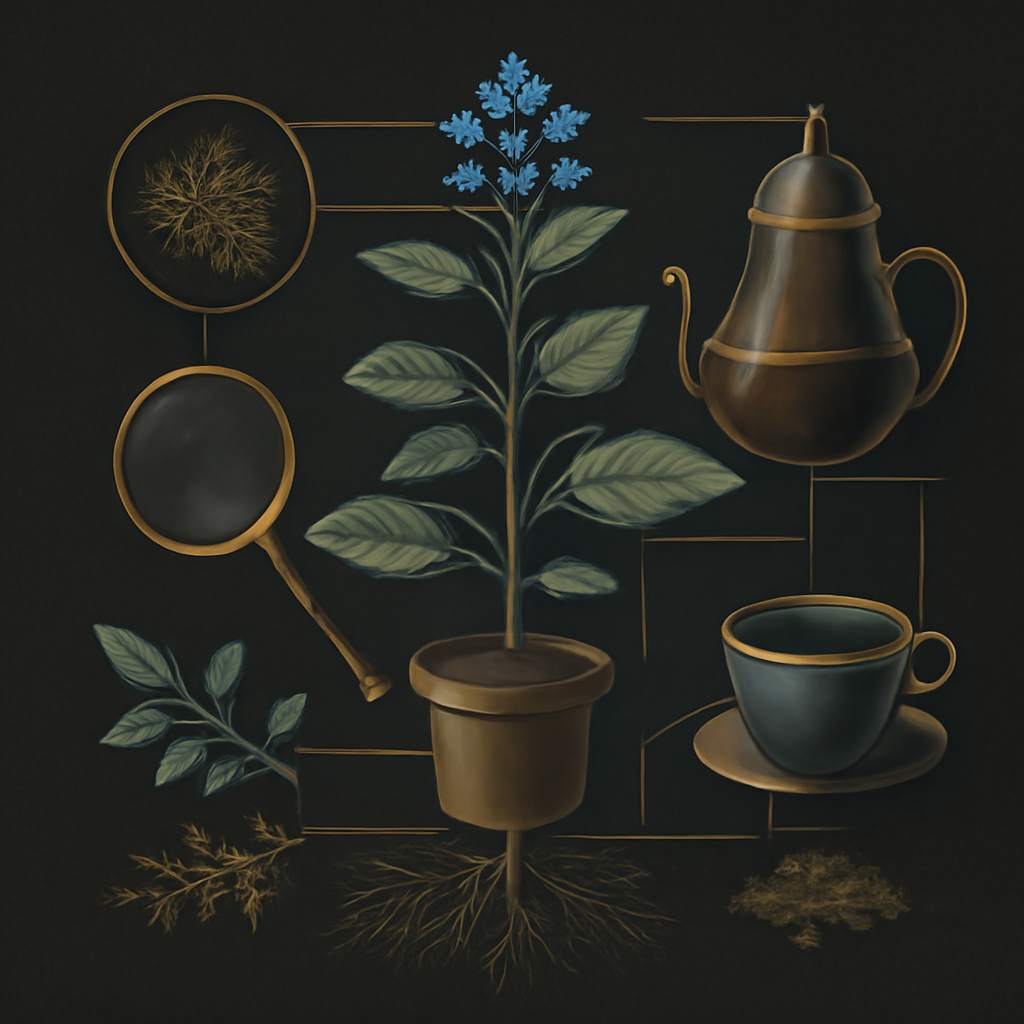
The Alchemist's Garden: Cultivating and Blending Your Own Herbal Infusions
Step into the vibrant, sensory world of the modern herbalist. For centuries, humans have forged an intimate alliance with the botanical kingdom, seeking solace, healing, and ritual in the simple act of steeping dried leaves, flowers, and roots. To transition from a casual drinker of commercial tea bags to a true herbal tea enthusiast is to embark on a journey of co-creation with nature. It is an exploration that bridges the ancient art of the apothecary with the precise science of organic chemistry.
By learning to cultivate your own tea garden, you gain direct agency over the terroir, harvest timing, and curing processes that dictate the flavor and potency of your brews. This guide demystifies the biology of tea plants, the chemistry of essential oils, and the structural architecture of blending, empowering you to grow not just plants, but a deeply personal, sustainable botanical practice.
✨
Wonder Moment
“Many of the intensely aromatic essential oils we love in herbal tea—like thymol, menthol, and linalool—were actually developed by plants as sophisticated chemical weapons to deter herbivores and insect pests. When we drink a soothing, aromatic cup of tea, we are essentially enjoying a highly diluted, beautifully balanced dose of botanical defense machinery.”
Reflect
If plants are constantly communicating and adapting chemically to their environments, how might our relationship with our home garden change if we view our plants not as passive decorations, but as highly responsive chemical alchemists reacting directly to the care we provide?
Developing confidence·Investigated 18 Jun 2026(2 months ago)·Investigation may be outdated
Your next question, in
Visual Trail
See The Alchemist's Garden: Cultivating and Blending Your Own Herbal Infusions
A guided visual explanation assembled from QE artwork and sourced documentary images.
01 / 02
QE visual interpretation
Frame 01
The Alchemist's Garden: Cultivating and Blending Your Own Herbal Infusions
Transform your passion for herbal tea by mastering the science of backyard cultivation, phytochemistry, and the art of sensory blending.
Image provenance and limitation
Source: AI-generated visual interpretation
Creator: Question Everything
Limitation: This image explains or evokes the subject. It is not documentary evidence and should not be used to verify a factual claim.
Evidence
What do we know?
Verified claims with confidence scoring and cited sources.
Generated without source retrieval. QE did not fetch sources for this investigation, so no citation here was checked against a retrieved set. Claims reflect the model’s training data. 3 of 3 findings carry no openable link at all.
Living footnotes
Claims remain in the reading flow. Select a citation number to inspect the source behind it.
01
AcademicNot confirmed
Terroir and controlled ecological stress increase the concentration of therapeutic essential oils in tea herbs.
Just as with wine grapes, the environmental conditions (terroir) under which herbal plants grow profoundly affect their secondary metabolites—the compounds responsible for aroma, flavor, and therapeutic effects. Research indicates that mild environmental stressors, such as regulated deficit irrigation (withholding water at specific growth stages), trigger defense mechanisms in plants like mint (Mentha) and rosemary (Salvia rosmarinus). This stress upregulates the biosynthesis of volatile monoterpenes and polyphenols.
By carefully managing soil composition (preferring well-drained, moderately fertile soils over excessively rich ones) and exposure to sunlight, home growers can deliberately stimulate the plant to produce higher concentrations of active compounds like menthol, rosmarinic acid, and apigenin. This results in a vastly superior, more flavorful, and biologically potent infusion compared to mass-produced, industrial herbs.
02
ObservationalNot confirmed
Circadian rhythms and seasonal timing dictate the optimal harvest window for maximum herbal potency.
Plants operate on highly precise internal biological clocks. The concentration of volatile essential oils in aromatic leaves and flowers peaks at specific times of the day and during precise growth stages. For instance, volatile compounds are at their highest concentration in the early morning, just after the dew evaporates but before the heat of the midday sun causes them to volatilize into the atmosphere.
Furthermore, harvesting during the plant's peak seasonal window—such as harvesting chamomile (Matricaria chamomilla) when the flower heads are fully open but before they begin to fade, or collecting lemon balm (Melissa officinalis) just prior to flowering—ensures that the delicate therapeutic compounds are captured at their biological apex. Harvesting post-flowering often results in a bitter, woody flavor as the plant diverts its energy and chemical reserves toward seed production.
03
ExperimentalNot confirmed
Low-temperature, active-airflow dehydration preserves volatile monoterpenes and prevents enzymatic degradation.
The post-harvest drying phase is critical to preserving the integrity of homegrown botanicals. Using high heat (such as standard kitchen ovens) rapidly degrades delicate, heat-sensitive compounds like the linalool in lavender or the citral in lemon verbena. Additionally, slow drying in high-humidity environments can lead to mold development and enzymatic oxidation, which turns green leaves brown and ruins the fresh, crisp flavor profiles.
Biochemical studies show that drying herbs at temperatures between 35°C and 40°C (95°F to 104°F) with active, low-humidity airflow preserves the highest percentage of essential oils while rapidly reducing water activity to safe preservation levels (below 10% moisture content). This locks in both color and chemical potency for long-term storage.
The complete record below preserves every citation, confidence input and recorded limitation.
Read the full evidence record3 findings · citations · limitations
Evidence review3 findings0 openable sources
01
Finding 1 of 3Academic
0
0/0 verified
Terroir and controlled ecological stress increase the concentration of therapeutic essential oils in tea herbs.
Just as with wine grapes, the environmental conditions (terroir) under which herbal plants grow profoundly affect their secondary metabolites—the compounds responsible for aroma, flavor, and therapeutic effects. Research indicates that mild environmental stressors, such as regulated deficit irrigation (withholding water at specific growth stages), trigger defense mechanisms in plants like mint (Mentha) and rosemary (Salvia rosmarinus). This stress upregulates the biosynthesis of volatile monoterpenes and polyphenols.
By carefully managing soil composition (preferring well-drained, moderately fertile soils over excessively rich ones) and exposure to sunlight, home growers can deliberately stimulate the plant to produce higher concentrations of active compounds like menthol, rosmarinic acid, and apigenin. This results in a vastly superior, more flavorful, and biologically potent infusion compared to mass-produced, industrial herbs.
Not confirmedmodel score 92%
Written from the model's own knowledge. No source was retrieved or checked.
UNVERIFIED — NO RETRIEVAL
›View sources and limits— limits
Supporting passage
Just as with wine grapes, the environmental conditions (terroir) under which herbal plants grow profoundly affect their secondary metabolites—the compounds responsible for aroma, flavor, and therapeutic effects. Research indicates that mild environmental stressors, such as regulated deficit irrigation (withholding water at specific growth stages), trigger defense mechanisms in plants like mint (Mentha) and rosemary (Salvia rosmarinus). This stress upregulates the biosynthesis of volatile monoterpenes and polyphenols.
By carefully managing soil composition (preferring well-drained, moderately fertile soils over excessively rich ones) and exposure to sunlight, home growers can deliberately stimulate the plant to produce higher concentrations of active compounds like menthol, rosmarinic acid, and apigenin. This results in a vastly superior, more flavorful, and biologically potent infusion compared to mass-produced, industrial herbs.
Citations (0 of 2 survived verification)
Nothing openable. No sources were retrieved for this investigation, so none were checked.
What limits this
This investigation was generated without source retrieval. The model named a source but gave no link, and no verification step ran against it.
The claim reflects the model's training data, not a checked citation.
The generator scored this 92%, which would read as “Established”. Its citations reach only “Unresolved”, so that is what is shown.
02
Finding 2 of 3Observational
0/0 verified
Circadian rhythms and seasonal timing dictate the optimal harvest window for maximum herbal potency.
Plants operate on highly precise internal biological clocks. The concentration of volatile essential oils in aromatic leaves and flowers peaks at specific times of the day and during precise growth stages. For instance, volatile compounds are at their highest concentration in the early morning, just after the dew evaporates but before the heat of the midday sun causes them to volatilize into the atmosphere.
Furthermore, harvesting during the plant's peak seasonal window—such as harvesting chamomile (Matricaria chamomilla) when the flower heads are fully open but before they begin to fade, or collecting lemon balm (Melissa officinalis) just prior to flowering—ensures that the delicate therapeutic compounds are captured at their biological apex. Harvesting post-flowering often results in a bitter, woody flavor as the plant diverts its energy and chemical reserves toward seed production.
Not confirmedmodel score 95%
Written from the model's own knowledge. No source was retrieved or checked.
UNVERIFIED — NO RETRIEVAL
›View sources and limits— limits
Supporting passage
Plants operate on highly precise internal biological clocks. The concentration of volatile essential oils in aromatic leaves and flowers peaks at specific times of the day and during precise growth stages. For instance, volatile compounds are at their highest concentration in the early morning, just after the dew evaporates but before the heat of the midday sun causes them to volatilize into the atmosphere.
Furthermore, harvesting during the plant's peak seasonal window—such as harvesting chamomile (Matricaria chamomilla) when the flower heads are fully open but before they begin to fade, or collecting lemon balm (Melissa officinalis) just prior to flowering—ensures that the delicate therapeutic compounds are captured at their biological apex. Harvesting post-flowering often results in a bitter, woody flavor as the plant diverts its energy and chemical reserves toward seed production.
Citations (0 of 1 survived verification)
Nothing openable. No sources were retrieved for this investigation, so none were checked.
What limits this
This investigation was generated without source retrieval. The model named a source but gave no link, and no verification step ran against it.
The claim reflects the model's training data, not a checked citation.
The generator scored this 95%, which would read as “Established”. Its citations reach only “Unresolved”, so that is what is shown.
03
Finding 3 of 3Experimental
0
0/0 verified
Low-temperature, active-airflow dehydration preserves volatile monoterpenes and prevents enzymatic degradation.
The post-harvest drying phase is critical to preserving the integrity of homegrown botanicals. Using high heat (such as standard kitchen ovens) rapidly degrades delicate, heat-sensitive compounds like the linalool in lavender or the citral in lemon verbena. Additionally, slow drying in high-humidity environments can lead to mold development and enzymatic oxidation, which turns green leaves brown and ruins the fresh, crisp flavor profiles.
Biochemical studies show that drying herbs at temperatures between 35°C and 40°C (95°F to 104°F) with active, low-humidity airflow preserves the highest percentage of essential oils while rapidly reducing water activity to safe preservation levels (below 10% moisture content). This locks in both color and chemical potency for long-term storage.
Not confirmedmodel score 94%
Written from the model's own knowledge. No source was retrieved or checked.
UNVERIFIED — NO RETRIEVAL
›View sources and limits— limits
Supporting passage
The post-harvest drying phase is critical to preserving the integrity of homegrown botanicals. Using high heat (such as standard kitchen ovens) rapidly degrades delicate, heat-sensitive compounds like the linalool in lavender or the citral in lemon verbena. Additionally, slow drying in high-humidity environments can lead to mold development and enzymatic oxidation, which turns green leaves brown and ruins the fresh, crisp flavor profiles.
Biochemical studies show that drying herbs at temperatures between 35°C and 40°C (95°F to 104°F) with active, low-humidity airflow preserves the highest percentage of essential oils while rapidly reducing water activity to safe preservation levels (below 10% moisture content). This locks in both color and chemical potency for long-term storage.
Citations (0 of 1 survived verification)
Nothing openable. No sources were retrieved for this investigation, so none were checked.
What limits this
This investigation was generated without source retrieval. The model named a source but gave no link, and no verification step ran against it.
The claim reflects the model's training data, not a checked citation.
The generator scored this 94%, which would read as “Established”. Its citations reach only “Unresolved”, so that is what is shown.
Interactive Exploration
Touch, drag, and discover
These visualizations respond to your curiosity. Interact to go deeper.
process flow
The Lifecycle of a Tisane: Seed to Steep
Strategic Sowing
The Morning Harvest
Low-Temp Dehydration
Curing & Storage
Precise Extraction
comparison table
Cultivating the Core Tea Botanicals
Preferred Terroir
Harvest Window
Drying Difficulty
Primary Phytochemical
Peppermint (Mentha x piperita)
Moist, rich soil; partial to full sun
Before flowering (leaves)
Easy (low moisture content)
Menthol (carminative, cooling)
German Chamomile (Matricaria chamomilla)
Sandy, well-drained soil; full sun
Fully open flower head
Medium (requires gentle handling)
Apigenin (nervine, sedative)
Lemon Balm (Melissa officinalis)
Sandy loam; partial shade
Early summer, pre-budding
Hard (prone to blackening if bruised)
Rosmarinic acid (anxiolytic, antiviral)
English Lavender (Lavandula angustifolia)
Alkaline, rocky soil; full sun
Just as lower buds open
Easy (hang dry in bunches)
Linalool (calming, aromatic)
Tap any row to highlight and compare
spectrum
The Extraction Spectrum: Water Temp & Steeping Times
Occurs when herbs are dried in direct sunlight compared to dark, temperature-controlled active air drying.
2-3x
Essential Oil Concentration
Found in plants grown with controlled deficit irrigation compared to over-watered, pampered garden plants.
12 Months
Maximum Freshness Window
The shelf-life of properly cured, whole-leaf herbs stored in airtight amber glass jars before terpene degradation accelerates.
Perspectives
How is this interpreted?
Enter a viewpoint. Notice what it reveals, what it leaves out, and whether it changes the question for you.
The EmpiricistScientific viewpointEstablished lens
From a phytochemical perspective, herbal teas (correctly termed 'tisanes') are aqueous extractions of diverse plant compounds. Scientists analyze these extractions to understand how active molecules—such as flavonoids, mucilage, tannins, and essential oils—interact with human physiology. The scientific view emphasizes precision: measuring water temperature, extraction times, and molecular synergy (how different herbs interact when blended together) to maximize bioavailability and ensure safety, particularly regarding potential interactions with pharmaceutical drugs.
What this lens notices
01Water temperature acts as a solvent selector; different compounds dissolve at different temperatures.
02Synergistic blending can enhance bioavailability (e.g., adding black pepper to turmeric infusions).
03Understanding contraindications prevents adverse biochemical reactions in the human body.
Application
Why does this matter to you?
Personal reflections and applications for your life.
Thought experimentPractical
How can I start a high-potency herbal tea garden in a limited space?
Why it changes the question
You don't need acres of land to cultivate a rich tea garden. A simple trio of Peppermint (for digestion), Chamomile (for nervous system support), and Lemon Verbena (for high-citral uplifting aromatics) can be grown in containers on a sunny balcony. Ensure you use high-quality organic potting soil, provide excellent drainage, and harvest regularly to encourage bushy, dense growth.
Try this
Plant a multi-tier container garden using a 12-inch terracotta pot for mint (to contain its invasive runners), a wide, shallow pot for chamomile seeds, and a deep pot for a woody lemon verbena shrub.
Media
QE Smart Glass
Curated media selected for this investigation.
QE Glass
YOUTUBE
Grow Your Own Pharmacy, 10 Healing Herbs You Need! 🌿
Gaz Oakley
ORDER MY NEW BOOK PLANT TO PLATE NOW https://geni.us/planttoplate ❤️ order my knife here ...
QE Glass
YOUTUBE
🔥He Woke in a Women-Only Country, Became the Only Man and Led It to Civilization With Modern Knowhow
No AI help here — no suggestions, no autocomplete, nothing finishing your sentences. That is deliberate. Working out what you think is effortful, and the effort is the part that changes you: reasoning is trained like a muscle, and a muscle that is always carried gets weaker. Let something else do the thinking and you keep the answer but lose the capacity to have reached it.
Write your current position.
Not what the page says. What you think, having read it.0 words · Nothing written yet.
Sign in to leave a mark. Your draft is saved here in the meantime.