AI Agents vs. Chatbots: Understanding the Next Evolution in Artificial Intelligence
In the ever-evolving world of artificial intelligence, two digital entities often come up: AI agents and chatbots. At first glance, they might seem similar—both interact with users through natural language and offer assistance. But beneath the surface, these technologies are fundamentally different. Chatbots are the digital equivalents of vending machines, responding predictably with scripted answers to specific questions. AI agents, by contrast, are like personal chefs—autonomous, adaptable, and capable of understanding context deeply, making decisions, and executing complex tasks.
This distinction reshapes how businesses and individuals experience AI. While chatbots excel at handling routine queries and simple tasks, AI agents bring a new level of intelligence and autonomy, able to plan, learn, and act across multiple systems. They can not only understand your request but also independently carry out a series of actions to fulfill it. This page explores what defines each, how they work, their unique strengths, and why this difference matters in our digital age.
“Unlike chatbots that respond only when prompted, AI agents can independently decide what to do next and act across systems to complete complex tasks.”
Reflect
If AI agents can learn and act autonomously, how might our future digital assistants change the way we work and live?
Research·6 sources·Established confidence·Investigated 13 Oct 2026(21 days ago)·May need refresh
Your next question, in
Visual Trail
See AI Agents vs. Chatbots: Understanding the Next Evolution in Artificial Intelligence
A guided visual explanation assembled from QE artwork and sourced documentary images.
01 / 02
QE visual interpretation
Frame 01
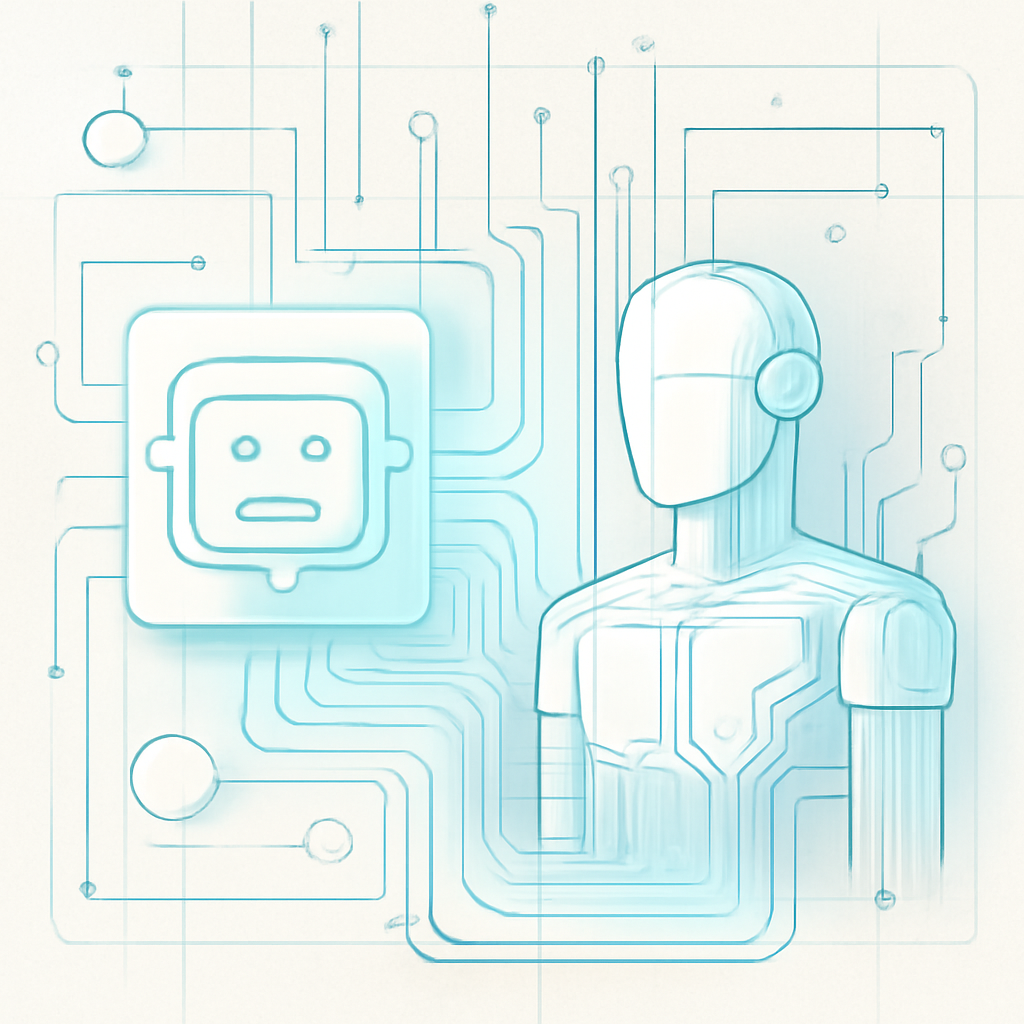
AI Agents vs. Chatbots: Understanding the Next Evolution in Artificial Intelligence
AI agents autonomously solve complex tasks, while chatbots provide scripted, simpler responses.
Image provenance and limitation
Source: AI-generated visual interpretation
Creator: Question Everything
Limitation: This image explains or evokes the subject. It is not documentary evidence and should not be used to verify a factual claim.
Evidence
What do we know?
Verified claims with confidence scoring and cited sources.
Generated without source retrieval. QE did not fetch sources for this investigation, so no citation here was checked against a retrieved set. Claims reflect the model’s training data.
1 of 4 findings need extra caution. Finding 2 rests on weaker sourcing than the other findings.
Living footnotes
Claims remain in the reading flow. Select a citation number to inspect the source behind it.
01
AcademicSupported
Chatbots operate primarily by following predefined scripts or decision trees to answer specific user queries.
Chatbots are designed to handle simple, predictable interactions. They respond based on a fixed set of rules or pre-written answers, making them reliable for routine tasks like FAQs or order tracking. However, their responses lack deep understanding, and when conversations become unpredictable or complex, chatbots often fail or escalate to human agents.
02
AcademicMixed evidence
AI agents are autonomous systems that can understand context, reason, learn, and take independent actions across multiple systems.
Unlike chatbots, AI agents use advanced large language models to not only process natural language but also to plan and execute multi-step workflows. They can integrate with various tools and databases, adapt from interactions over time, and complete complex tasks without continuous human input. This autonomy allows them to handle more sophisticated problems and deliver personalized, context-aware assistance.
03
AcademicSupported
AI agents can continuously learn and improve from their interactions, whereas chatbots require manual updates and maintenance.
Chatbots rely on static programming and predefined intents, which means their knowledge and responses must be manually updated by administrators. In contrast, AI agents leverage machine learning techniques that allow them to adapt to new information, refine their understanding, and enhance performance over time, making them more flexible and scalable for complex environments.
04
AcademicSupported
Chatbots are best suited for simple, well-defined tasks, while AI agents excel at managing complex workflows and multi-step processes.
The architecture of chatbots limits them to predictable, linear interactions, such as answering FAQs or guiding users through fixed decision trees. AI agents, by contrast, can handle variable scenarios, reason through multiple steps, and coordinate actions across different systems, making them ideal for customer service automation, sales assistance, and more sophisticated applications.
The complete record below preserves every citation, confidence input and recorded limitation.
Read the full evidence record4 findings · citations · limitations
Evidence review4 findings7 openable sources
01
Finding 1 of 4Academic
2
2/2 verified
Chatbots operate primarily by following predefined scripts or decision trees to answer specific user queries.
Chatbots are designed to handle simple, predictable interactions. They respond based on a fixed set of rules or pre-written answers, making them reliable for routine tasks like FAQs or order tracking. However, their responses lack deep understanding, and when conversations become unpredictable or complex, chatbots often fail or escalate to human agents.
Supportedmodel score 82%
2 sources agree, none peer-reviewed.
REFERENCE ×2
›View sources and limits— 2 citations, limits
Supporting passage
Chatbots are designed to handle simple, predictable interactions. They respond based on a fixed set of rules or pre-written answers, making them reliable for routine tasks like FAQs or order tracking. However, their responses lack deep understanding, and when conversations become unpredictable or complex, chatbots often fail or escalate to human agents.
QE used this source because its retrieved passage directly addresses the claim. It appeared in 3 complementary searches.
“Think of a chatbot like a vending machine: It has a fixed inventory of snacks (predetermined responses), a small keypad for user inputs (the queries you can pose), and it can only give you exactly what you selected (a scripted response). It’s simple, predictable, and it works well if you need to serve a particular nee…”
QE used this source because its retrieved passage directly addresses the claim.
“ee how tools like Slack AI and Agentforce bring intelligent automation to life, right where work happens. ## What is an AI agent vs. a chatbot? A chatbot is an AI-powered program designed to simulate conversation with human users through text or voice. Most operate via predefined rules or decision trees, while more ad…”
This passage was checked against the claim.
Retrieved 13/10/2026
What limits this
Generated without source retrieval — citations here were not verified against a retrieved set.
No peer-reviewed source among the citations.
02
Finding 2 of 4AcademicNeeds caution
1
1/1 verified
AI agents are autonomous systems that can understand context, reason, learn, and take independent actions across multiple systems.
Unlike chatbots, AI agents use advanced large language models to not only process natural language but also to plan and execute multi-step workflows. They can integrate with various tools and databases, adapt from interactions over time, and complete complex tasks without continuous human input. This autonomy allows them to handle more sophisticated problems and deliver personalized, context-aware assistance.
Mixed evidencemodel score 55%
Verification was mixed across 1 source.
REFERENCE
›View sources and limits— 1 citation, limits
Supporting passage
Unlike chatbots, AI agents use advanced large language models to not only process natural language but also to plan and execute multi-step workflows. They can integrate with various tools and databases, adapt from interactions over time, and complete complex tasks without continuous human input. This autonomy allows them to handle more sophisticated problems and deliver personalized, context-aware assistance.
QE used this source because its retrieved passage directly addresses the claim.
“| Make complex decisions using real-time data | | Integration | Operate within specific platforms | Work across multiple systems and data sources | | Complexity | Handle predictable, linear interactions | Manage complex workflows and variable scenarios | | Initiation | Reactive—respond to user input | Proactive—can in…”
This passage was checked against the claim.
Retrieved 13/10/2026
What limits this
Generated without source retrieval — citations here were not verified against a retrieved set.
1 of 2 citations failed verification and are not shown.
Rests on a single source. No independent corroboration.
No peer-reviewed source among the citations.
Verification was mixed — some citations supported the claim and some did not.
03
Finding 3 of 4Academic
2
2/2 verified
AI agents can continuously learn and improve from their interactions, whereas chatbots require manual updates and maintenance.
Chatbots rely on static programming and predefined intents, which means their knowledge and responses must be manually updated by administrators. In contrast, AI agents leverage machine learning techniques that allow them to adapt to new information, refine their understanding, and enhance performance over time, making them more flexible and scalable for complex environments.
Supportedmodel score 82%
2 sources agree, none peer-reviewed.
REFERENCE ×2
›View sources and limits— 2 citations, limits
Supporting passage
Chatbots rely on static programming and predefined intents, which means their knowledge and responses must be manually updated by administrators. In contrast, AI agents leverage machine learning techniques that allow them to adapt to new information, refine their understanding, and enhance performance over time, making them more flexible and scalable for complex environments.
QE used this source because its retrieved passage directly addresses the claim.
“Chatbots operate based on predefined flows and triggers. They handle what the user asks in the moment, such as answering FAQs, checking order status, or providing basic troubleshooting based on a described issue.An AI agent is an autonomous system that proactively completes multi-step, complex workflows. AI agents can…”
QE used this source because its retrieved passage directly addresses the claim.
“A common pattern here is ReAct (Reasoning + Acting): LLMs reason and act in an interleaved manner. Each iteration follows three steps: [...] LLM-powered chatbots replace the rule engine with a language model. Instead of matching keywords, the model generates natural language responses that feel conversational and cont…”
This passage was checked against the claim.
Retrieved 13/10/2026
What limits this
Generated without source retrieval — citations here were not verified against a retrieved set.
No peer-reviewed source among the citations.
04
Finding 4 of 4Academic
2
2/2 verified
Chatbots are best suited for simple, well-defined tasks, while AI agents excel at managing complex workflows and multi-step processes.
The architecture of chatbots limits them to predictable, linear interactions, such as answering FAQs or guiding users through fixed decision trees. AI agents, by contrast, can handle variable scenarios, reason through multiple steps, and coordinate actions across different systems, making them ideal for customer service automation, sales assistance, and more sophisticated applications.
Supportedmodel score 82%
2 sources agree, none peer-reviewed.
REFERENCE ×2
›View sources and limits— 2 citations, limits
Supporting passage
The architecture of chatbots limits them to predictable, linear interactions, such as answering FAQs or guiding users through fixed decision trees. AI agents, by contrast, can handle variable scenarios, reason through multiple steps, and coordinate actions across different systems, making them ideal for customer service automation, sales assistance, and more sophisticated applications.
QE used this source because its retrieved passage directly addresses the claim.
“More complex tasks and customer queries often need to be escalated to human agents. That makes traditional chatbots best suited for customer support tasks like: Addressing FAQs and common questions using preset answers, scripts, and a knowledge base Making basic decisions based on predefined rules or decision trees Au…”
QE used this source because its retrieved passage directly addresses the claim.
“Most enterprises will adopt a dispatcher layer that routes work to the right tier — chatbot, agent, or human — based on risk and complexity. Well-defined, single-turn query? Route to the chatbot tier. Complex, multi-step workflow requiring tool access and exception handling? Route to the agent tier. High-stakes judgme…”
This passage was checked against the claim.
Retrieved 13/10/2026
What limits this
Generated without source retrieval — citations here were not verified against a retrieved set.
No peer-reviewed source among the citations.
Interactive Exploration
Touch, drag, and discover
These visualizations respond to your curiosity. Interact to go deeper.
comparison table
AI Agent vs. Chatbot: Key Functional Differences
Chatbot
AI Agent
Understanding
Pattern matching and scripted responses
Context-aware reasoning and decision-making
Autonomy
Reactive—waits for user input
Proactive—can initiate actions independently
Learning
Manual updates required
Continuously learns and adapts
Task Complexity
Handles simple, linear tasks
Manages complex, multi-step workflows
Integration
Limited to predefined scripts and data
Deep integration with multiple systems and tools
Tap any row to highlight and compare
process flow
How an AI Agent Completes a Task
Receive User Request
Plan Actions
Execute Steps
Observe and Learn
Complete or Escalate
Contested
This one is genuinely argued over
Both cases are put as strongly as their own supporters would put them, from evidence rather than from who holds the view. Read them and decide for yourself.
The case that it's true
AI agents represent a significant leap forward in AI technology, enabling autonomous decision-making, multi-step reasoning, and seamless integration across enterprise systems. They can proactively identify user needs, perform complex workflows without human intervention, and continuously improve through learning. This makes them invaluable for businesses seeking to scale intelligent automation beyond the constraints of traditional chatbots.
What this rests on
Ability to execute complex, multi-step tasks
Integration with multiple backend systems for real-time data access
Continuous learning and adaptation from interactions
The case against
Despite their potential, AI agents are still relatively new and complex, requiring sophisticated infrastructure and careful oversight. For many use cases, especially simple customer service queries or predictable workflows, chatbots remain more cost-effective, reliable, and easier to implement. Overreliance on AI agents without mature controls could lead to errors or unintended consequences.
What this rests on
Higher complexity and cost to deploy and maintain AI agents
Chatbots' suitability for clearly defined, routine tasks
Risks of autonomous actions without human supervision
What both sides accept
Both AI agents and chatbots serve important roles in automating user interactions and improving efficiency. They share foundational AI technologies like natural language processing and machine learning, but differ in autonomy and complexity. Many enterprises adopt a hybrid approach, using chatbots for straightforward queries and escalating complex tasks to AI agents or human agents, balancing capabilities and oversight.
Documented, and not in dispute
Chatbots and AI agents both improve customer experience and reduce human workload
Hybrid systems route tasks based on complexity and risk
Both require continuous improvement and monitoring
Application
Why does this matter to you?
Personal reflections and applications for your life.
Thought experimentSelf-Reflection
How might relying on AI agents change your expectations of digital assistants?
Why it changes the question
Understanding the capabilities of AI agents helps you set realistic expectations and better leverage their strengths, while recognizing limitations is key to safe and effective use.
Try this
Try interacting with both a chatbot and an AI agent to observe differences in responsiveness and complexity.
Media
QE Smart Glass
Curated media selected for this investigation.
QE Glass
YOUTUBE
AI Agents, Clearly Explained
Jeff Su
My AI Toolkit: https://academy.jeffsu.org/ai-toolkit?utm_source=youtube&utm_medium=video&utm_campaign=177 Understanding ...
QE Glass
YOUTUBE
AI Agents vs AI Chatbots: What’s the difference - AI Agents Explained UNDER 2 Minutes
MaxonShire
AI Agents vs Chatbots: The Future of AI Explained , what's the difference between AI Agents vs AI Chatbots ? This video breaks ...
QE Glass
YOUTUBE
AI Agents vs AI Chatbots: What REALLY Makes Them Different
Vlad Talks Tech
Your AI chatbot can suggest what to do, but it can't actually do it for you. AI agents change that. In this clip from my Pluralsight ...
QE Glass
YOUTUBE
AI Agents vs Chatbots EXPLAINED!
TestMu AI (Formerly LambdaTest)
Chatbots vs AI Agents - What's the difference? While Chatbots follow set rules to respond to user queries, AI Agents are ...
QE Glass
YOUTUBE
Generative AI vs AI agents vs Agentic AI
codebasics
What is the difference between generative ai and ai agents and agentic AI system? Let's understand it in a very simple, intuitive ...
QE Glass
YOUTUBE
Chatbot vs AI Agent vs Harnessed AI Agent Explained in 5 Minutes | What's the Difference & Use Cases
Learn with Whiteboard
What is the difference between a chatbot, an AI agent, and a harnessed AI agent? And what exactly is an AI agent harness? In this ...
Keep Going
Where this leads
Questions this investigation opens up — and what QE has already looked into.
No AI help here — no suggestions, no autocomplete, nothing finishing your sentences. That is deliberate. Working out what you think is effortful, and the effort is the part that changes you: reasoning is trained like a muscle, and a muscle that is always carried gets weaker. Let something else do the thinking and you keep the answer but lose the capacity to have reached it.
Write your current position.
Not what the page says. What you think, having read it.0 words · Nothing written yet.
Sign in to leave a mark. Your draft is saved here in the meantime.